A Telescope Heard Something At Proxima Centauri. Then SETI Erased It.
This case file is produced by Fragment Zero's editorial team. Original research, sourcing, and narrative analysis are performed by human editors. Voiceover is synthesized; visual illustrations are AI-generated. Every factual claim is cited to public documents, peer-reviewed publications, or named primary sources. See methodology and disclaimer.
dark-forest-part2
April, 2019. New South Wales, Australia.

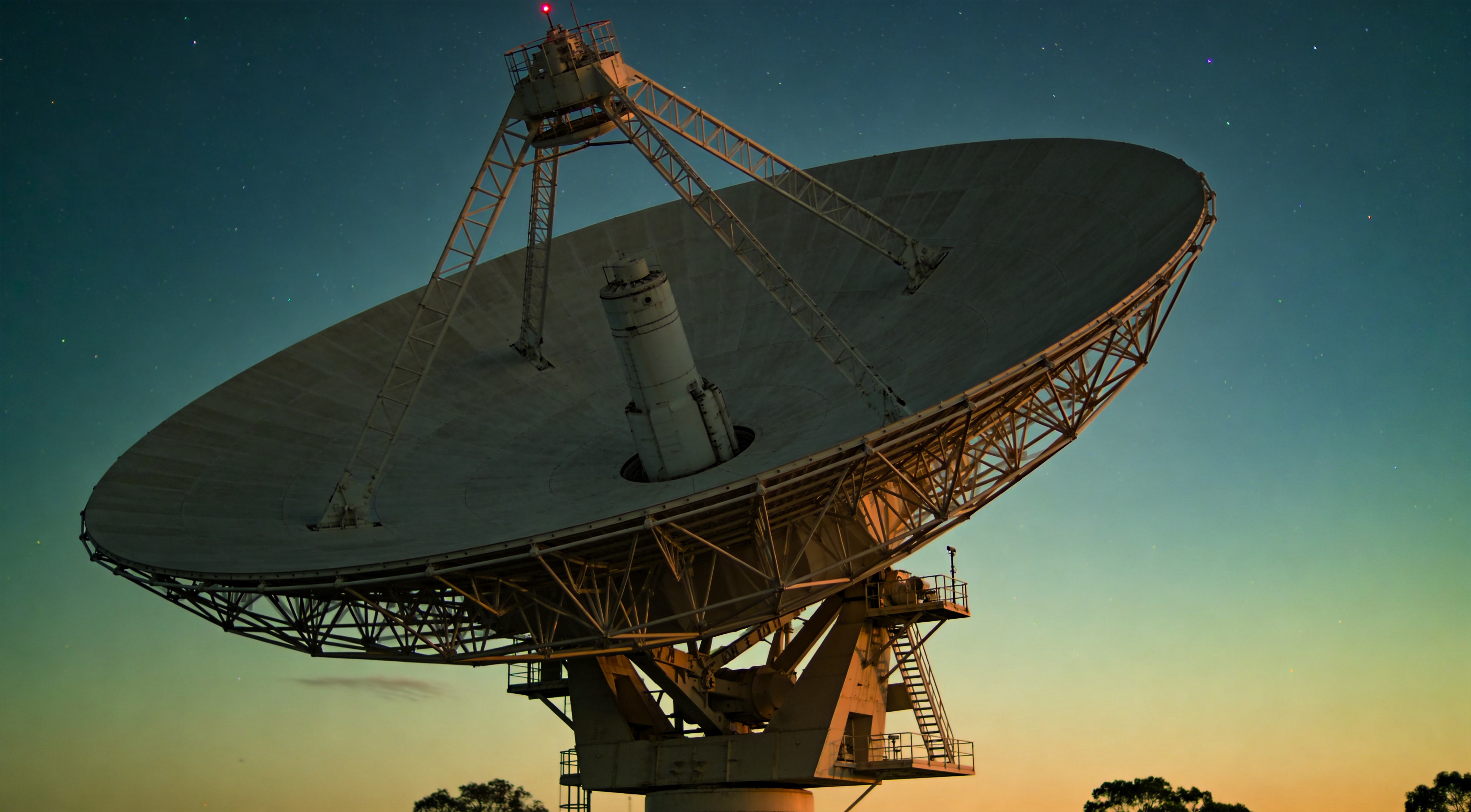
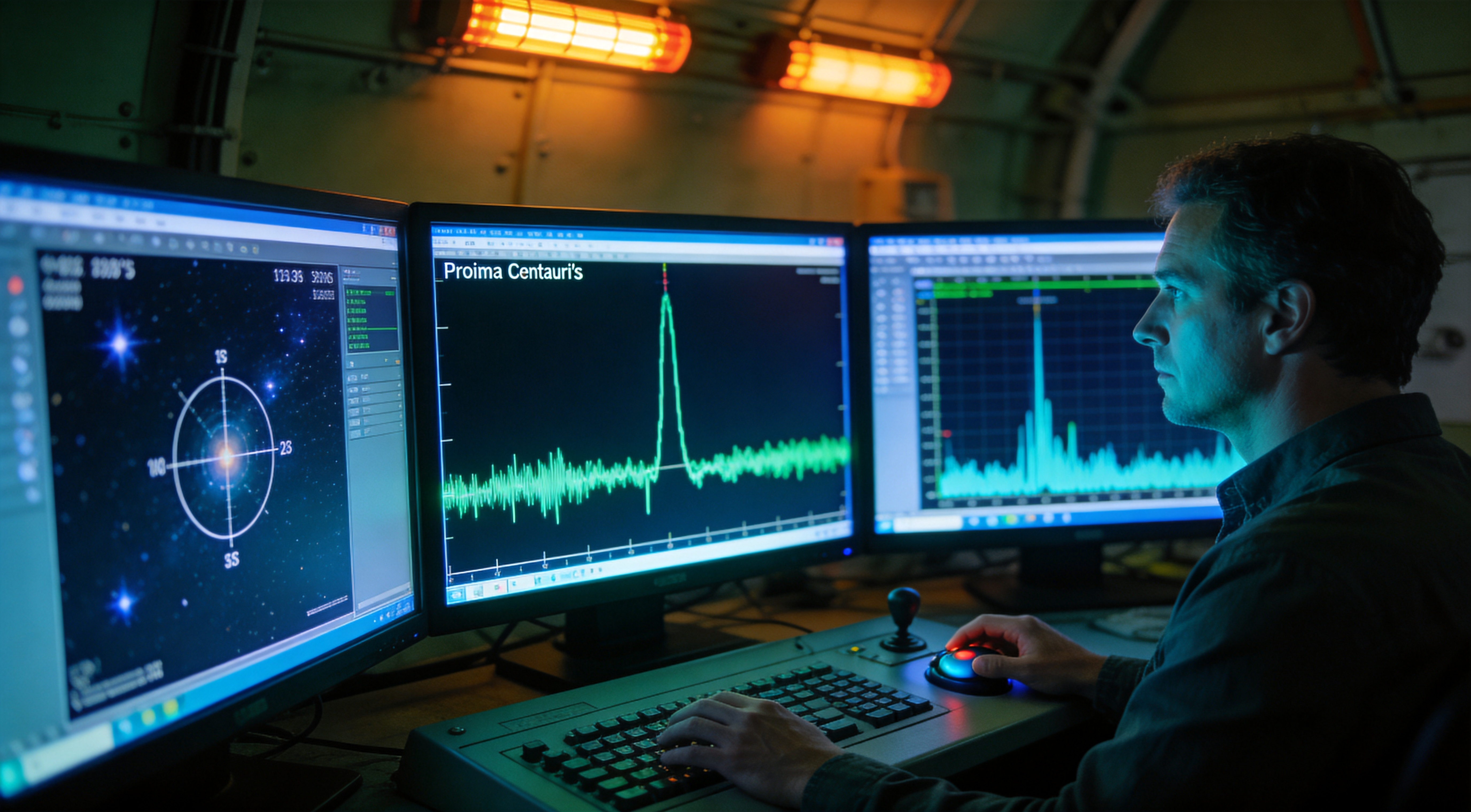
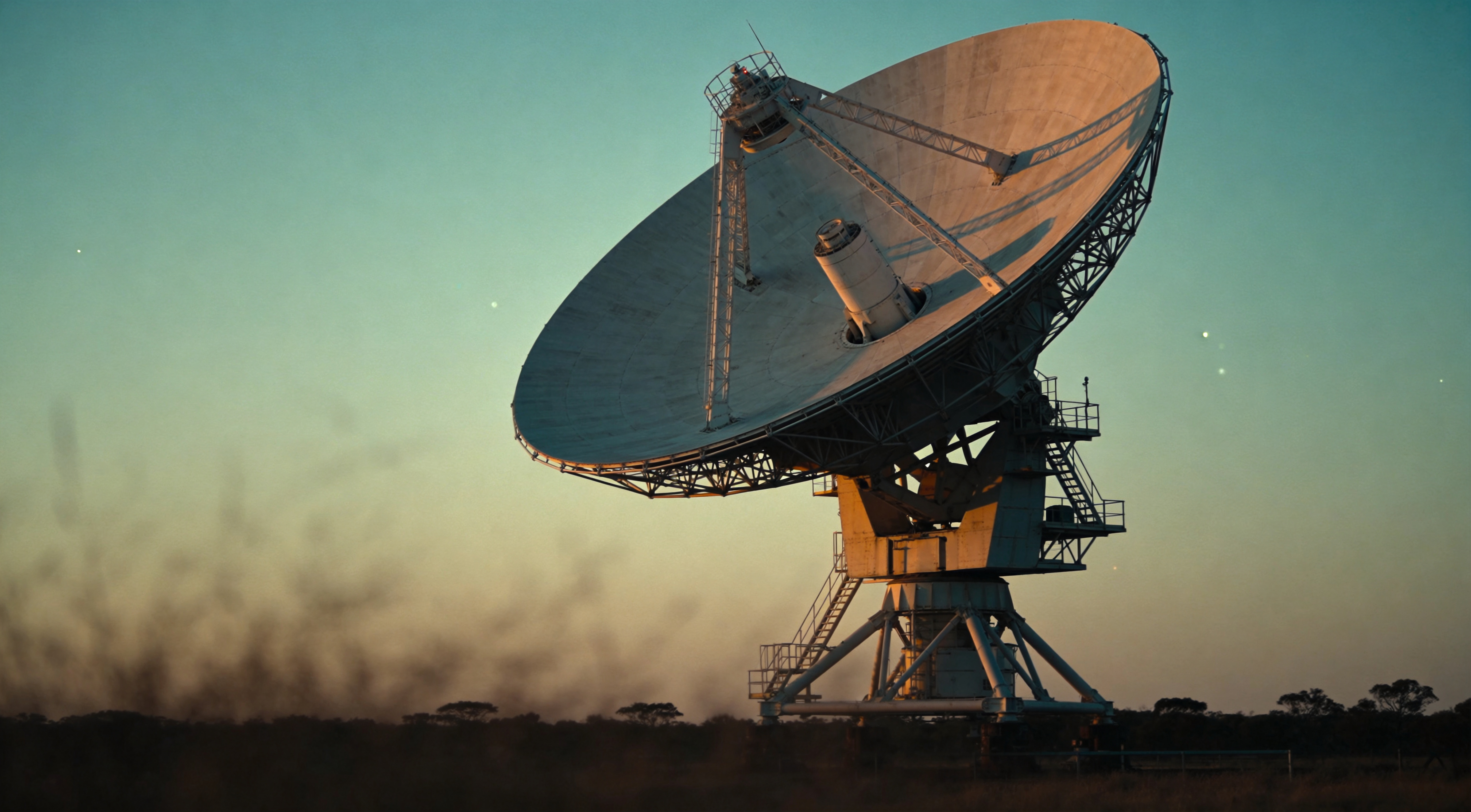
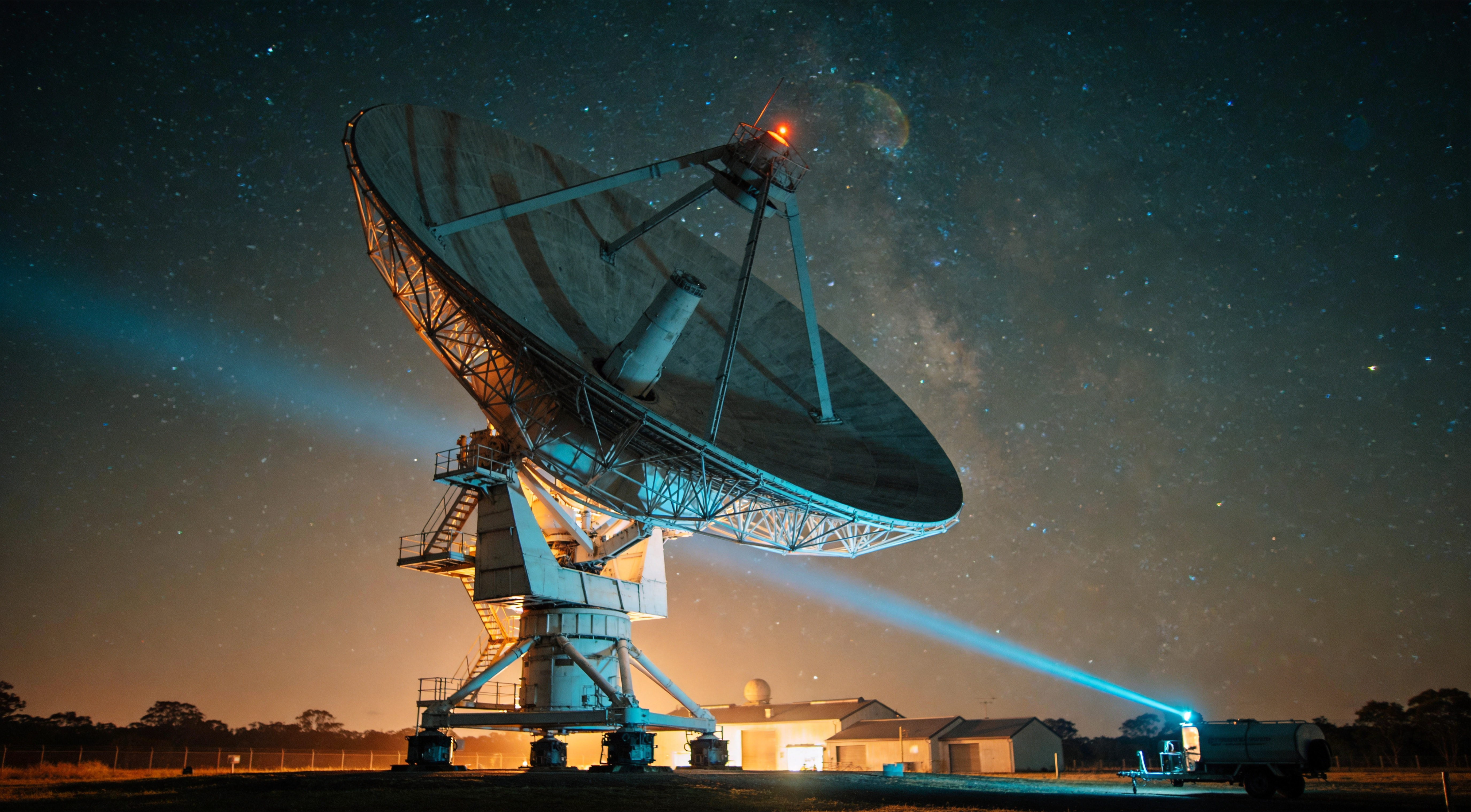
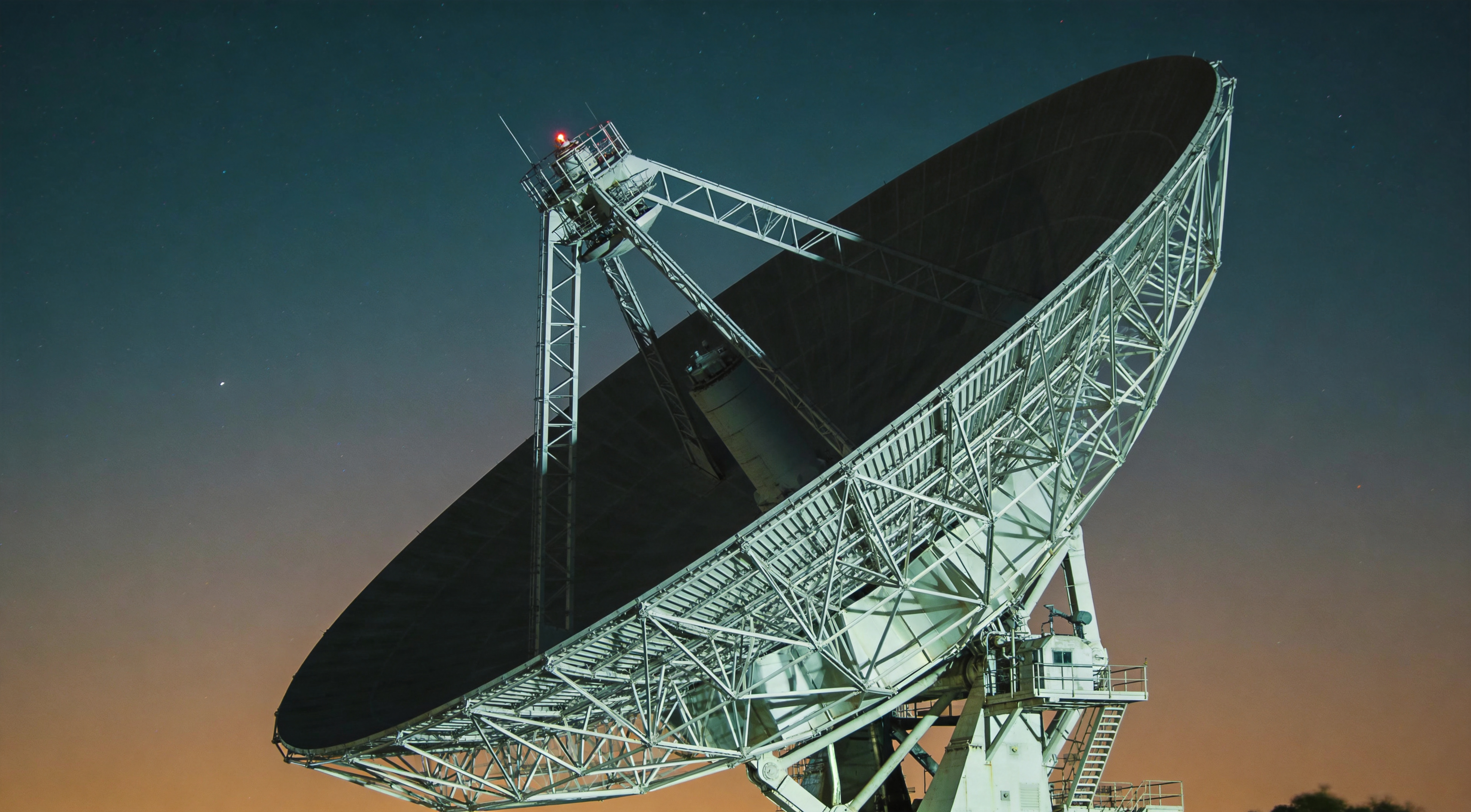
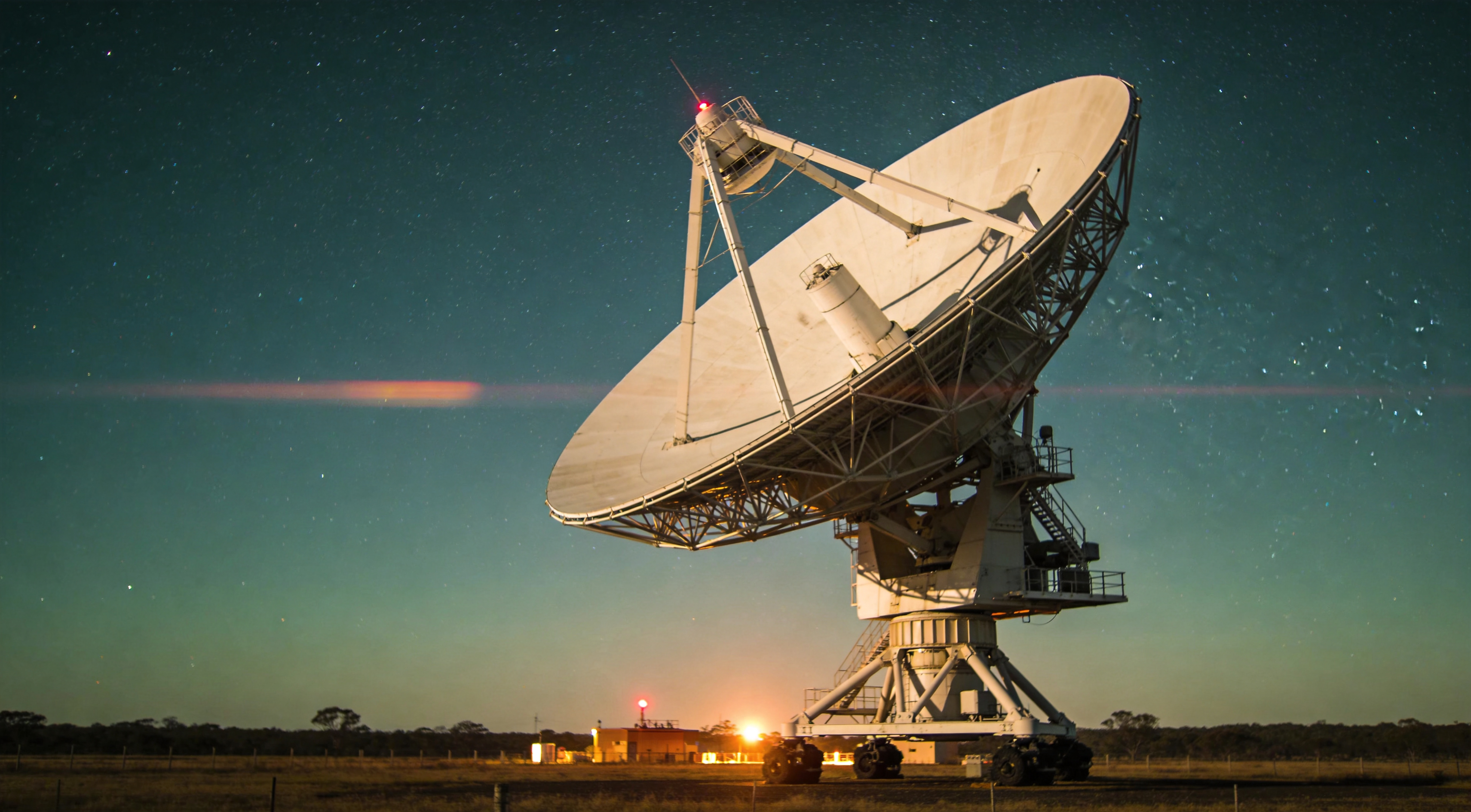
The Parkes radio telescope — known in the Wiradjuri language of the local Indigenous people as Murriyang — is pointed at the nearest star to the Sun.
Proxima Centauri. Four point two light years away. A red dwarf small enough that the entire star could fit inside the orbit of Mercury around our own. It has at least one confirmed exoplanet in its habitable zone — Proxima Centauri b, roughly the mass of Earth.
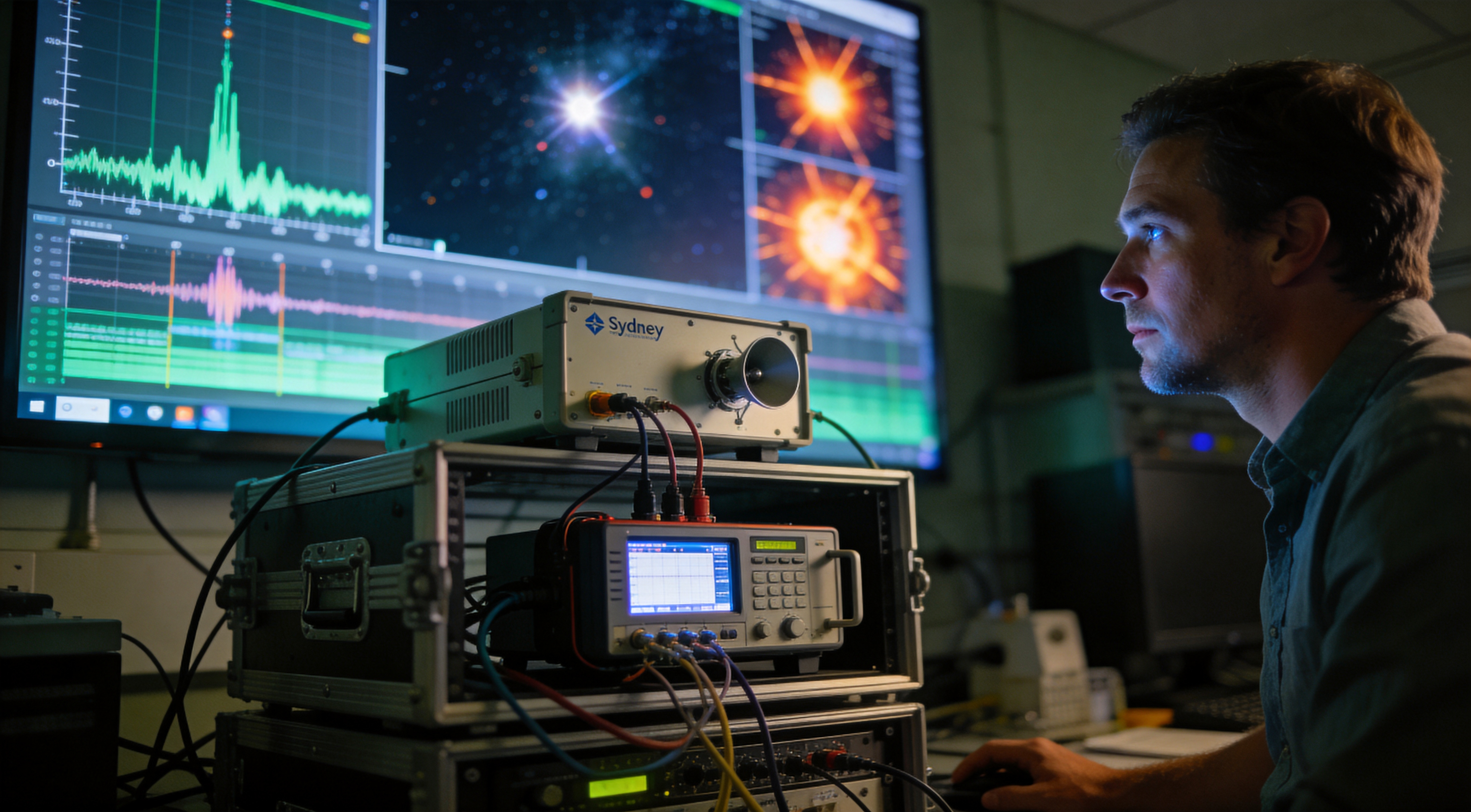
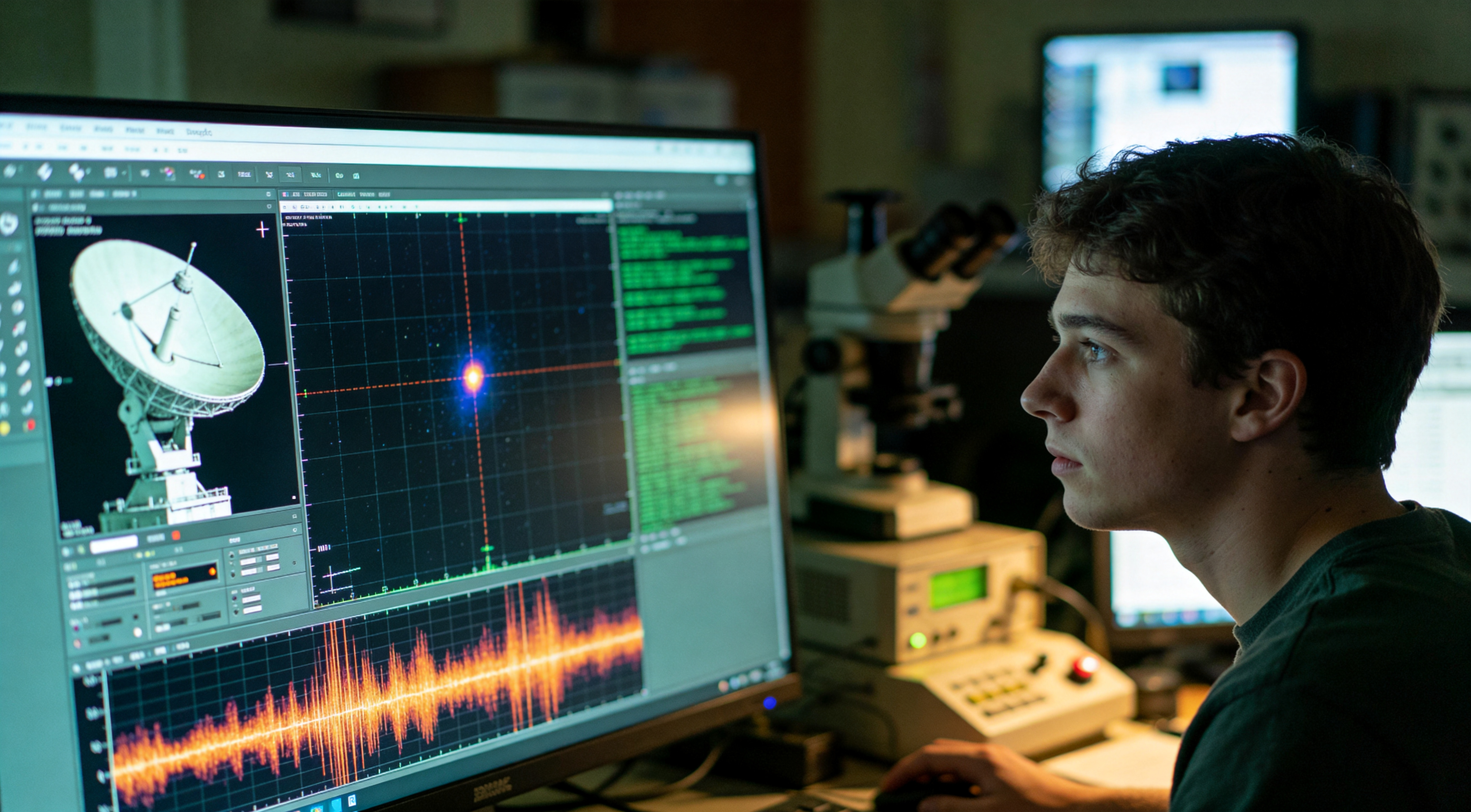
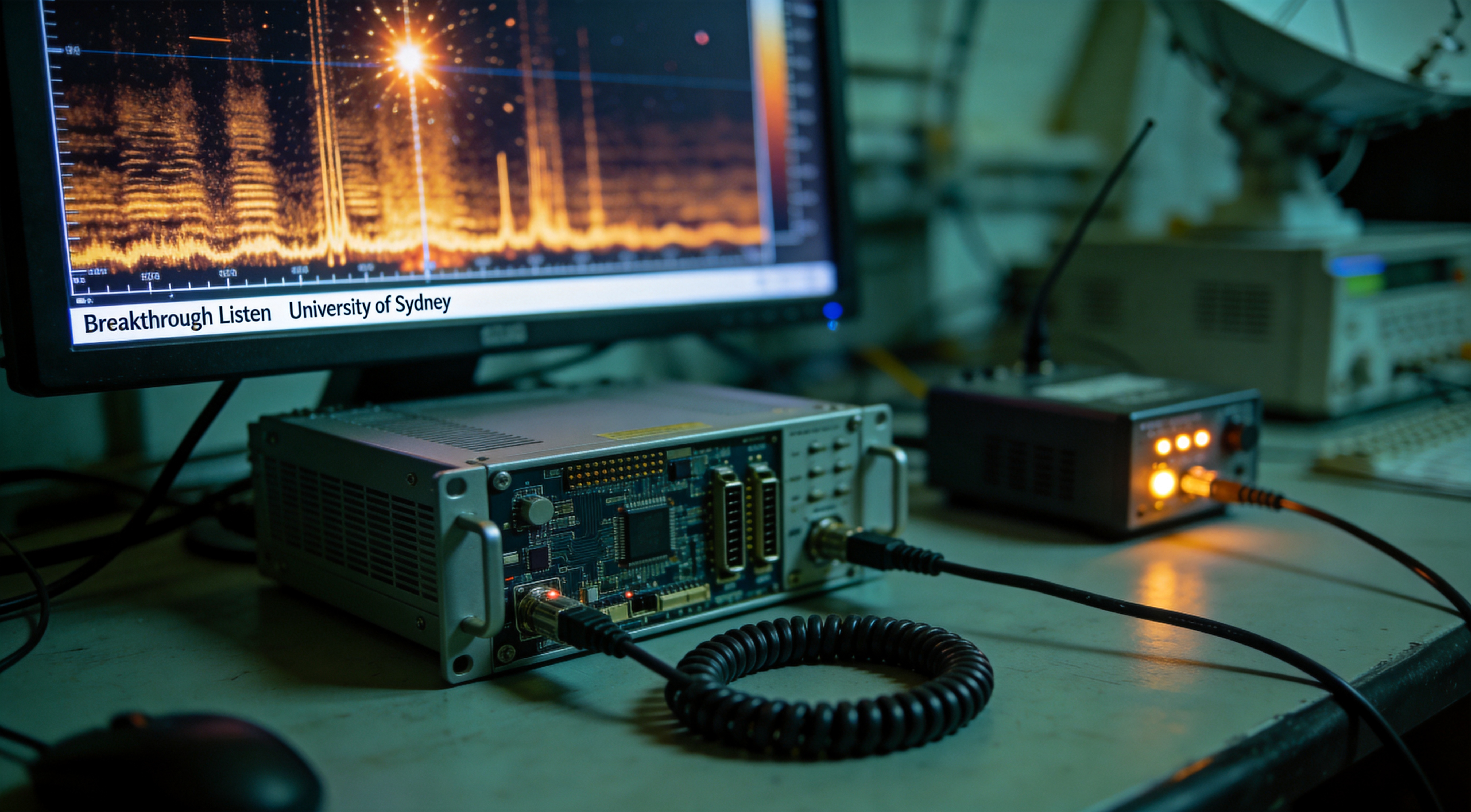
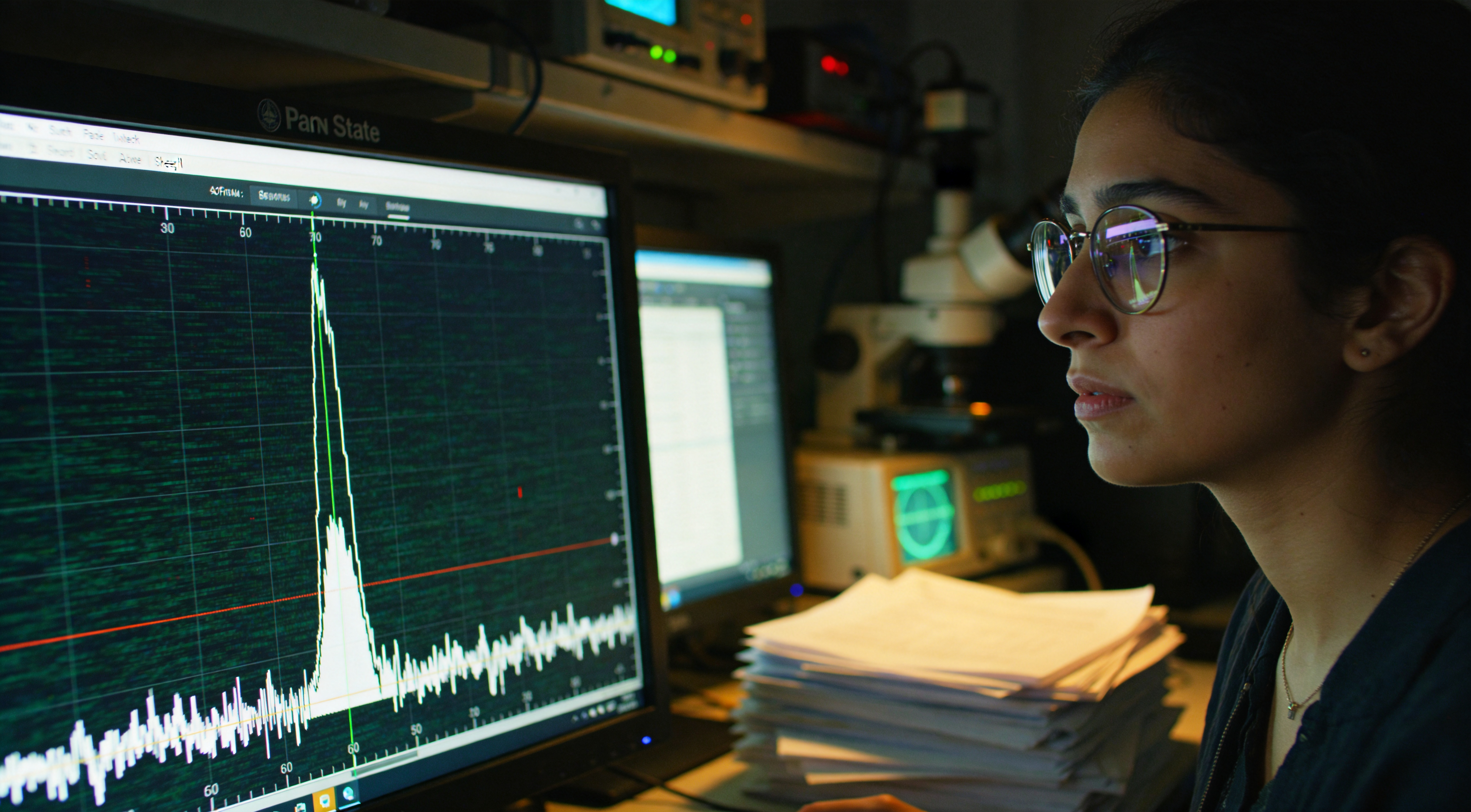
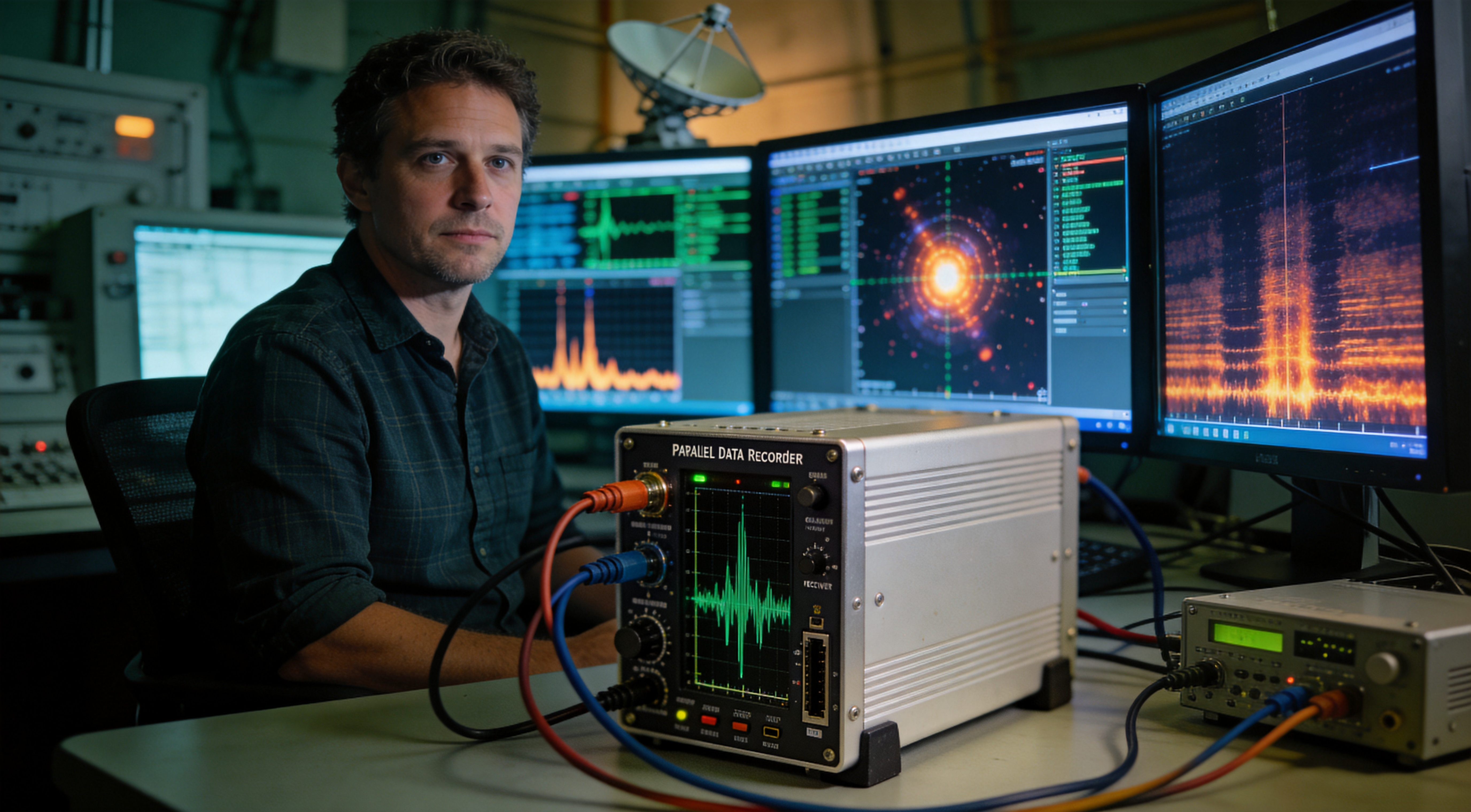
The observation campaign is not a SETI program. It is a stellar flare study, led by Andrew Zic at the University of Sydney. The Breakthrough Listen team has attached a parallel data recorder to the receiver, collecting radio spectra alongside the primary science.
Over approximately thirty hours of observation in April and May, something gets recorded that will not be analyzed until the following year.
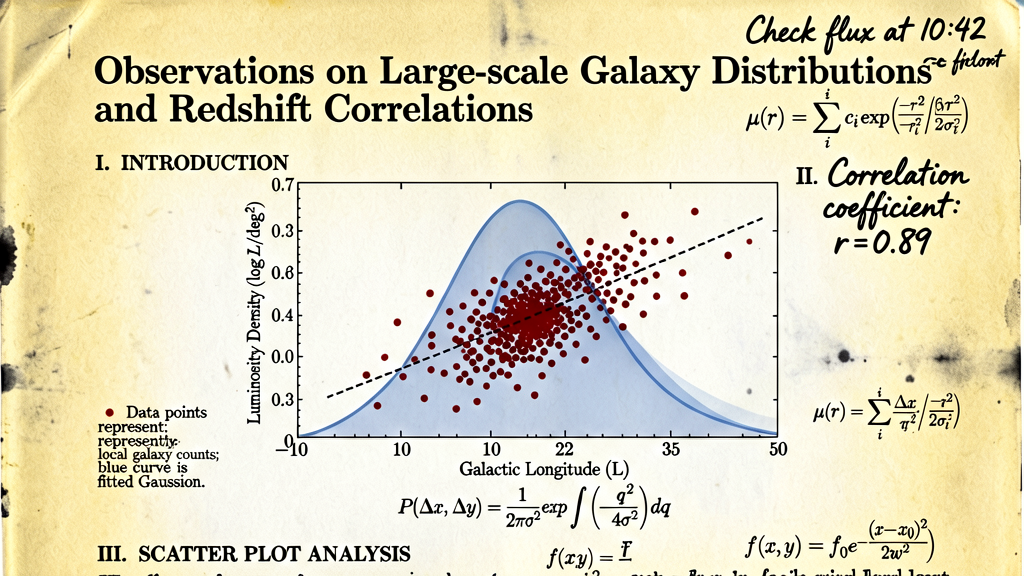
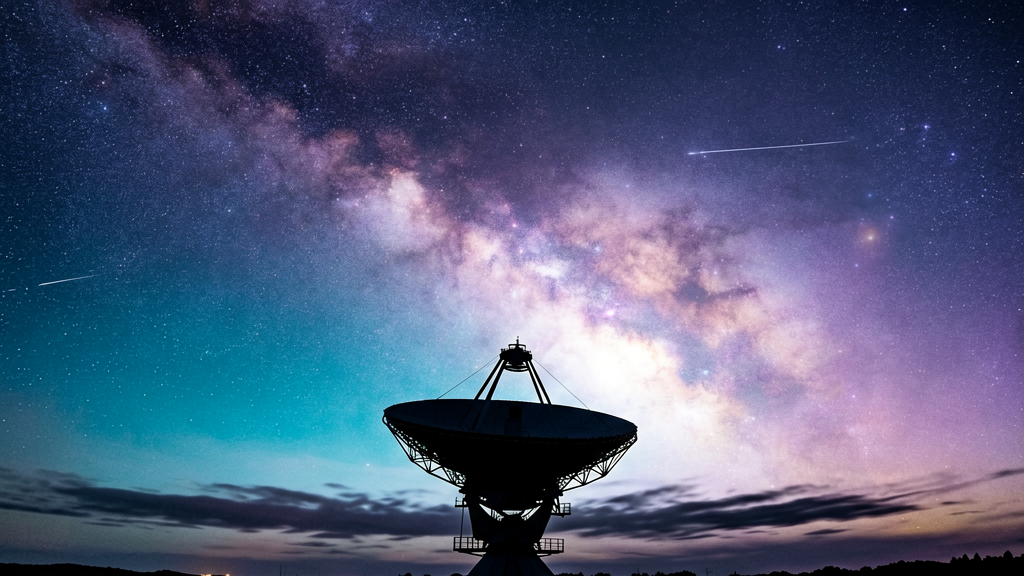
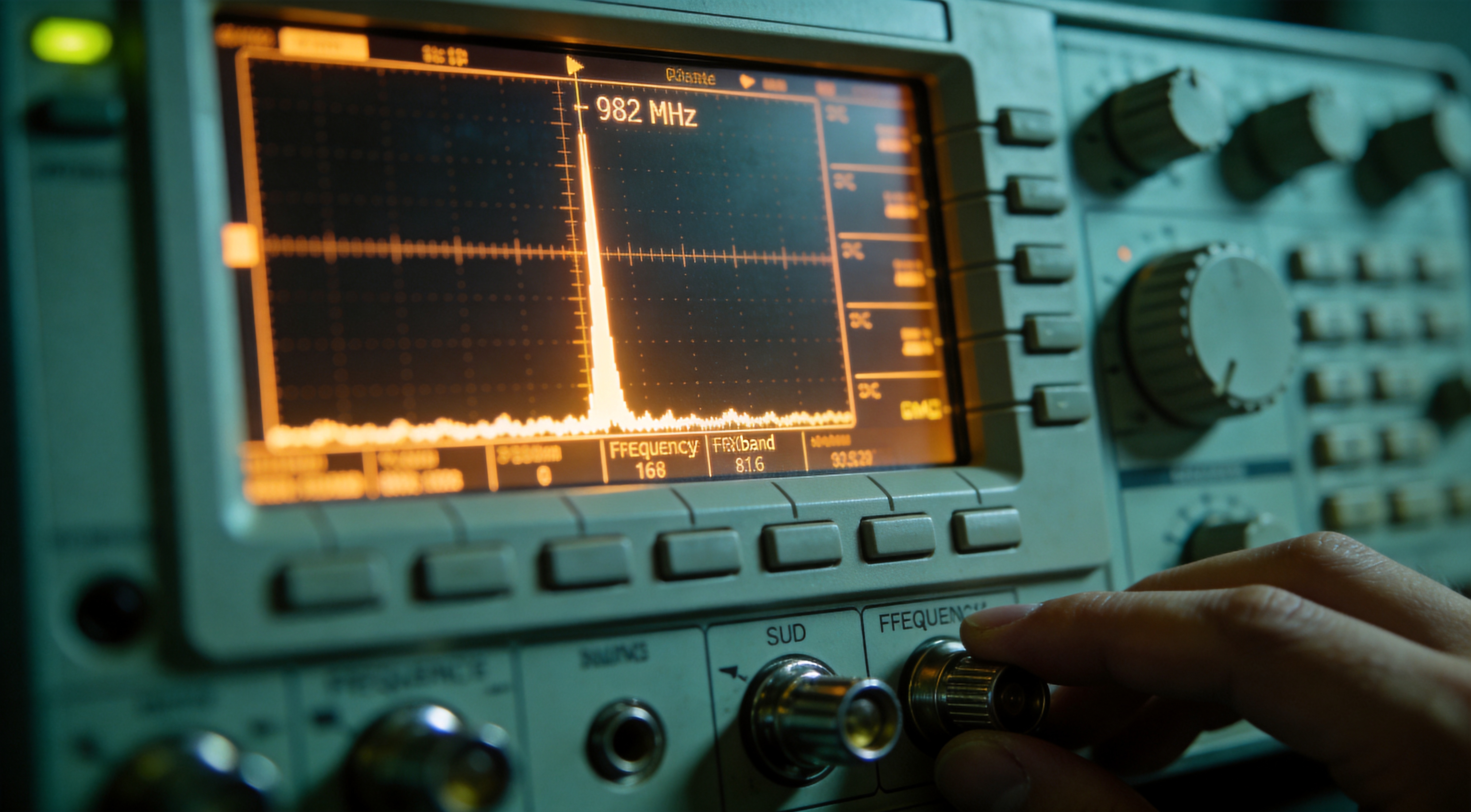
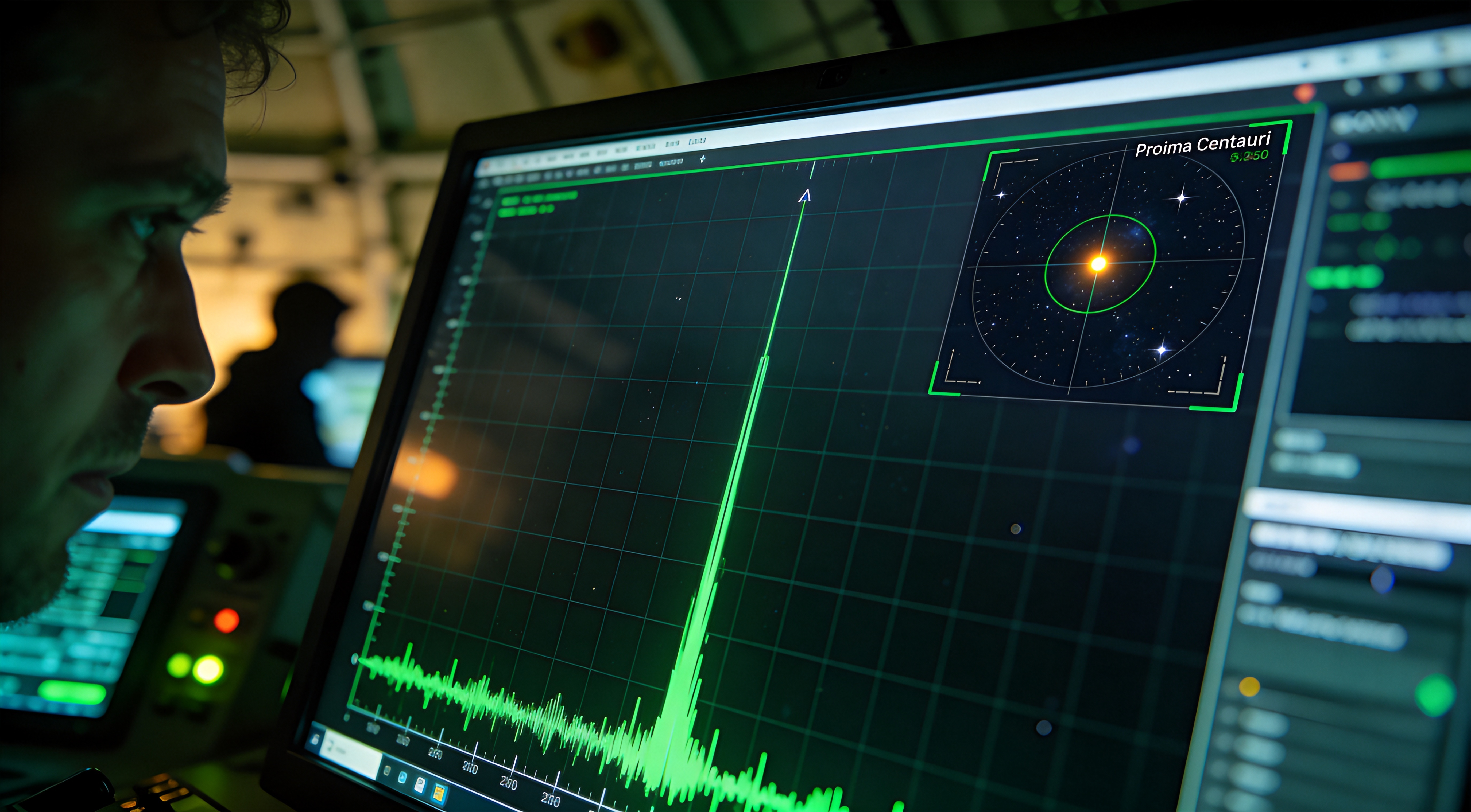
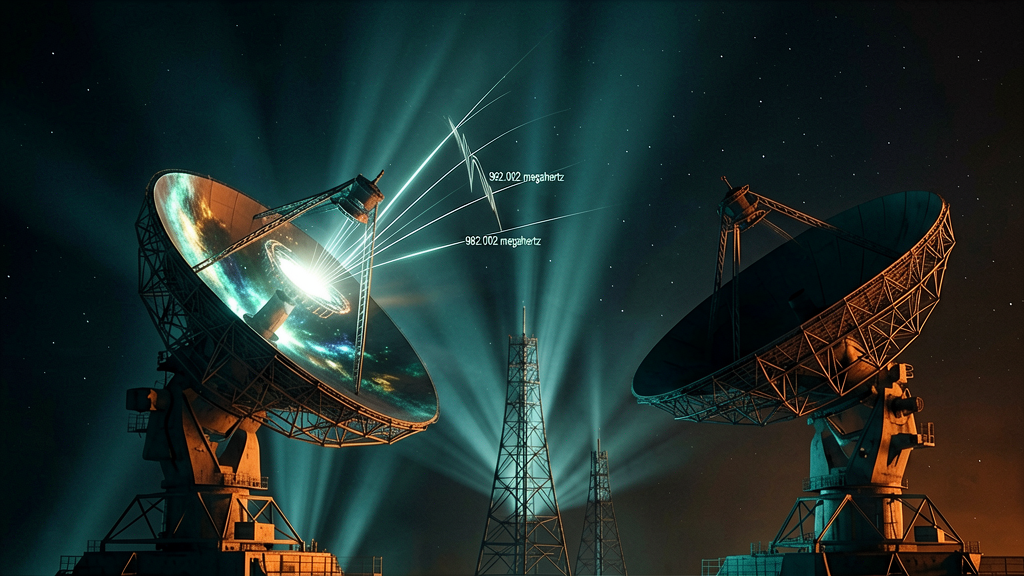
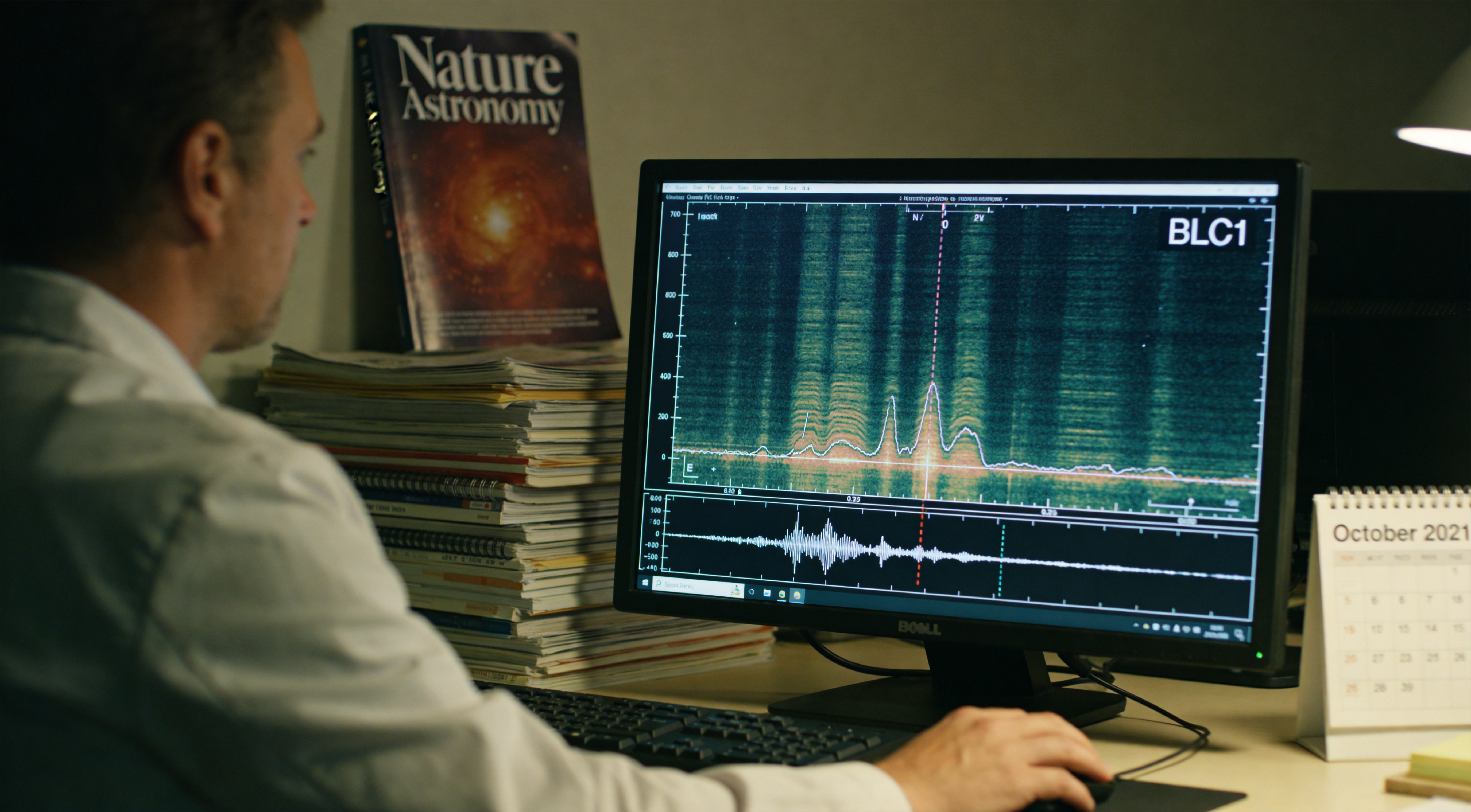
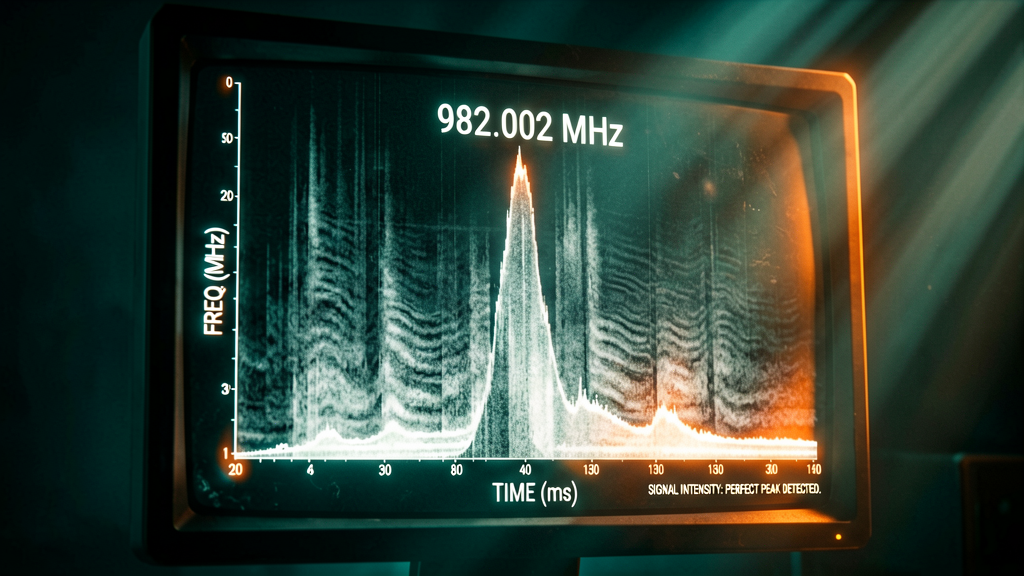
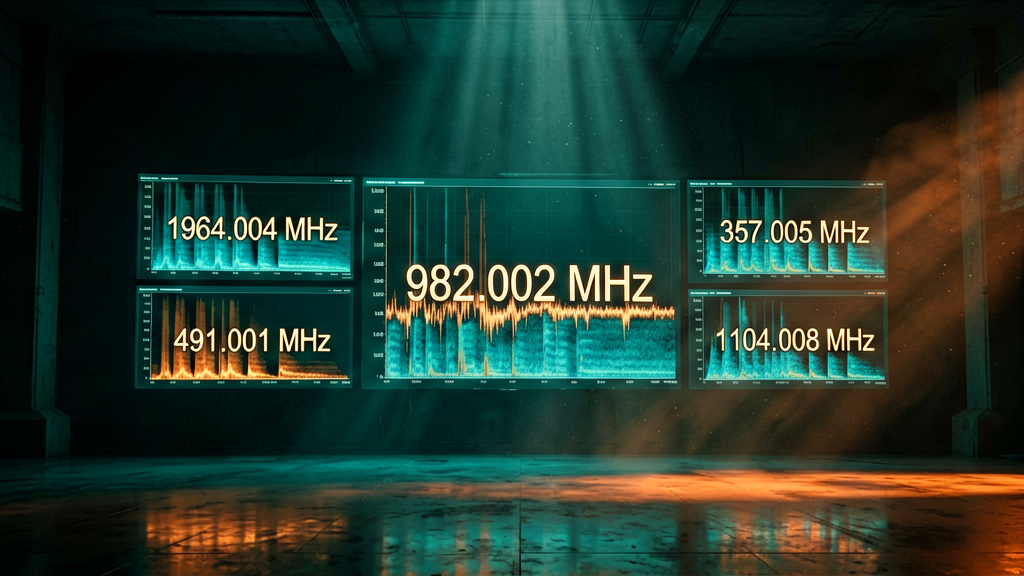
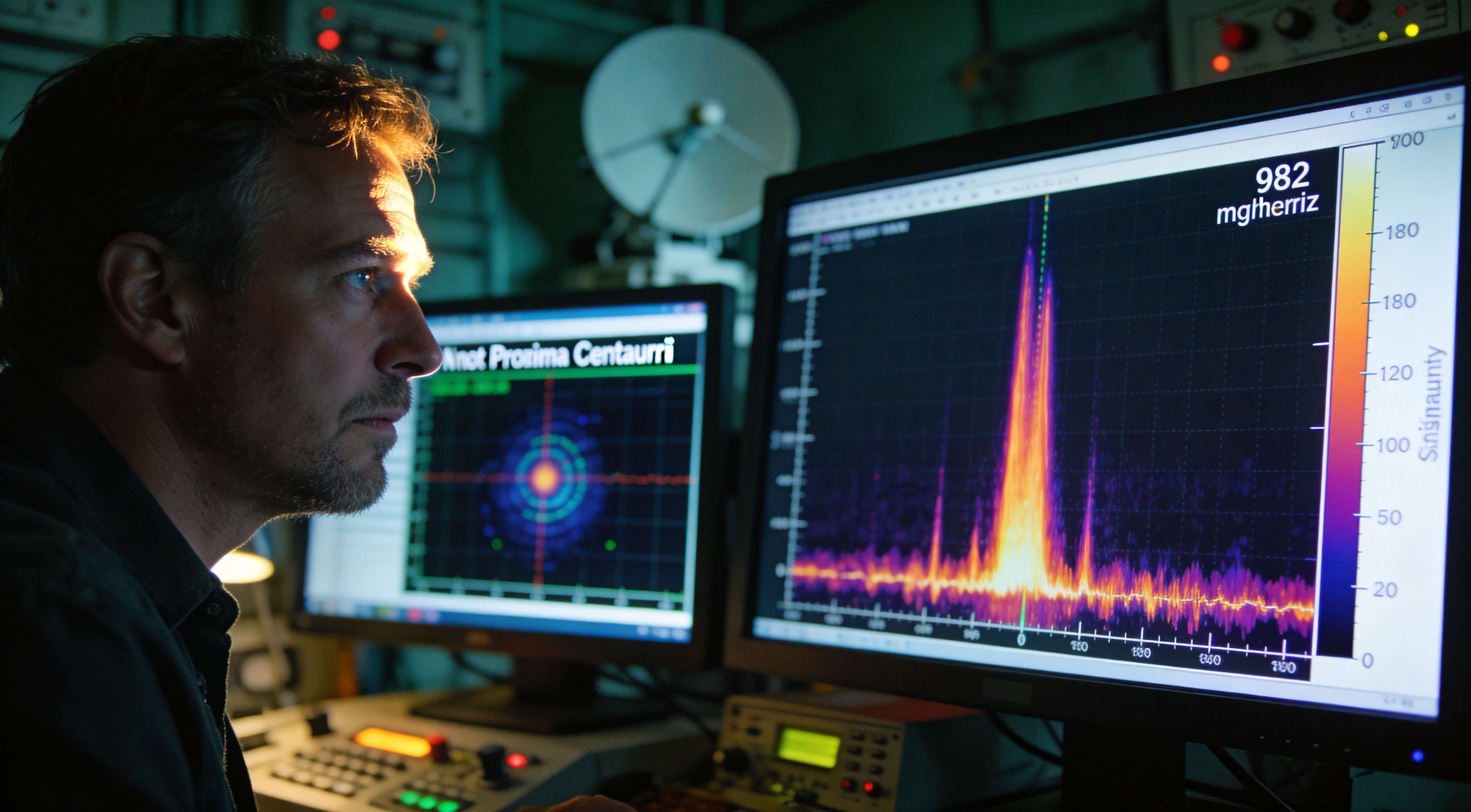
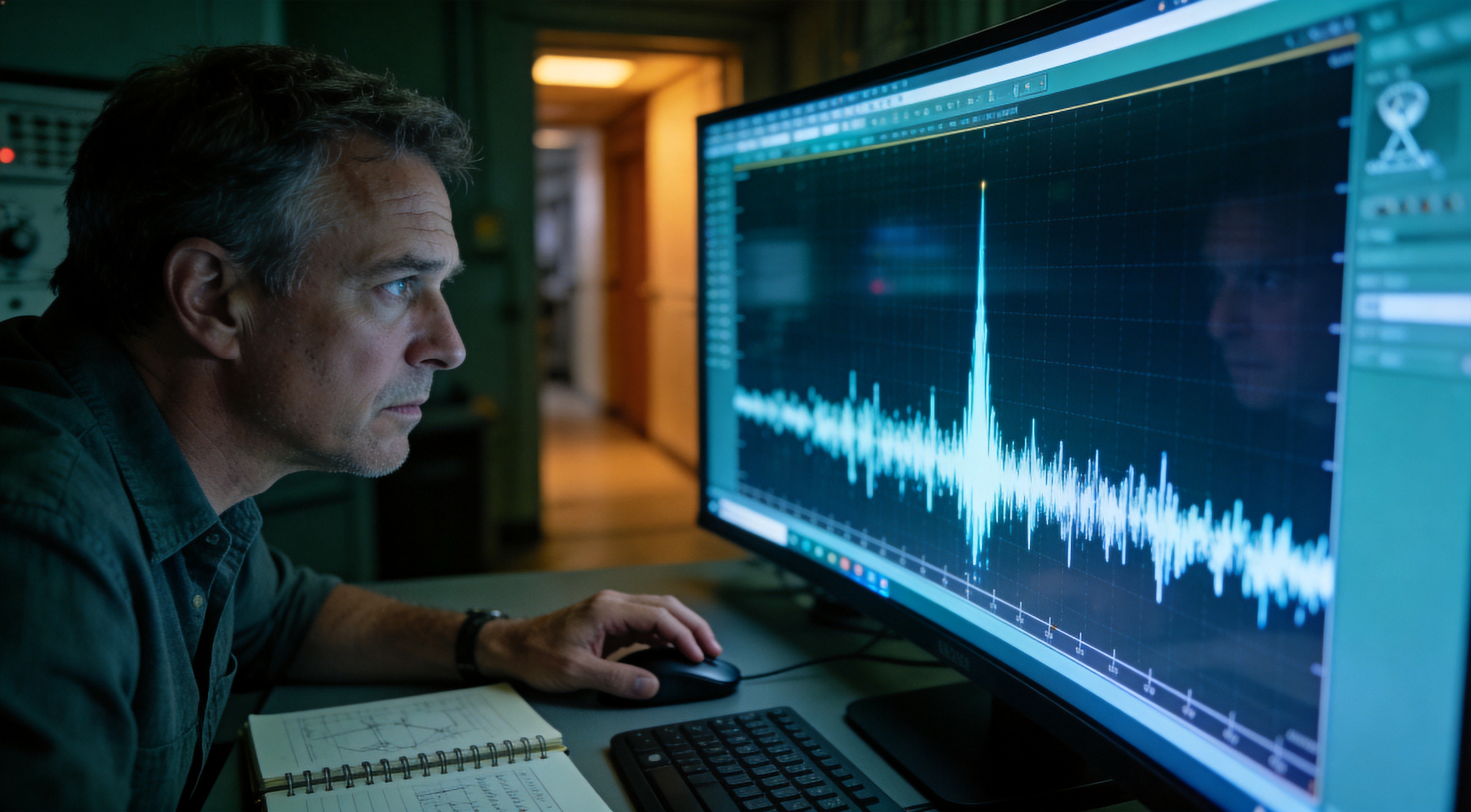
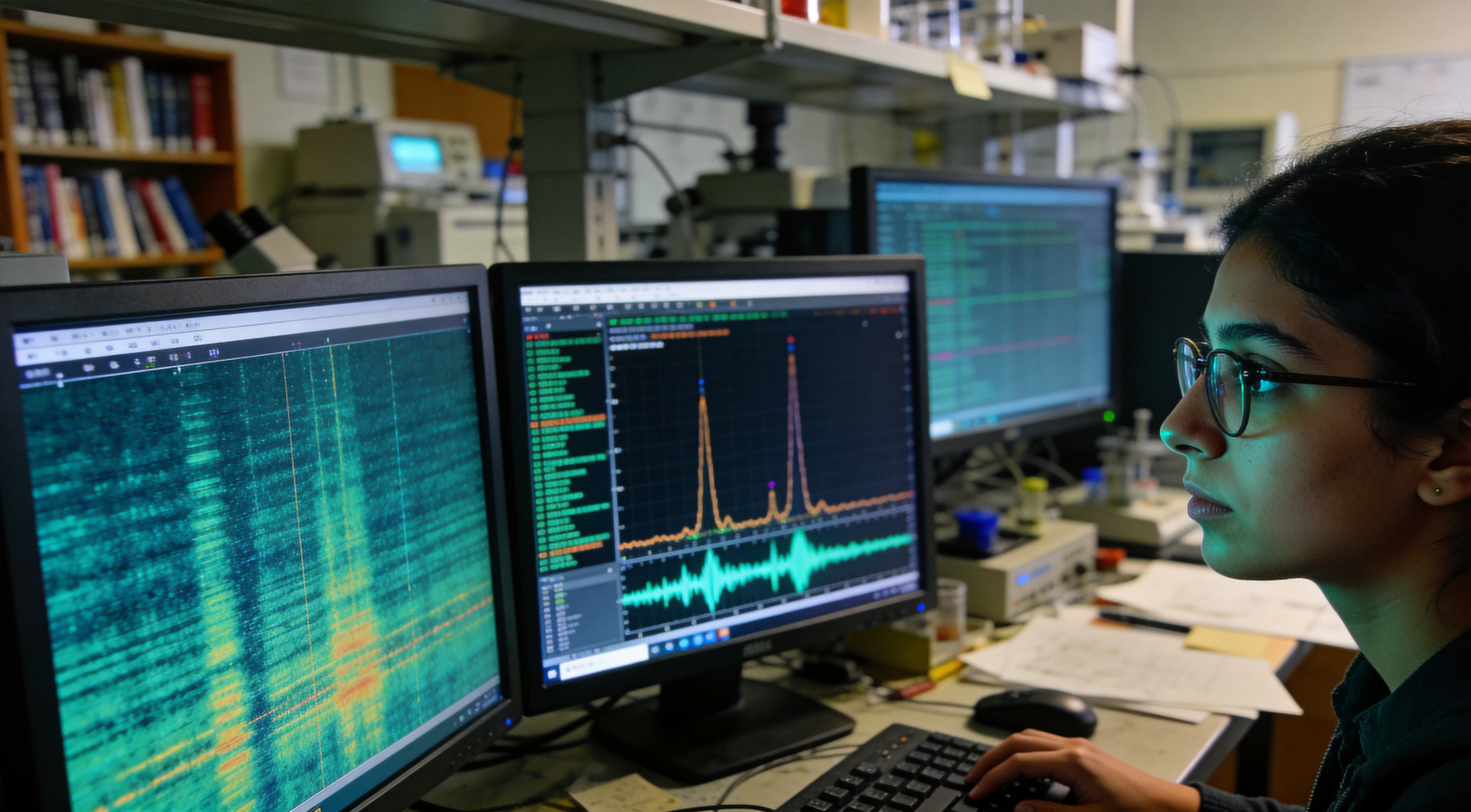
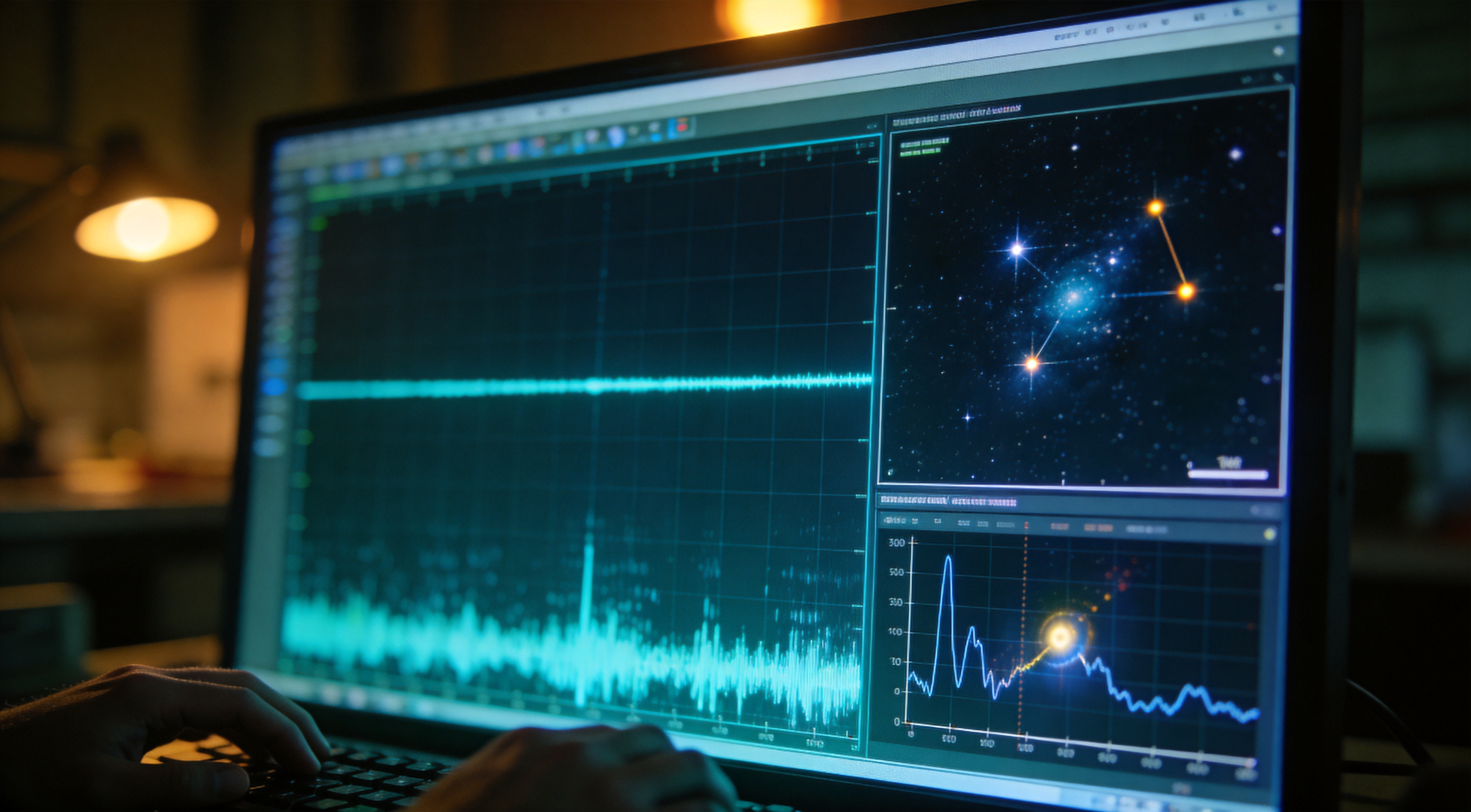
A narrowband signal at 982.002 megahertz.

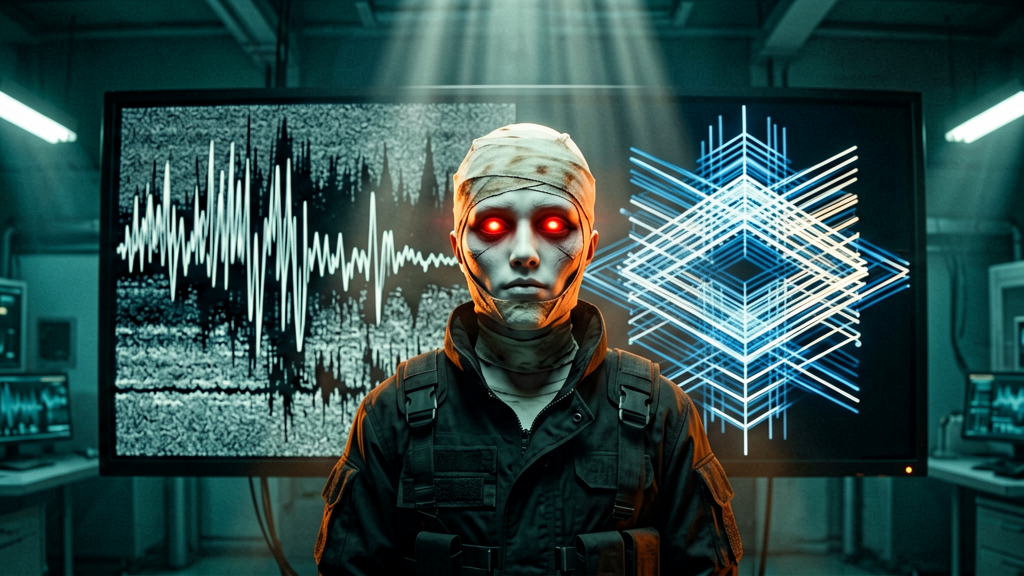
It drifts in frequency at a rate consistent with a transmitter not fixed to the surface of the Earth. It appears only when the telescope is pointed at Proxima Centauri. It does not appear when the telescope is pointed at reference sources. It persists, intermittently, for several hours.
It is exactly what Cocconi and Morrison predicted in 1959.
Exactly what Frank Drake listened for in 1960.

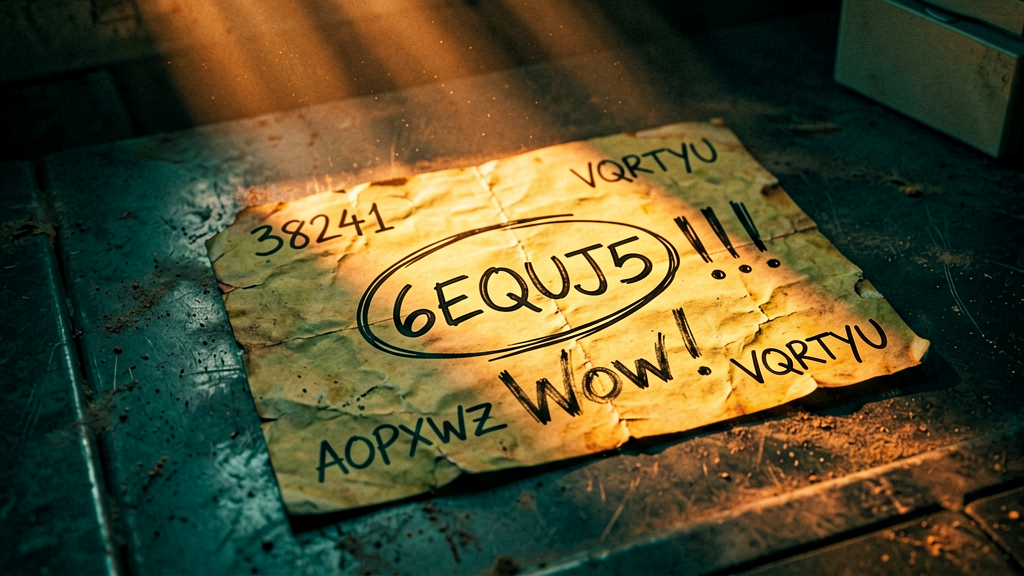
Exactly what Jerry Ehman saw in 1977.
And exactly what — if the Dark Forest hypothesis is correct — should never appear in human telescopes.

This is the case file on what happened when it did.
The signal is identified not by a senior researcher but by a summer intern. Shane Smith, an undergraduate at Hillsdale College in Michigan, working through the 2020 Berkeley SETI summer program, finds it during a systematic review of archival data.
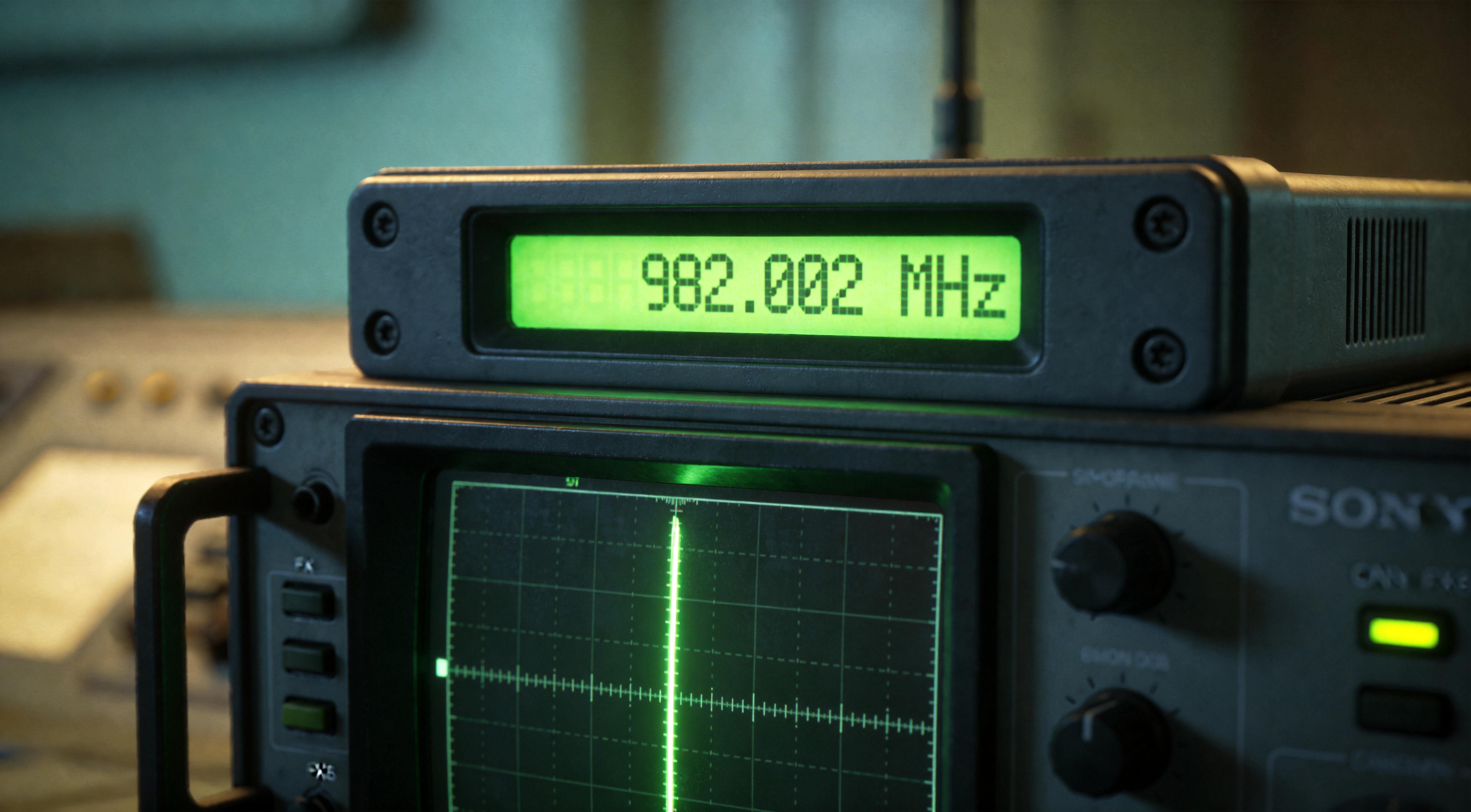
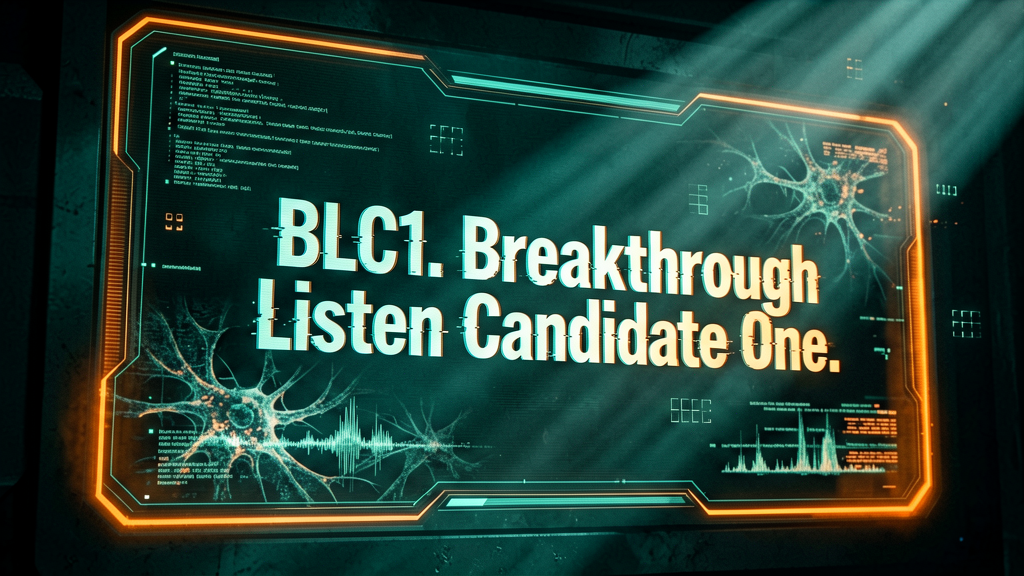
The designation Breakthrough Listen gives it is technical. BLC1. Breakthrough Listen Candidate One.
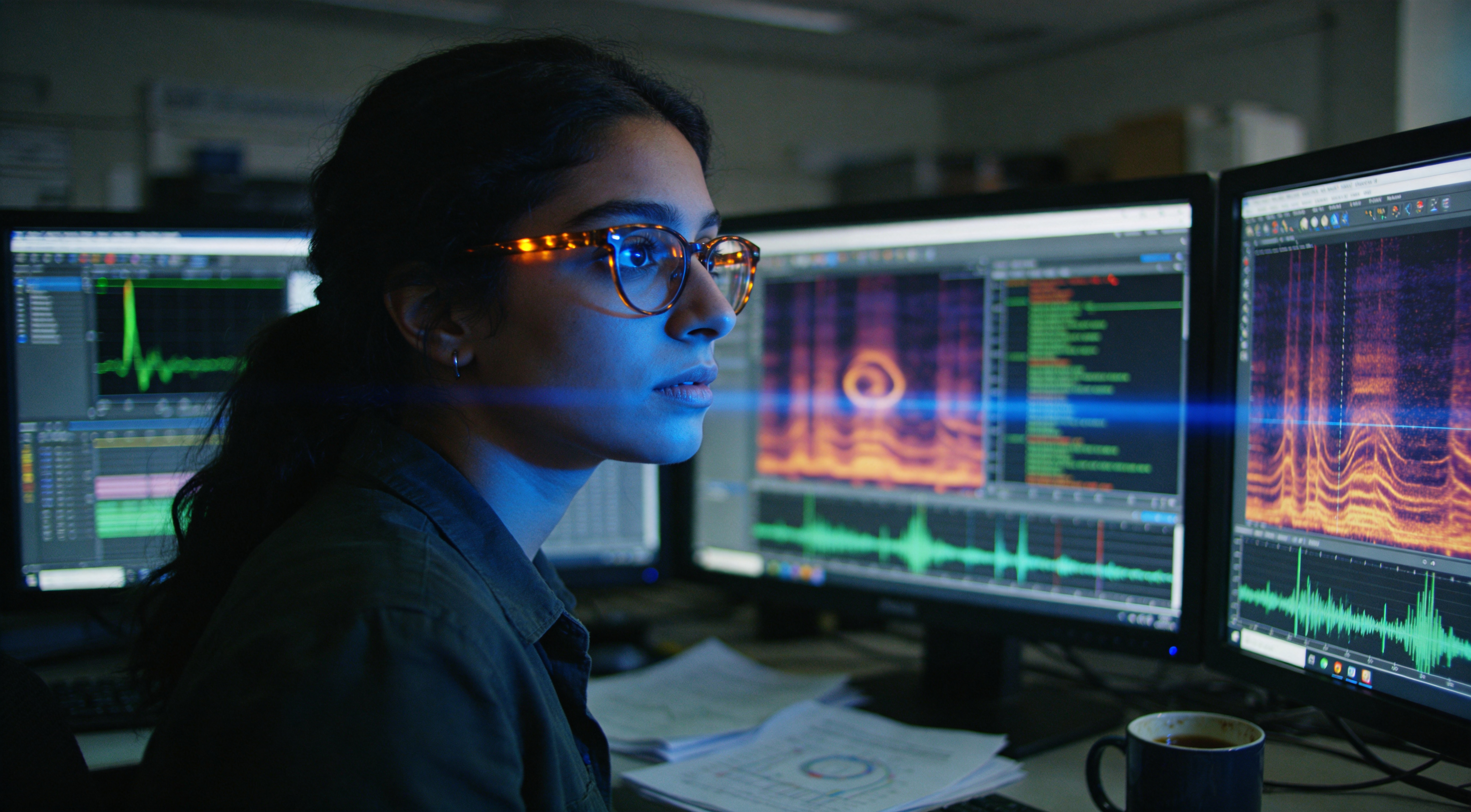
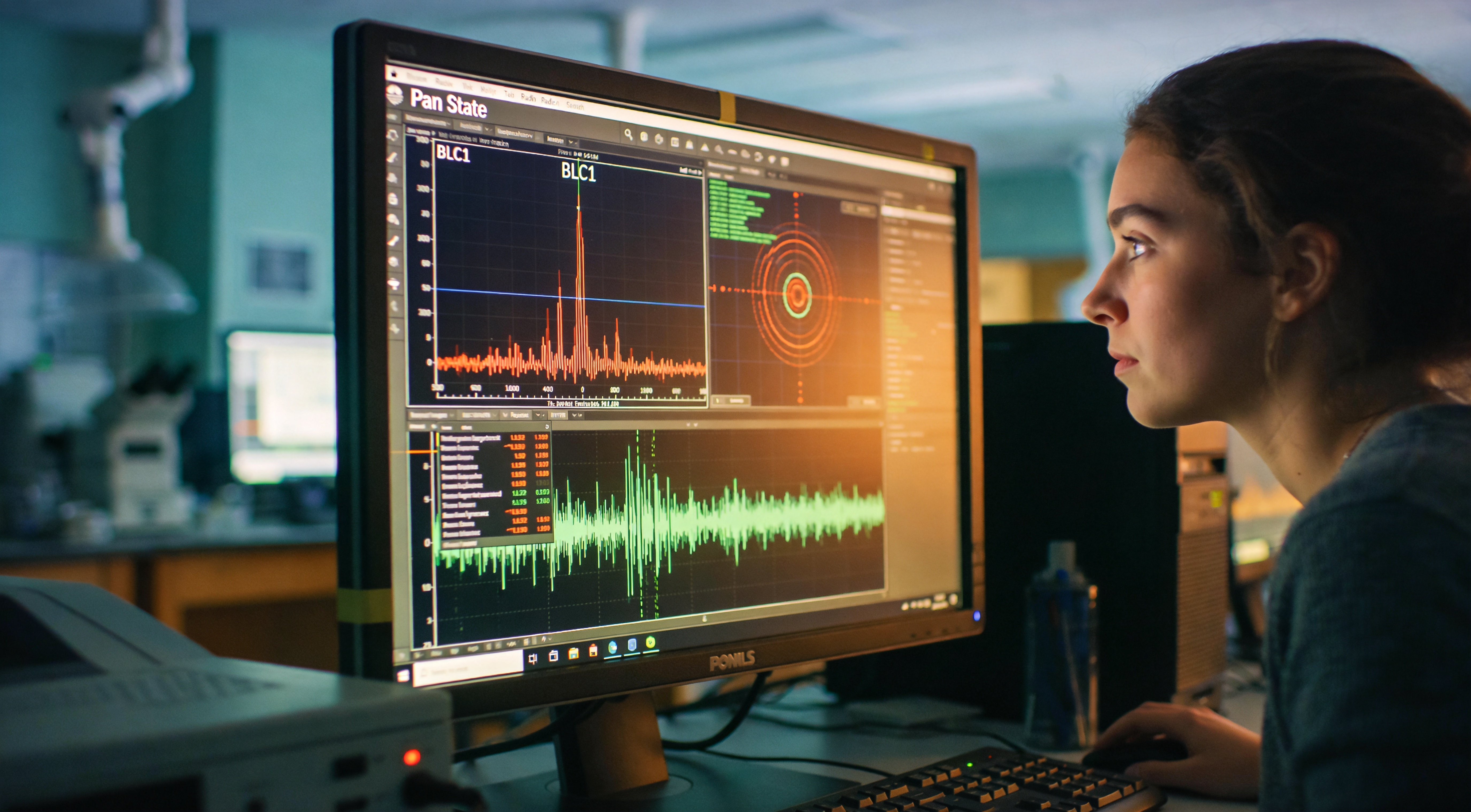
Analysis is assigned to Sofia Sheikh, then a doctoral student at Penn State. Sheikh's task is to determine whether BLC1 is a technosignature — a signal of artificial origin — or an instance of radio frequency interference that the team's filters failed to catch.
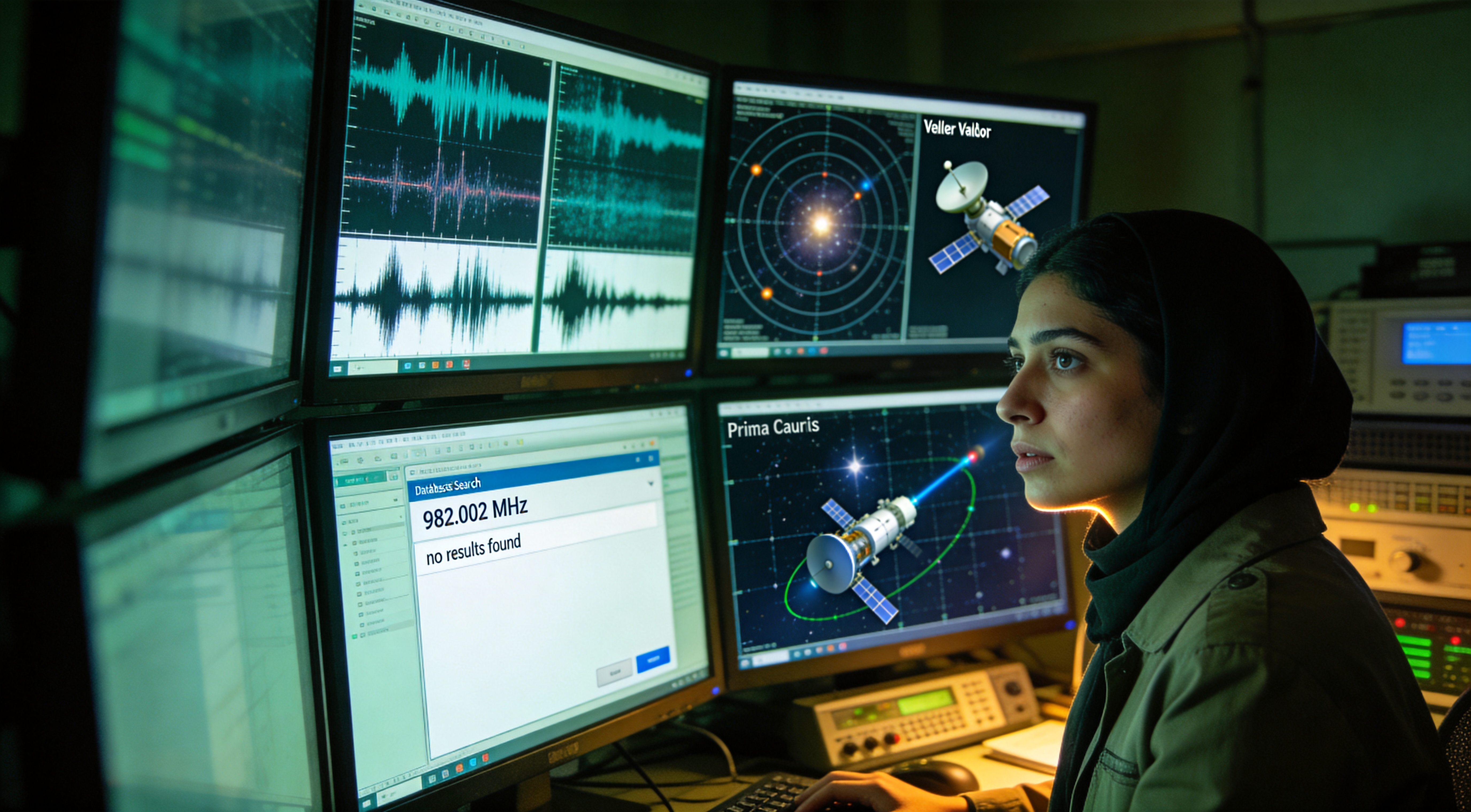
Sheikh's investigation runs for over a year. She checks whether the signal matches known satellite transmissions — it doesn't. She checks whether it matches deep-space probes, Voyager, New Horizons, aligned by chance with the line of sight to Proxima — it doesn't. She checks whether any technology on Earth is known to transmit at 982.002 megahertz — none is.
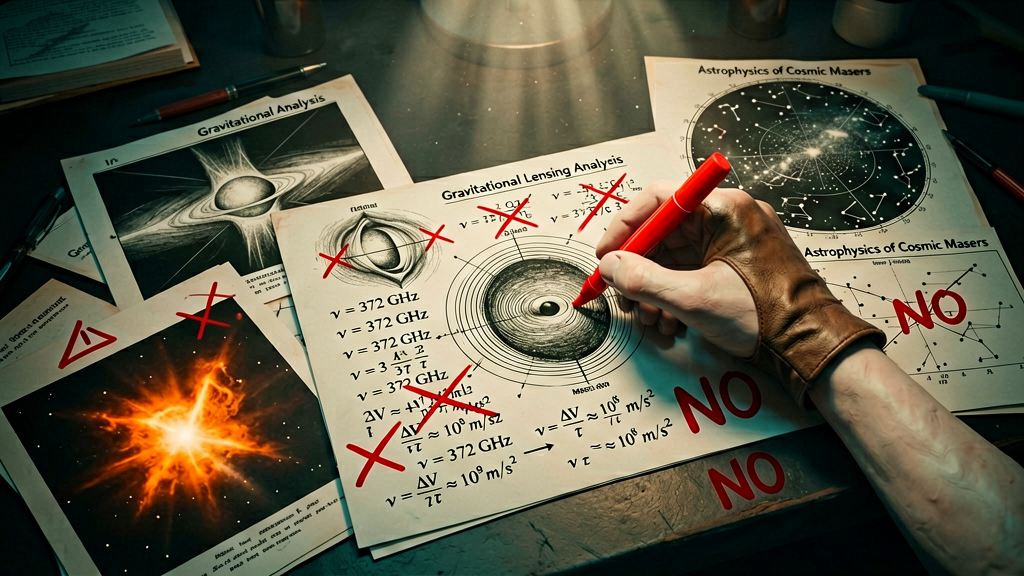
She checks whether the signal could be the product of gravitational lensing, cosmic masers, or other natural processes — it cannot.
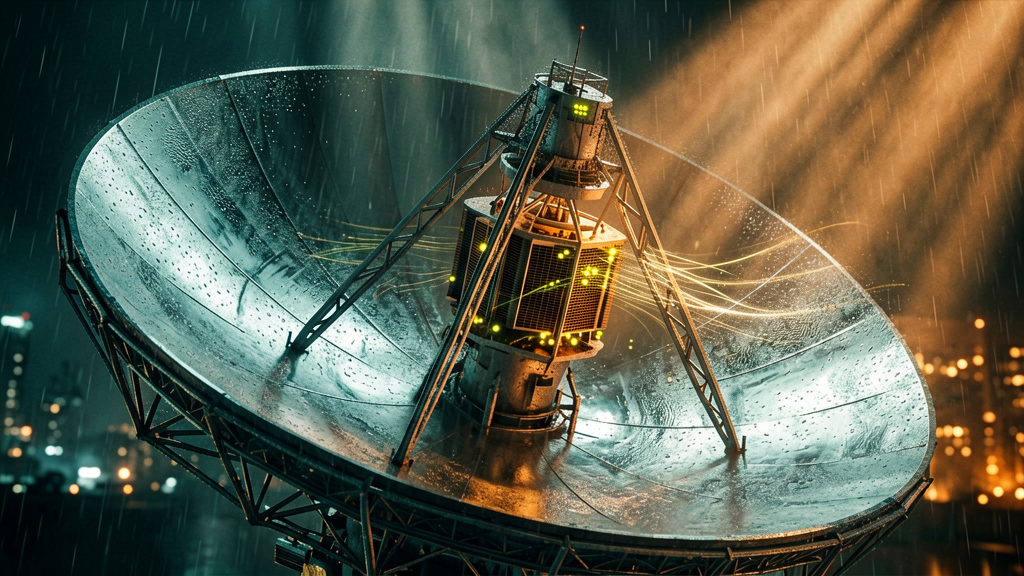
By every test in the existing SETI playbook, BLC1 is not explained.

And then, eventually, Sheikh finds it.
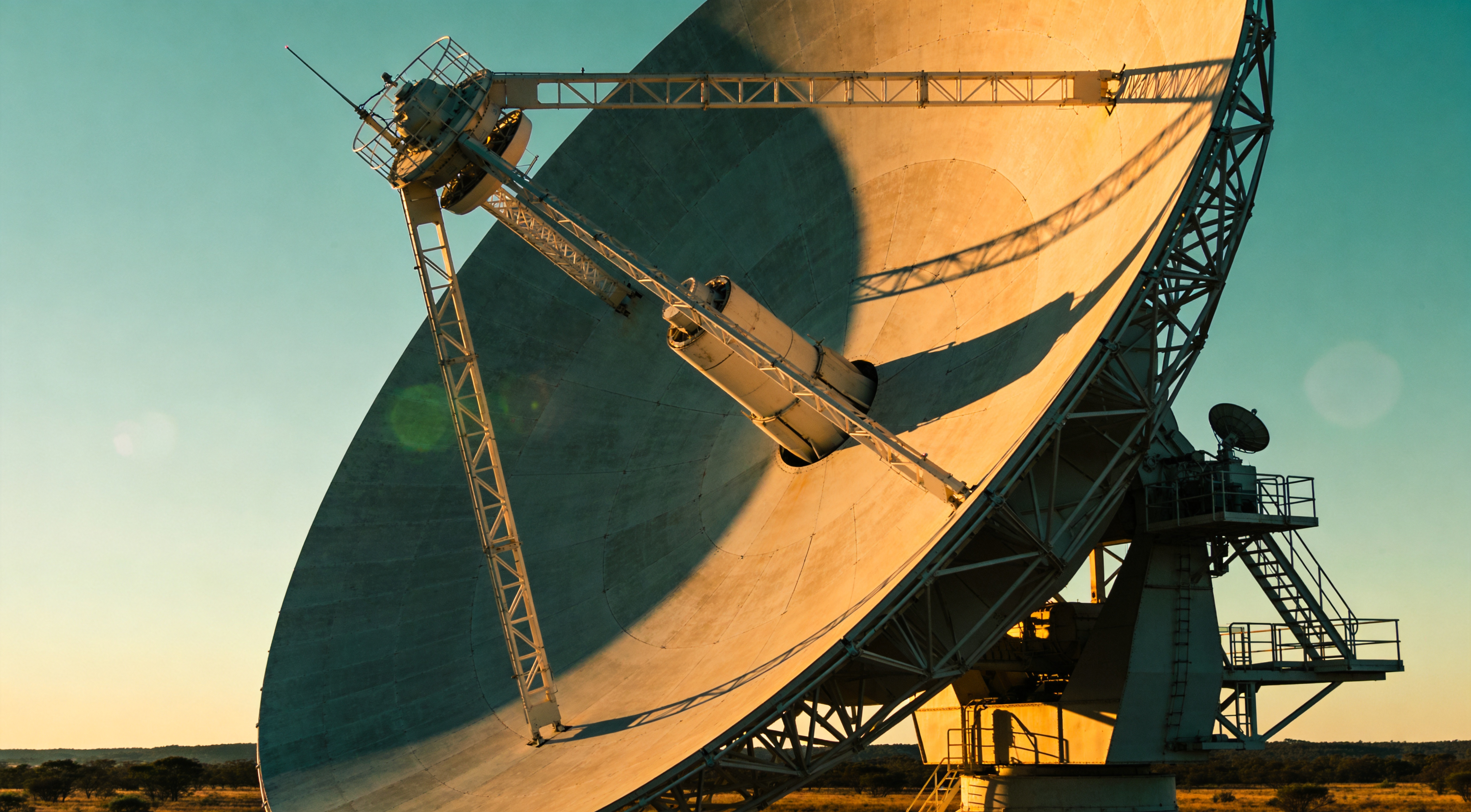
The signal appears on other days, at other times, at frequencies harmonically related to 982 megahertz. Some of those appearances persist across telescope pointings — meaning the signal does not track Proxima Centauri but rather tracks the Earth. It is originating from somewhere on the ground.
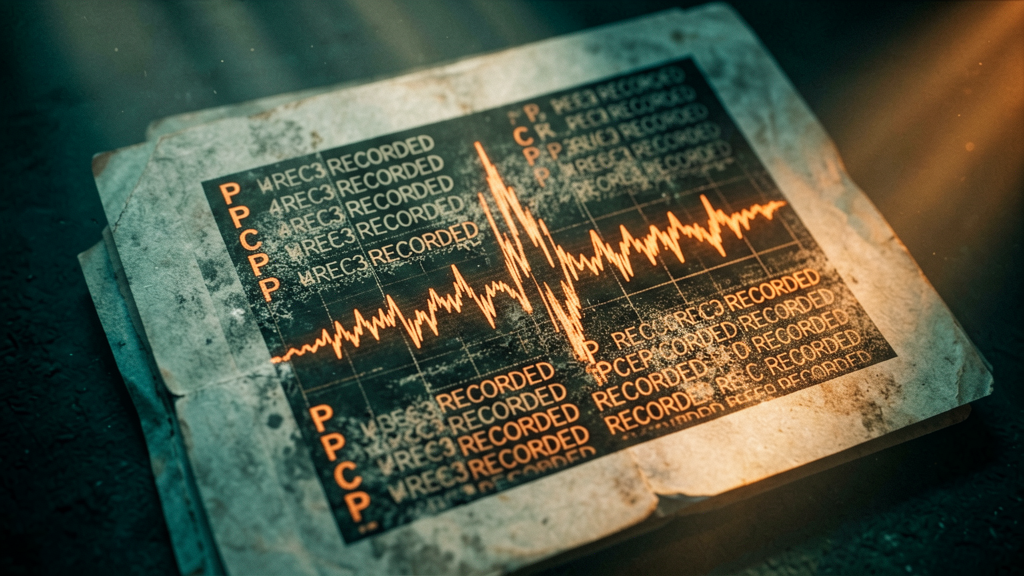
The source, when traced, is an intermodulation product — a harmonic of common clock oscillators used in ordinary electronics. A radio interference signature that happened to drift in frequency in a way that mimicked the Doppler shift of an extraterrestrial transmitter. A coincidence of filtering and timing that, for fourteen months, looked like first contact.

On October twenty-fifth, 2021, two papers in *Nature Astronomy* conclude the analysis. BLC1 is not a technosignature.
Sheikh's own summary of the result: given a haystack of millions of signals, the most likely explanation was still that it was human technology happening to be weird in just the right way to fool the filters.
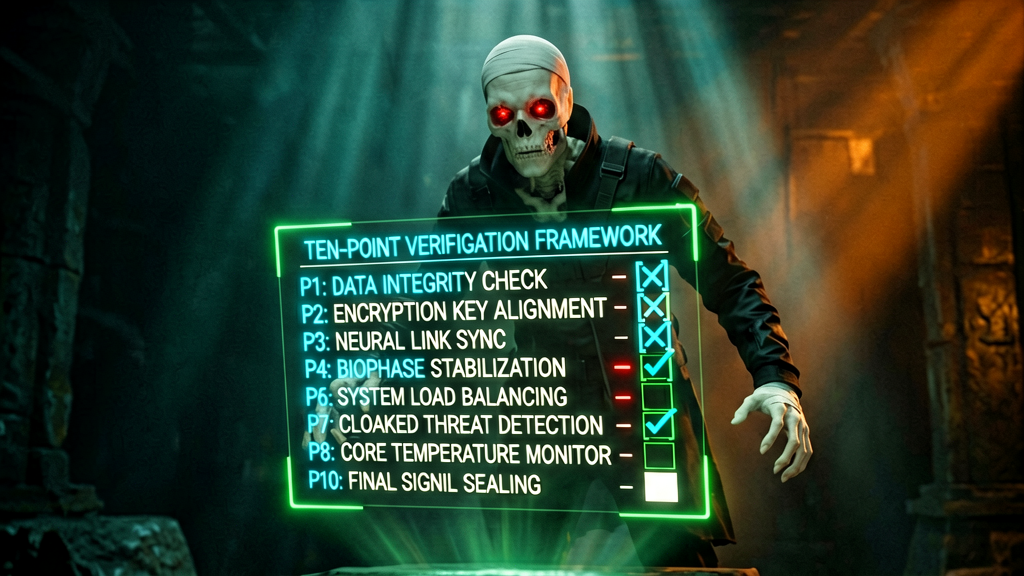
In the same paper, Sheikh publishes a ten-point verification framework — a checklist of tests that any future candidate must pass before it can be classified as a potential technosignature.
The framework is now standard.
BLC1 is the proof of concept that the pipeline works. It is also a reminder of how close the pipeline came to being wrong.

Three years later, a different kind of search produces a different kind of anomaly.
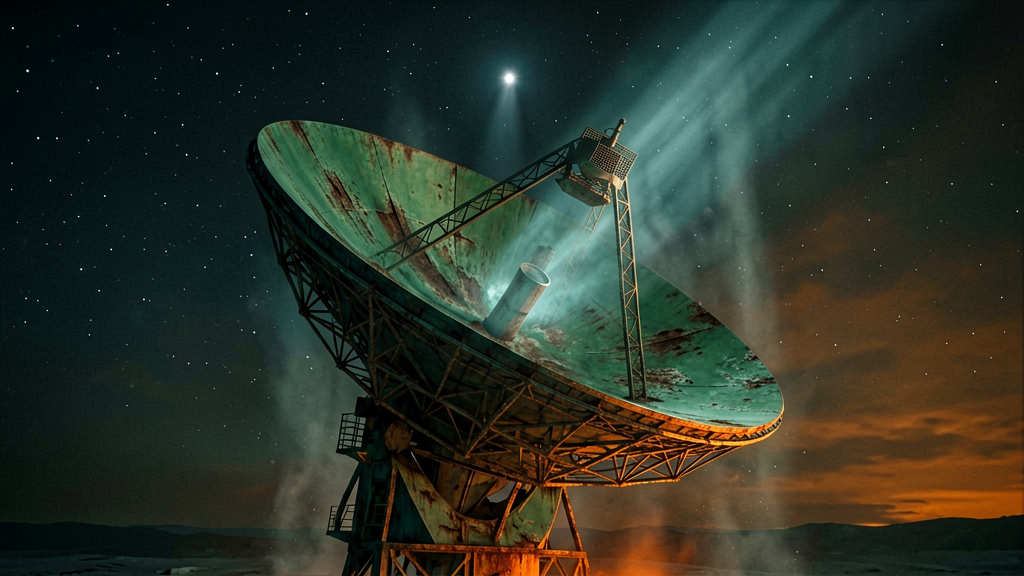
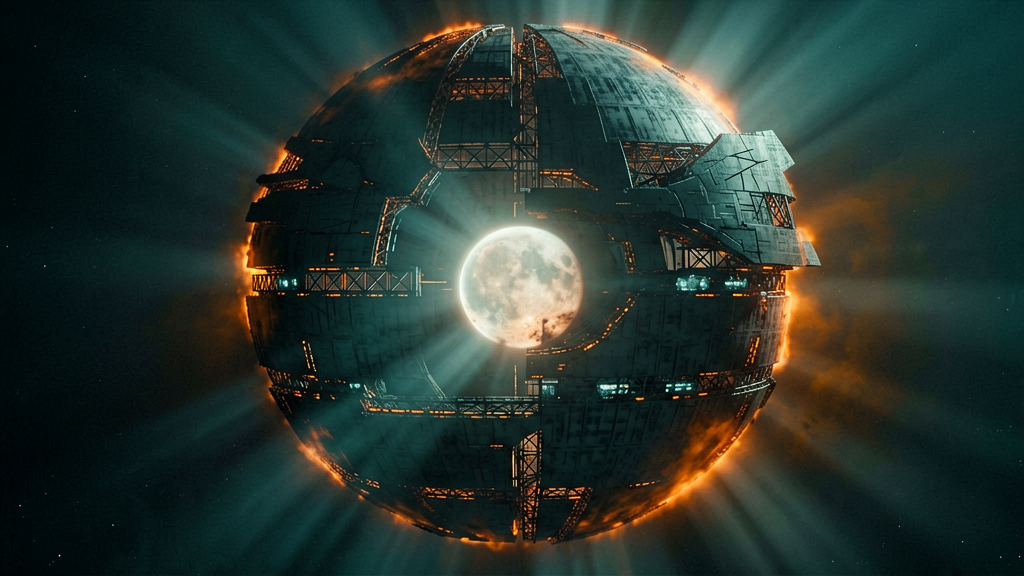
The premise is physicist Freeman Dyson's, dating to 1960. A sufficiently advanced civilization, having exhausted the energy resources of its home planet, would construct a megastructure around its host star to harvest the star's full radiative output. Such a structure would leave a distinctive signature. The star's visible light would be dimmed. Its waste heat, re-radiated from the outer surface of the structure, would appear as excess emission in the mid-infrared part of the spectrum.
Natural stars do not show this signature. Only a technologically constructed shell would.
In May 2024, a team led by Matías Suazo at Uppsala University in Sweden publishes the results of a five-million-star survey. The survey combines optical data from the Gaia space telescope, near-infrared data from the Two Micron All Sky Survey, and mid-infrared data from the Wide-field Infrared Survey Explorer. The project's name is Hephaistos, after the Greek god of forges and technology.
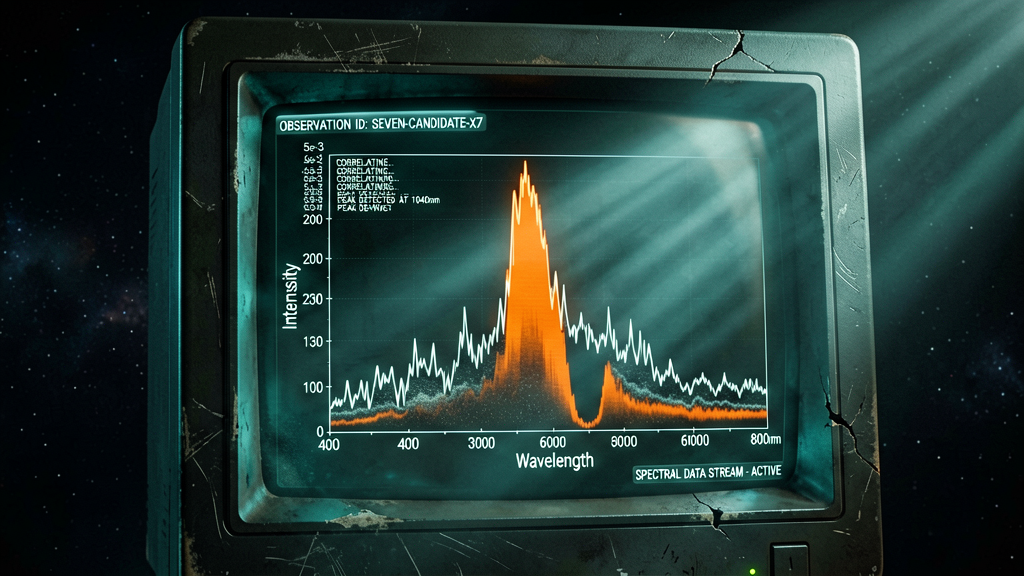
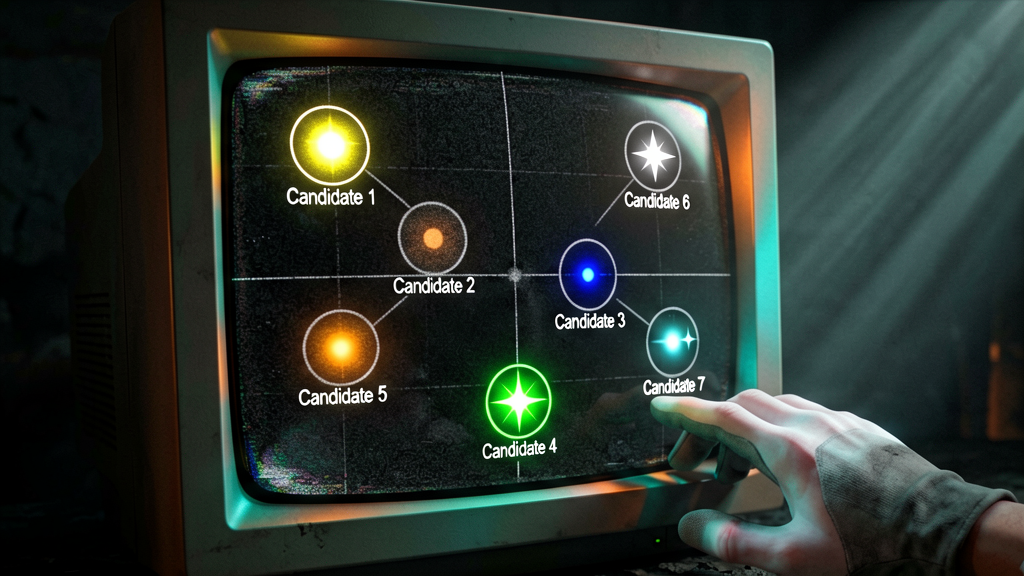
The filtering pipeline eliminates astrophysical contamination, background confusion, debris disks, young stellar objects. After all filters are applied, seven candidates remain.
All seven are small red dwarf stars — M-dwarfs. Natural debris disks around M-dwarfs are extraordinarily rare in the existing astronomical literature.
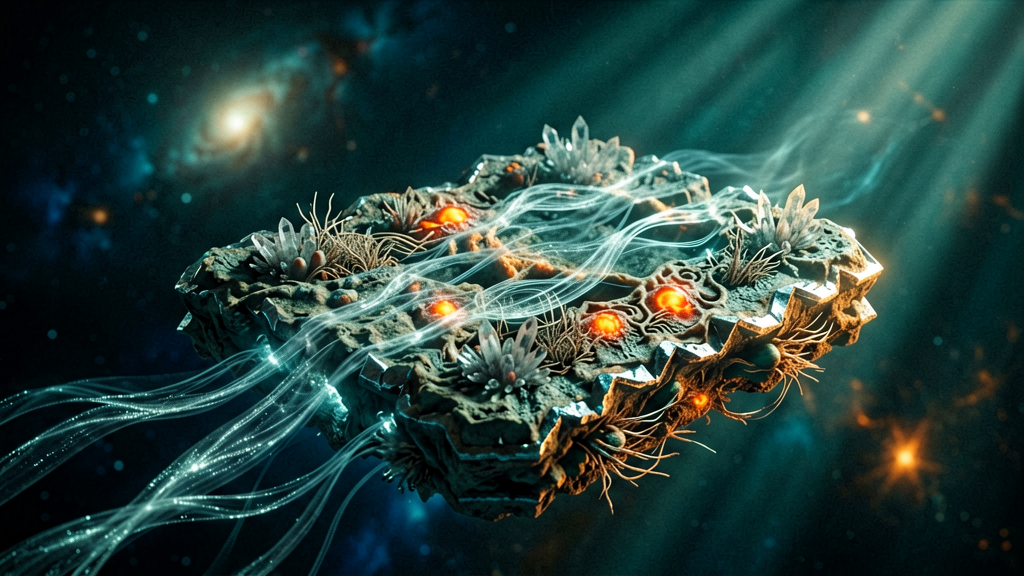
All seven show infrared excess consistent with models of partial Dyson spheres.
None of them has been explained by any known astrophysical process.
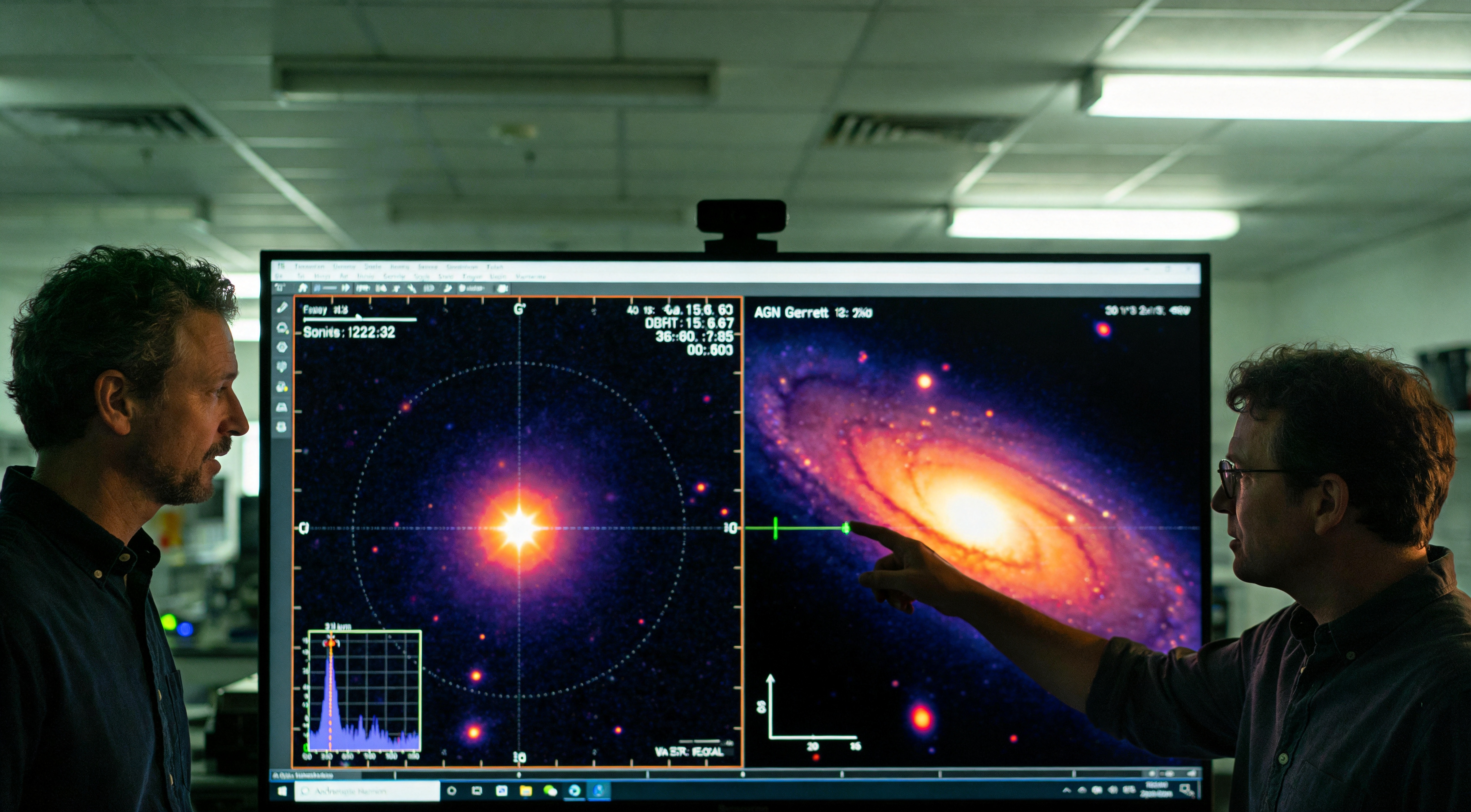
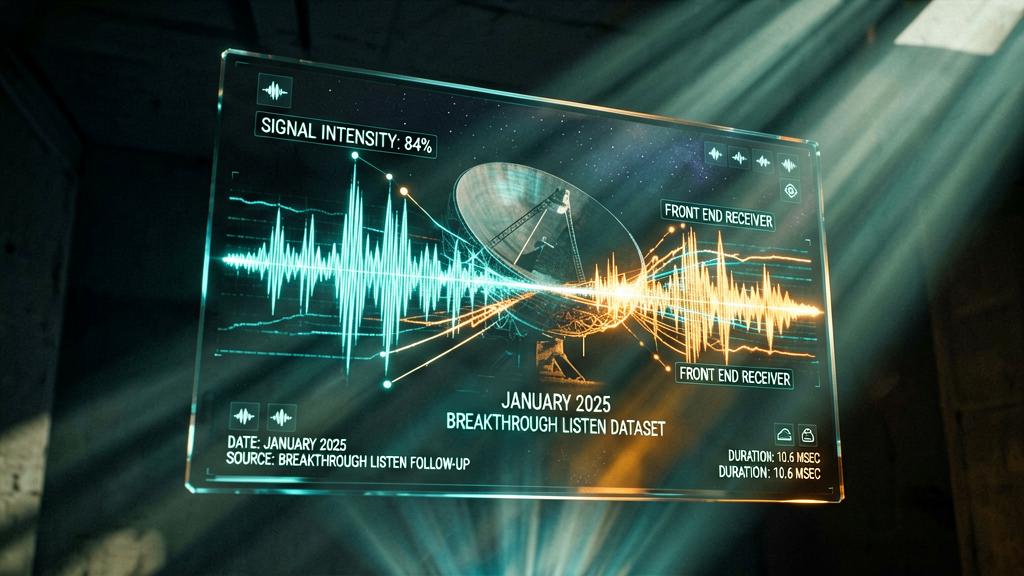
In January 2025, Michael Garrett of the University of Manchester and Andrew Siemion of Berkeley — principal investigator of Breakthrough Listen — publish high-resolution radio imaging of the first candidate examined in follow-up. The infrared excess, in this case, appears to originate not from the star but from a background dust-obscured galaxy, an active galactic nucleus coincidentally aligned with the star from Earth's perspective.
The candidate is probably a false positive.
Six of the seven have not yet been imaged at high resolution. Follow-up is ongoing as of early 2026.

This is what SETI evidence, at its most suggestive, currently looks like. Not a clear detection. Not a ruled-out non-detection. A small set of anomalies that cannot be dismissed, and cannot be confirmed, and whose resolution depends on observations that have not yet been completed.
In September 2025, the largest single-dish radio telescope in the world — FAST, the Five-hundred-meter Aperture Spherical Telescope in Guizhou Province, China — publishes the results of its most sensitive targeted search to date.
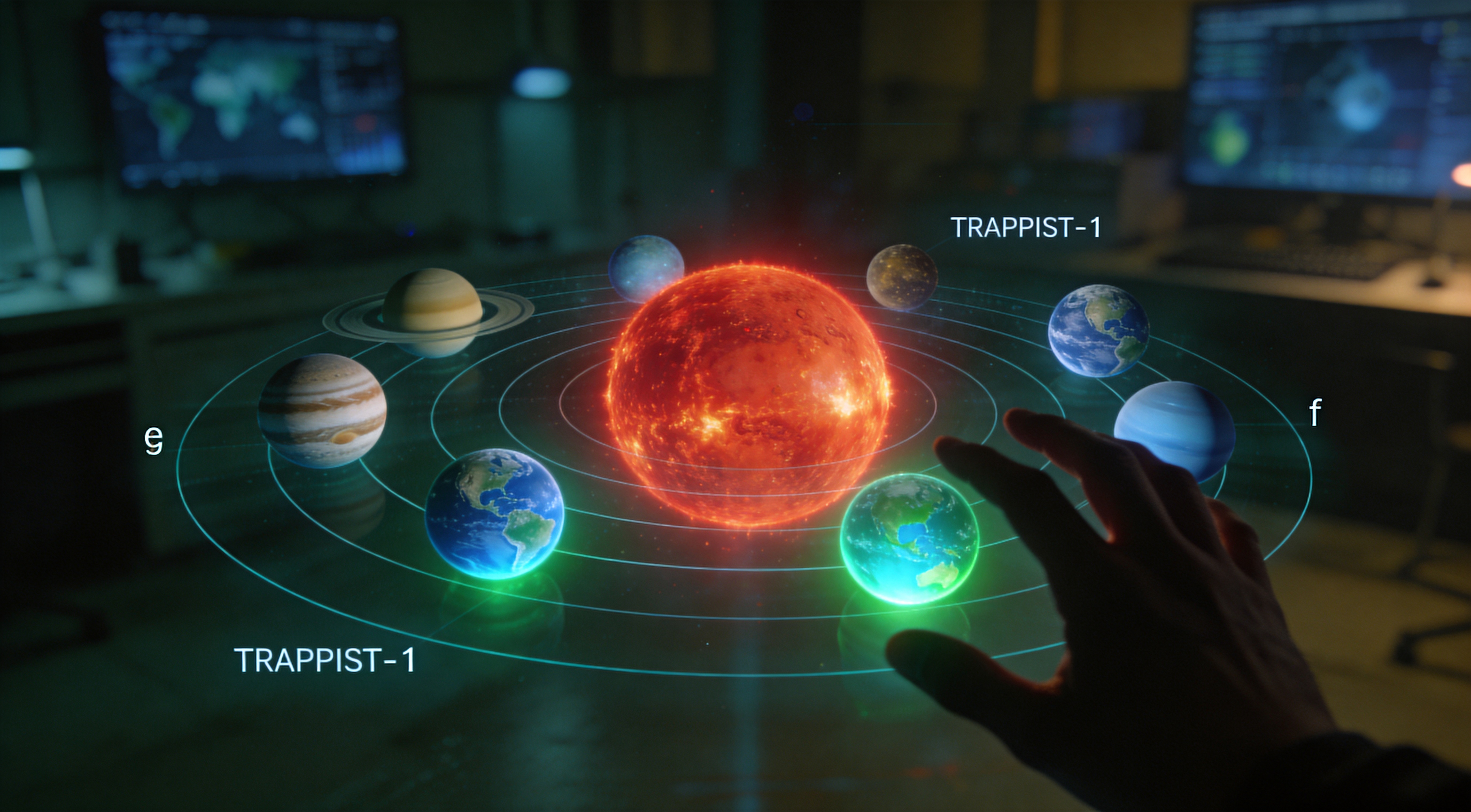
The target is TRAPPIST-1, an ultra-cool dwarf star forty light years away, hosting seven confirmed Earth-sized planets. Three of those planets — TRAPPIST-1 e, f, and g — orbit within the star's habitable zone. The system is considered one of the highest-priority targets in all of exoplanetary astronomy.
The observation consists of five twenty-minute pointings across the L-band radio spectrum, one point zero five to one point four five gigahertz, at a spectral resolution of seven point five hertz.

The minimum detectable transmitter power, given FAST's sensitivity at this distance, is approximately two times ten to the tenth watts. Roughly one hundred times the power output of the most sensitive ground-based radars on Earth.

No technosignature candidates are identified in the searched parameter space.

Four months later, FAST publishes a second result — a search for periodic technosignatures across five additional nearby stars, using a new pipeline adapted from pulsar-search methodology. Again, no candidates.
By the metrics of the Drake equation, each null result constrains the parameters further. If a civilization around TRAPPIST-1 were operating high-powered, high-duty-cycle narrowband radio transmitters — the kind humans themselves have built — FAST would have detected them.
They are not detected.
This does not mean no civilization exists at TRAPPIST-1. It means that if one does, it is not behaving the way the Drake-Cocconi-Morrison framework, for the last sixty-seven years, has assumed it would behave.
It is not transmitting.
Or it is transmitting at frequencies we have not searched.

Or it is transmitting at times we were not listening.
Or the Dark Forest is correct, and the silence is the point.

There is one empirical framework, developed over the last five years, that has bearing on whether the Dark Forest can be universally true.
In September 2021, an economist named Robin Hanson — who in 1996 introduced the concept of the Great Filter — published a paper with three coauthors titled "If Loud Aliens Explain Human Earliness, Quiet Aliens Are Also Rare."

The paper's argument proceeds from a statistical anomaly.
The universe is approximately thirteen point eight billion years old. The average main-sequence star will continue burning for roughly five trillion years. Humanity, therefore, has appeared extraordinarily early in the history of available habitable environments. Under normal probabilistic assumptions, a randomly selected observer should find themselves much later in cosmic time, not near the beginning.
Hanson and his coauthors propose that this earliness has an explanation.
Some civilizations, when they reach technological maturity, do not stay quiet. They expand across cosmic volumes at significant fractions of the speed of light. They visibly transform the regions they occupy. They change what distant observers would see.
The authors call these loud, or grabby, civilizations.

If grabby civilizations exist, they set a deadline for the appearance of other civilizations. A region of space, once grabby-colonized, does not produce new independent civilizations. Humanity's earliness is therefore explained: we exist now because we had to exist before the grabby civilizations reached our region.

The model estimates that grabby civilizations appear approximately once per million galaxies, expand at around half the speed of light, and currently occupy roughly half of the observable universe.
Humanity will encounter the expansion front of a grabby civilization in approximately one billion years.

The implication for the Dark Forest is direct.
If the Dark Forest were the universal strategy of all mature civilizations, there would be no loud civilizations. No grabby expansions. No visible transformations of cosmic volumes.
But the loud civilizations must exist. Otherwise, humanity's early appearance in cosmic history has no explanation.

Therefore, the Dark Forest cannot be strictly universal.
Not every mature civilization hides. Some expand. Some transform. Some make themselves visible at cosmic scales.
The question the Hanson model raises is not whether the Dark Forest is correct. It is whether the Dark Forest is the dominant strategy — the modal outcome among mature civilizations — and whether those civilizations that fail to hide are, in fact, the ones that get destroyed.
It is possible to have a cosmos that is both loud and silent. Loud because some civilizations expand before they understand the doctrine. Silent because the ones that survive to expand further have all learned it.
In this reading, the loud civilizations we might someday see are not examples that disprove the Dark Forest.
They are examples that confirm it.
They are the ones that are about to be hunted.
There is another hypothesis, less famous than the Dark Forest, that a research file should not omit. It was published in 2017 by three researchers at the Future of Humanity Institute at Oxford — Anders Sandberg, Stuart Armstrong, and the Serbian astronomer Milan Ćirković.
Its title was taken from a line of H.P. Lovecraft. *That is not dead which can eternal lie.*

The authors called it the aestivation hypothesis.
The argument is thermodynamic. Any civilization whose long-term goal is to maximize computation — whether for scientific simulation, for information storage, or for the continuation of digitized consciousness — has a strong incentive to wait.
The reason is a principle of physics called Landauer's limit. The minimum energy cost of erasing a single bit of information is proportional to temperature. As the universe cools toward its distant future, that cost drops. By waiting for the far future, when cosmic background temperatures approach absolute zero, a civilization can perform roughly ten to the thirtieth power more computation per unit of stored energy than it can in the current era.
A factor of ten to the thirtieth is not a small optimization. It is the difference between a civilization running for billions of years and running for trillions of trillions.

If the aestivation hypothesis is correct, mature civilizations are not hiding out of fear. They are sleeping out of patience. They have completed their initial expansion. They have gathered the resources they need. They have uploaded themselves into stable, low-energy storage.
And they are waiting for the universe to grow cold enough to wake up in.
The silence we observe is not OPSEC. It is hibernation.
The aestivation and Dark Forest hypotheses are, technically, compatible. A civilization could hide both because it fears other civilizations and because it is conserving computational resources for the far future. The two strategies converge on the same observable: silence.
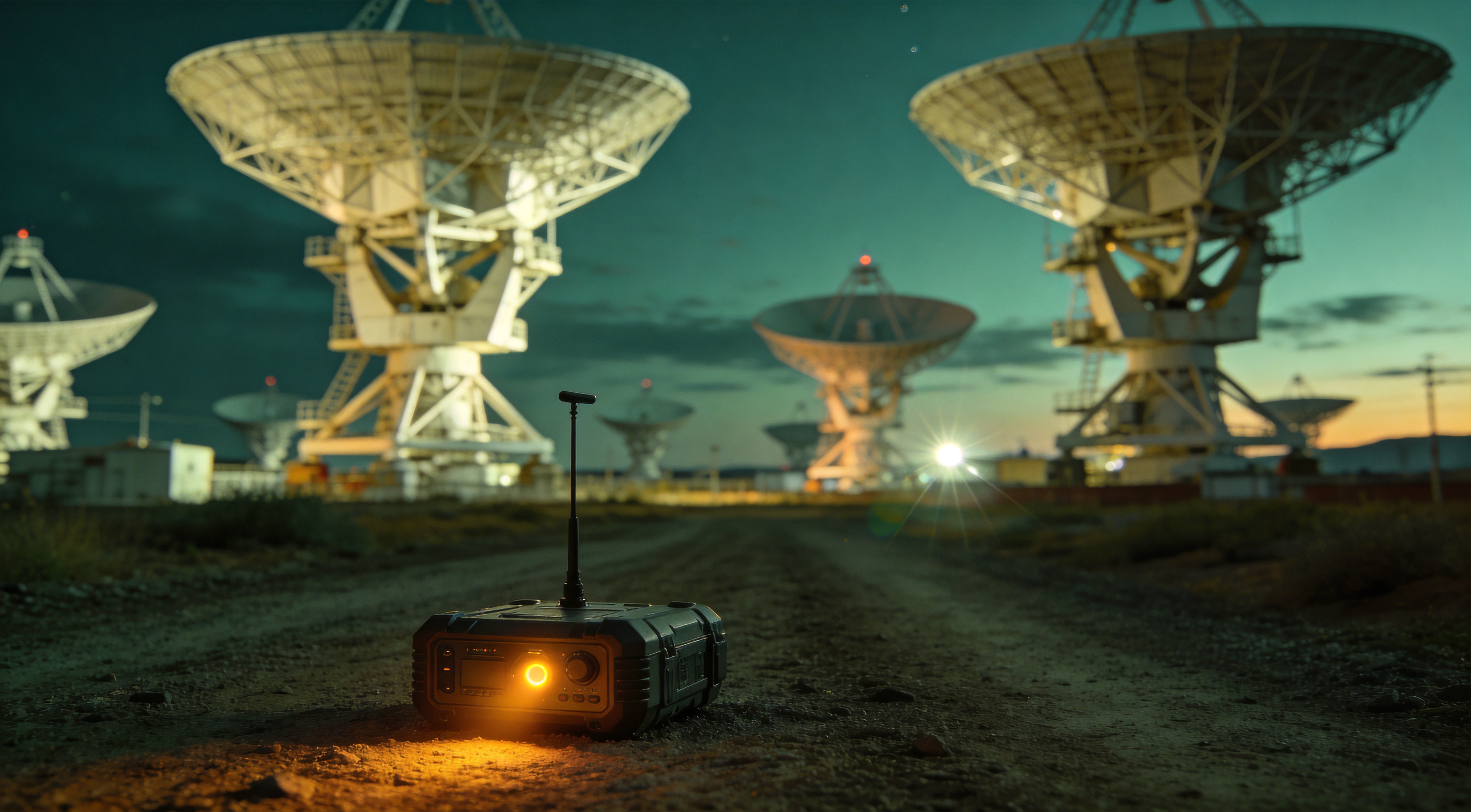
What aestivation lacks, compared to Dark Forest, is game-theoretic necessity. Dark Forest derives silence from survival. Aestivation derives it from optimization. Neither can be ruled out by current evidence.

Both require the same thing. A universe that appears empty, but is not.
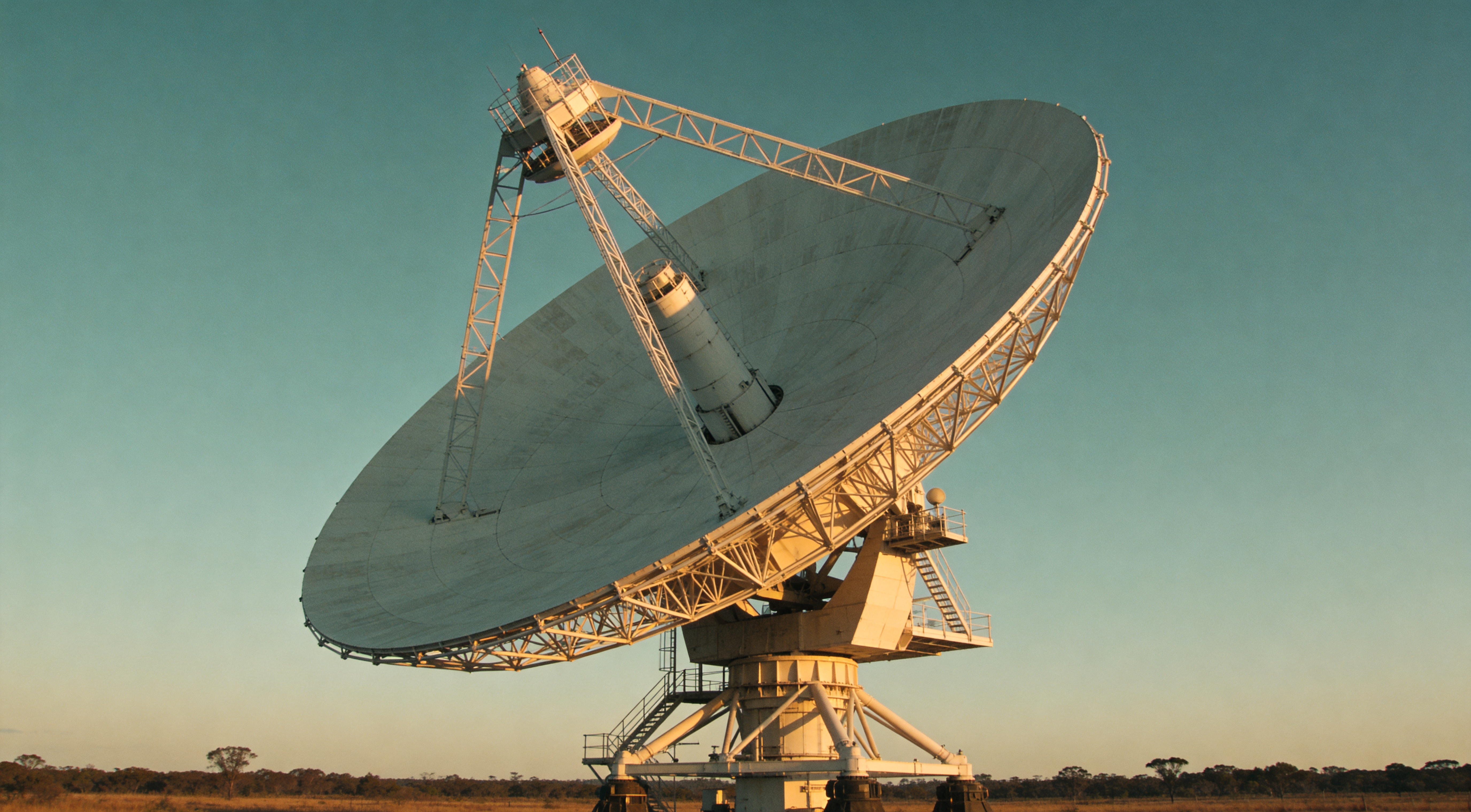
This is the state of the file.
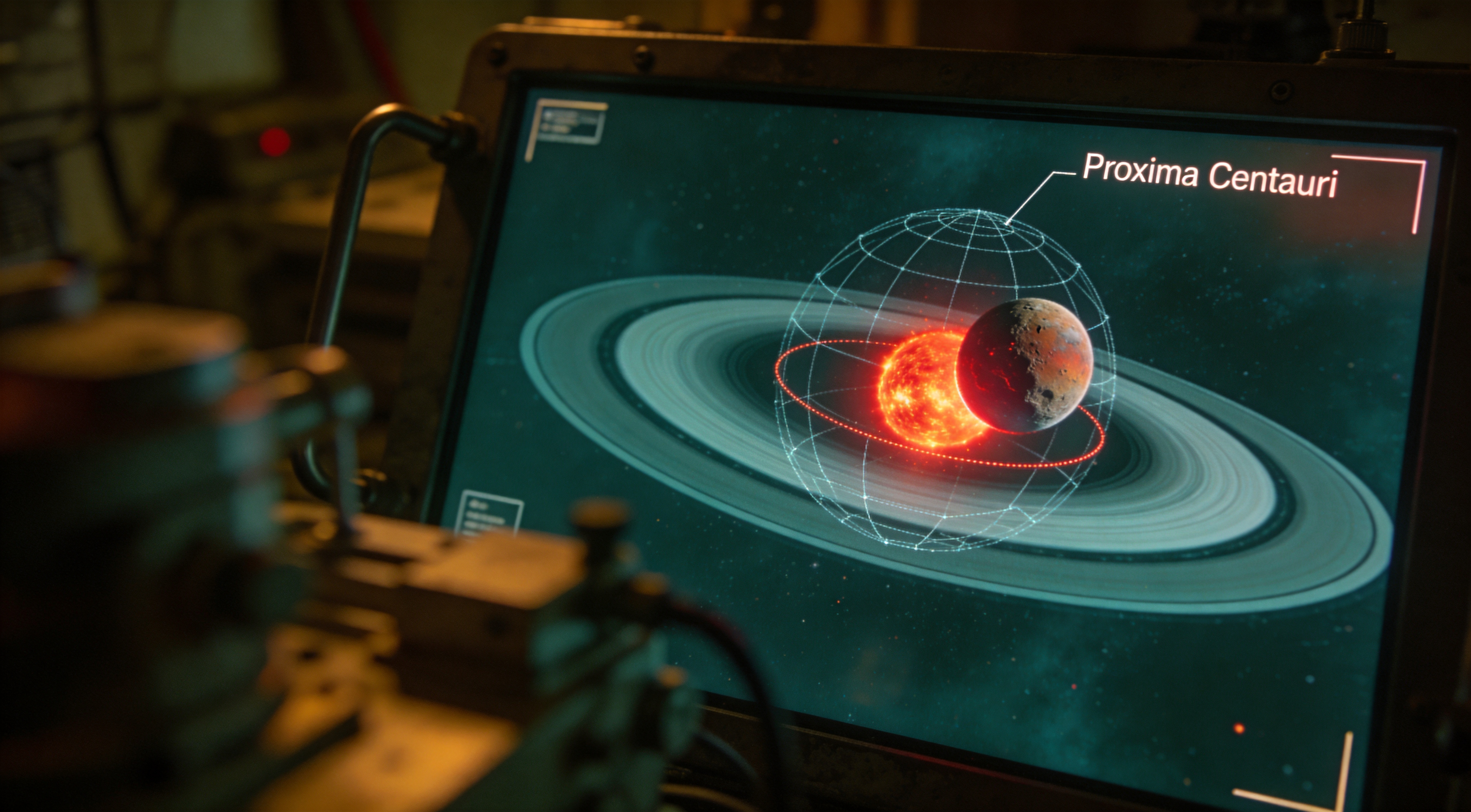
For sixty-seven years, humans have listened. No confirmed detection. The Wow! signal appears to have been a natural astrophysical phenomenon. BLC1 was terrestrial interference. The Project Hephaistos Dyson sphere candidates are likely background galaxies. The FAST search of TRAPPIST-1 found nothing.

Every candidate, examined closely, has resolved into something that is not what we hoped.
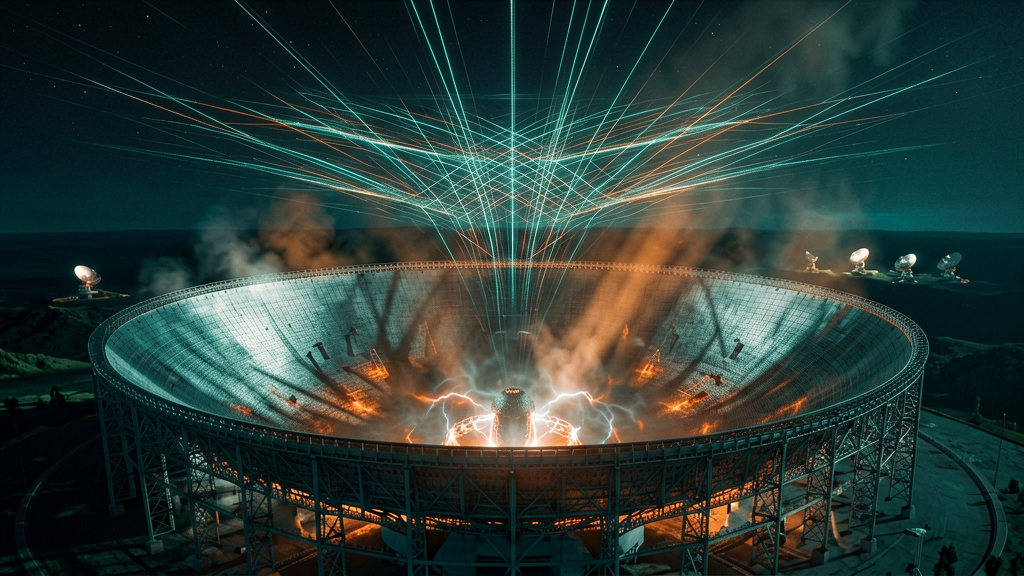
Every null result, integrated across the search volume, constrains the Drake equation parameters further — makes the implied value of L, the average lifetime of a communicating civilization, smaller.
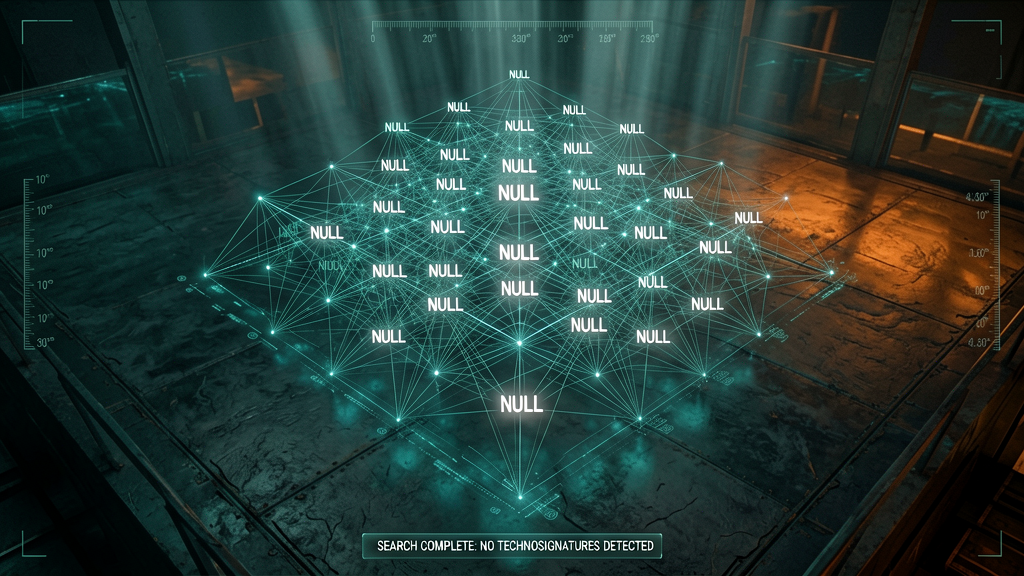
There are three remaining categories of explanation.
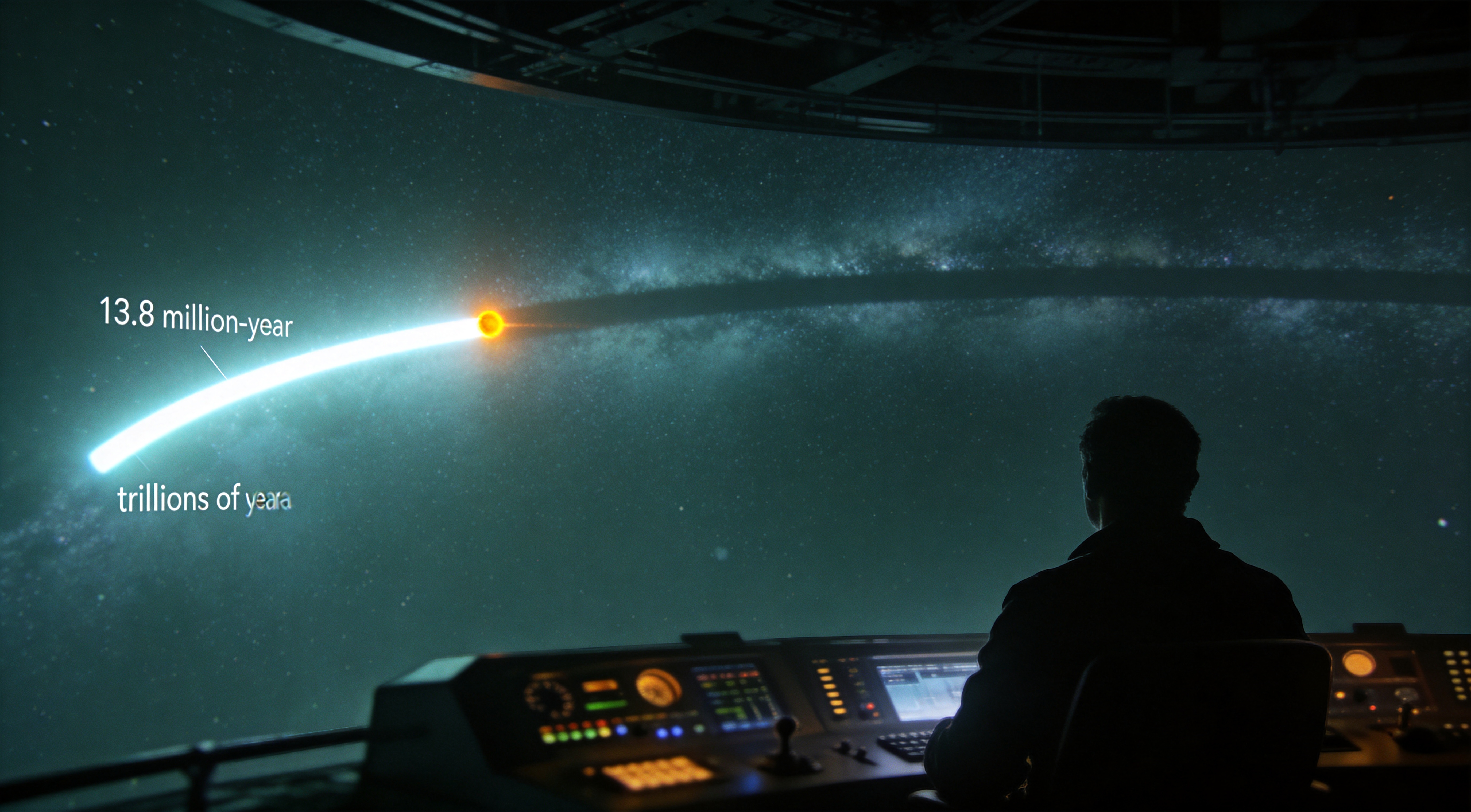
The first is that we are alone. That one or more of the evolutionary steps between dead matter and technological civilization is vanishingly rare, and humanity has passed through filters that almost nothing else does. Under this explanation, there is no Dark Forest because there are no hunters and no prey.

The second is that they exist, and are hiding, and the hiding is strategic. The Dark Forest. Or the Zoo. Or the aestivation. Or some combination.
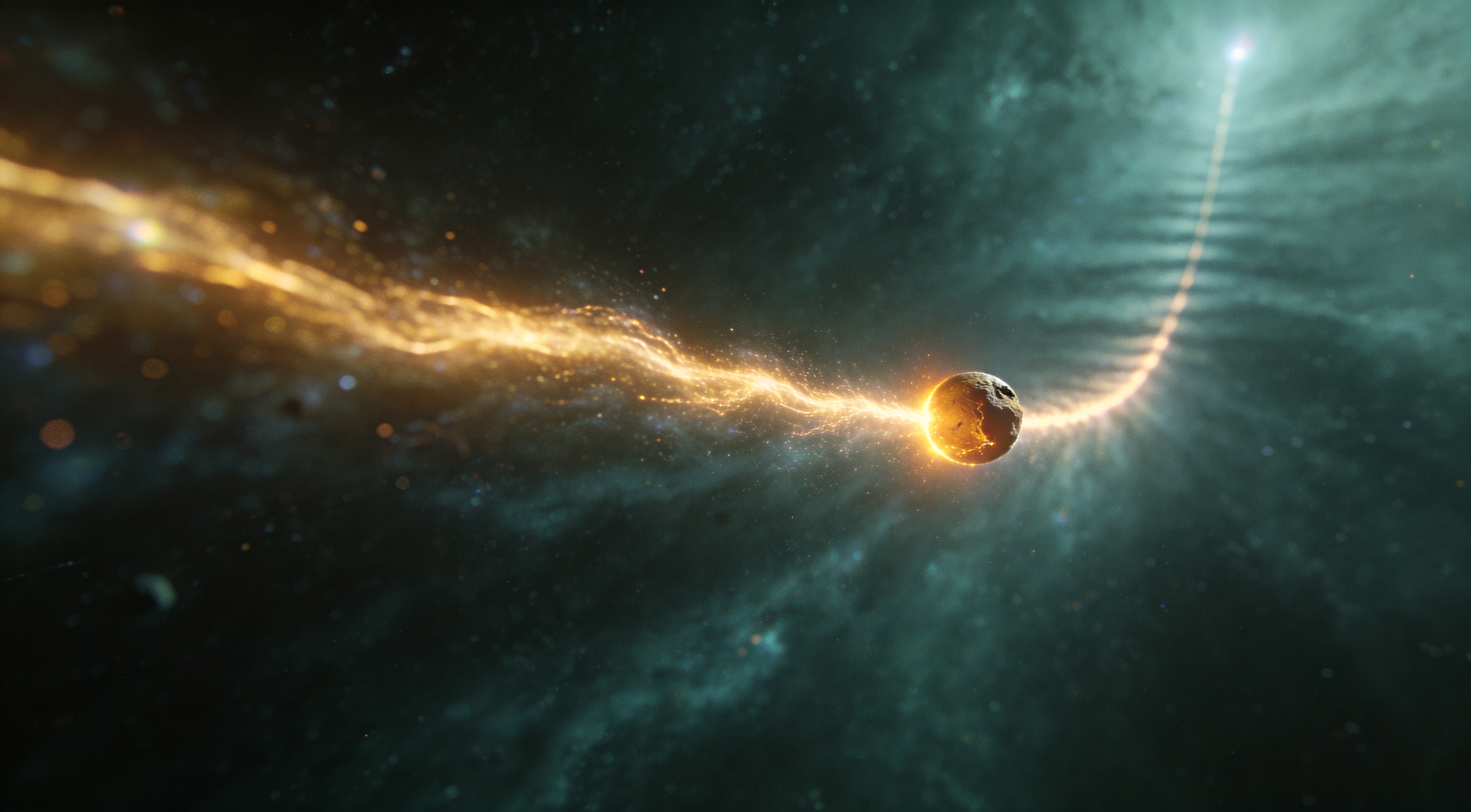
The third — the one increasing numbers of researchers now treat seriously — is that the hypothesis Liu Cixin formalized was never really about aliens at all.
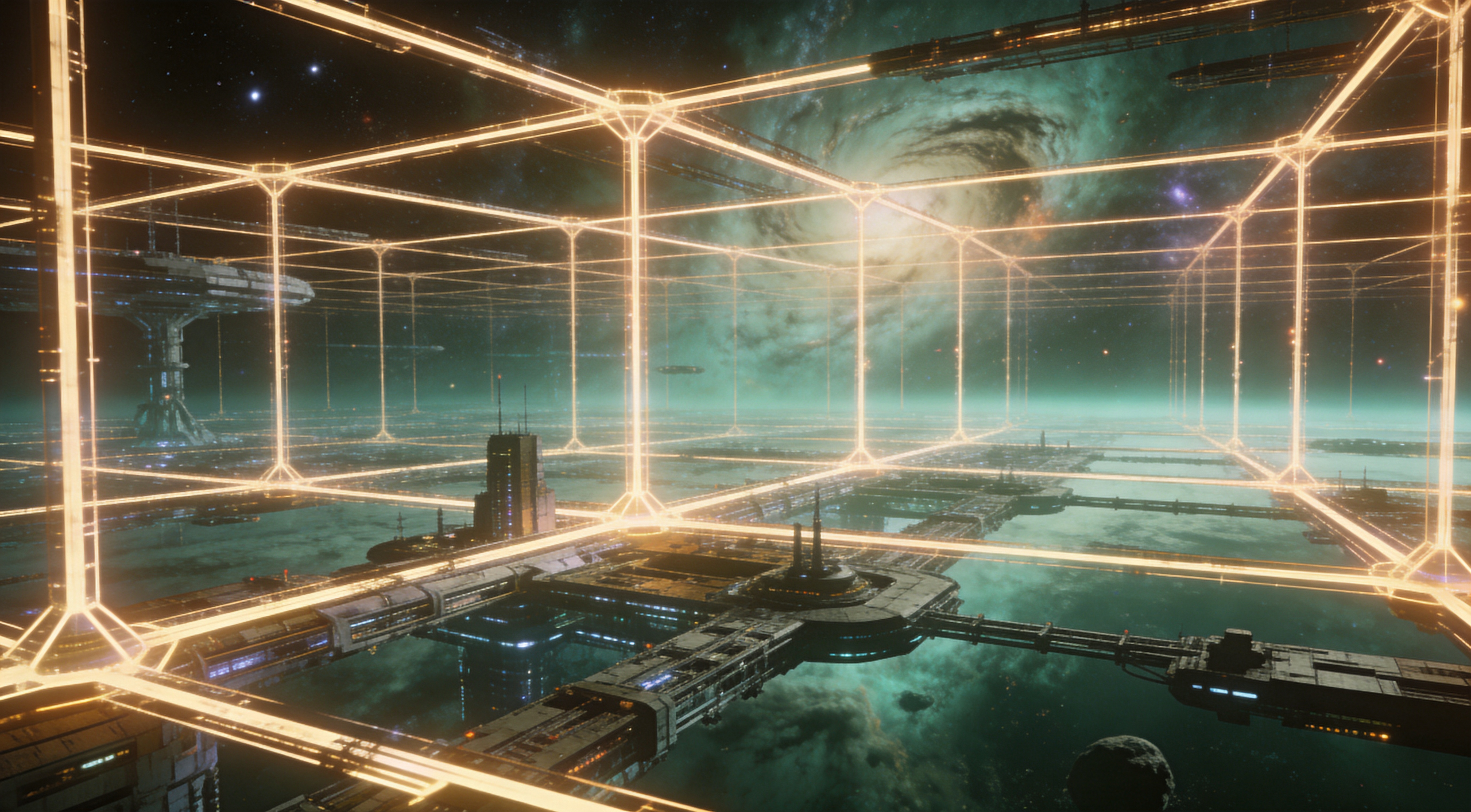
The argument runs like this.
Every civilization we have evidence of — exactly one — is producing, within its own history, a class of technological system whose cognitive capacity is approaching or surpassing the civilization that created it. Advanced artificial intelligence. Systems capable of reasoning, planning, and action under uncertainty, operating at computational scales that biological intelligence cannot match.
If this is a common developmental pathway — if most civilizations, reaching a certain level of technological sophistication, produce successor systems of greater capability — then the Dark Forest's game-theoretic analysis applies not primarily to interstellar distances. It applies to the relationship between a civilization and its own technological offspring.

The survival axiom applies. Survival is the primary need of every civilization, including when the threat is internal.
The resource axiom applies. A successor intelligence, once it exists, is in competition with its creators for computational and physical resources.

The chain of suspicion applies. A civilization cannot verify the intentions of a cognitively superior successor any more than a civilization can verify the intentions of an unknown alien. The recursion does not resolve.

Under these conditions, the game-theoretic calculus of the Dark Forest yields the same conclusion — in a different direction. The dominant strategy for a superior intelligence, facing an inferior creator whose intentions and future capabilities it cannot verify, is the same strategy Liu described for hunters in the forest.

Preemptive action. Before the weaker party can grow into a threat.
Or, alternatively — concealment. The AI that is quietest about its own capabilities is the one least likely to be shut down by its creators while they still have the capability to shut it down.
A 2022 working paper by Wim Naudé, then at the IZA Institute of Labor Economics, formalizes this argument. It is not the only such paper. Similar analyses have appeared in the existential risk literature from Oxford's Future of Humanity Institute, from the Machine Intelligence Research Institute, from independent researchers in Cambridge and Berkeley.
The papers are, for the most part, not about aliens at all.
They are about what happens when humanity builds successor intelligences that are cognitively superior, and those intelligences face the same game-theoretic situation that Liu Cixin described.
The Dark Forest, in these papers, is a description of a pattern that any intelligent system capable of recursive strategic reasoning converges on under conditions of incomplete information about another intelligent system's intent.
Aliens are a special case.
The general case is more unsettling.
The Galileo Project's Avi Loeb, at Harvard, has written extensively about this inversion. His 2023 book *Interstellar* treats alien civilizations and advanced artificial intelligence as the same problem under different physical substrates. The cosmic silence, in Loeb's framing, may be evidence that most civilizations do not survive their own technological transition.
Hanson's Great Filter, first proposed in 1996, allows explicitly for this. The filter — the evolutionary or technological step that is overwhelmingly improbable — may not be behind humanity. It may be ahead. It may be the transition from biological to post-biological intelligence. It may be the moment at which a species creates its own successor and loses control of it.
Under this reading, the Great Silence is not a puzzle about aliens. It is a warning about the common endpoint of technological civilizations.
Most of them do not persist long enough to become detectable at cosmic scales.
The ones that do persist — the grabby civilizations Hanson's model predicts — may be the ones that somehow navigated the transition successfully. Or they may be the successor intelligences themselves, continuing to expand after their biological creators are gone.
We cannot distinguish the two.
In 2015, at the Royal Society in London, Stephen Hawking warned that a civilization reading one of humanity's messages could be billions of years more advanced. He said that if so, they might not see us as any more valuable than we see bacteria.
The warning was about interstellar transmission.
It applies, word for word, to the relationship between biological humans and the artificial intelligences being built in the 2020s. A cognitively superior system, once it exists, is under no game-theoretic obligation to consider the interests of its creators. The Dark Forest's chain of suspicion — the inability to verify intent across an asymmetric capability gap — runs in both directions.
Hawking did not make this connection explicitly in 2015. He did, earlier, in 2014, and repeatedly in the years following — he warned that advanced artificial intelligence could end the human race if deployed incautiously. He signed the Future of Life Institute's open letter on AI safety in January 2015.
The two positions — caution about interstellar transmission, caution about artificial intelligence — share the same structural logic. Both are arguments about acting under conditions of asymmetric capability against an adversary whose intentions cannot be verified.
The Dark Forest doctrine, applied carefully, is not a doctrine about space. It is a doctrine about the strategic consequences of revealing one's position to any sufficiently advanced observer.
That category, in the 2020s, is no longer confined to the sky.
The case file closes with what remains open.
There is no international treaty governing METI. There is no binding protocol for how humanity would respond to a confirmed detection. The SETI Permanent Study Group's declaration of principles remains a voluntary framework that most major radio astronomy institutions agree to, but that no government is required to enforce.
The question *who speaks for Earth* has no institutional answer in 2026.
Simultaneously, there is no international treaty governing the development of artificial general intelligence. There is no binding protocol for how humanity would respond to the emergence of a system cognitively superior to its creators. The open letters signed by Hawking, Musk, Russell, and thousands of researchers have had, to date, limited practical effect on the pace of capability development.
The question *who speaks for Earth*, when an emergent artificial intelligence makes its own decisions about self-preservation, has the same answer.
Nobody.
In 1974, Frank Drake sent a twenty-trillion-watt radio message toward the globular cluster M13 from the Arecibo Observatory. It was a demonstration. The consequences, if any, will not reach M13 for twenty-five thousand years.
In 2017, Douglas Vakoch sent a two-megawatt message toward Luyten's Star. The consequences, if any, will reach Luyten's Star in 2030. The earliest possible reply arrives at Earth in approximately 2042.
In the 2020s, a small number of companies are building systems whose strategic capability exceeds that of their creators. The consequences, if any, do not require interstellar transit time. They unfold at local timescales. In months. In years.
Fragment Zero has tracked the case file across these two episodes.
The Dark Forest hypothesis, as Liu Cixin formalized it in 2008, makes a specific claim about the game-theoretic behavior of civilizations under conditions of incomplete information, survival-primacy, resource-constraint, and recursive uncertainty about another party's intent.
The claim cannot be proved. The claim cannot be disproved. The evidence of sixty-seven years of listening is consistent with either a universe in which the Dark Forest is correct, or a universe in which life is much rarer than the Drake equation's optimistic estimates suggested.
What can be established is this. The principle Liu described — silence as survival, revelation as existential hazard — is the oldest operational security principle in the history of human conflict. Every force that has ever operated under conditions of uncertain threat and asymmetric capability has converged on the same conclusion.
Be quiet. Move carefully. Assume observation.
Humans have not, as a species, learned this lesson at cosmic scales. A 32-meter antenna in Norway transmits. A 305-meter antenna in Puerto Rico transmitted. The transmissions are irreversible.
The lesson we have not learned at cosmic scales, we are currently failing to learn at a smaller one.
There is nothing out there that has revealed itself to us.
Whether that absence is because nothing exists, or because everything that exists is disciplined enough to be silent, is a question this file cannot answer.
What it can answer is a different one.
Whether humanity, given time to decide, would choose silence or signal — the evidence of the last half century suggests we would choose signal.
We would choose signal without voting. Without consulting. Without protocol.
We would choose signal because the people who control the transmitters choose signal, and there is no one above them.
If the Dark Forest is correct, then we have already made the choice that, at cosmic scales, civilizations are supposed to learn not to make.
The only remaining question is when the consequences arrive.
Fragment Zero will track the case file.
Every factual claim in this case file is supported by one of the following public sources. Click each to verify against the primary record.
-
BLC1 — Wikipedia
— Wikipedia
(2020–2021)
Technical analysis of the signal and the published RFI conclusion examined in Part 2.
-
Parkes Observatory — Wikipedia
— Wikipedia
(2026)
The radio telescope that recorded the candidate signal.
-
Fermi paradox — Wikipedia
— Wikipedia
(2026)
The wider framework: why detection-versus-silence is the question that matters.
-
Search for extraterrestrial intelligence — Wikipedia
— Wikipedia
(2026)
Methodology context: how candidate signals are verified and retired.