Megafauna Vanished In A Geological Instant. The Black Sediment Layer Tells What Hit Them.
This case file is produced by Fragment Zero's editorial team. Original research, sourcing, and narrative analysis are performed by human editors. Voiceover is synthesized; visual illustrations are AI-generated. Every factual claim is cited to public documents, peer-reviewed publications, or named primary sources. See methodology and disclaimer.
Megafauna Vanished In A Geological Instant. The Black Sediment Layer Tells What Hit Them.
In three years, the temperature in Greenland fell by ten degrees Celsius.
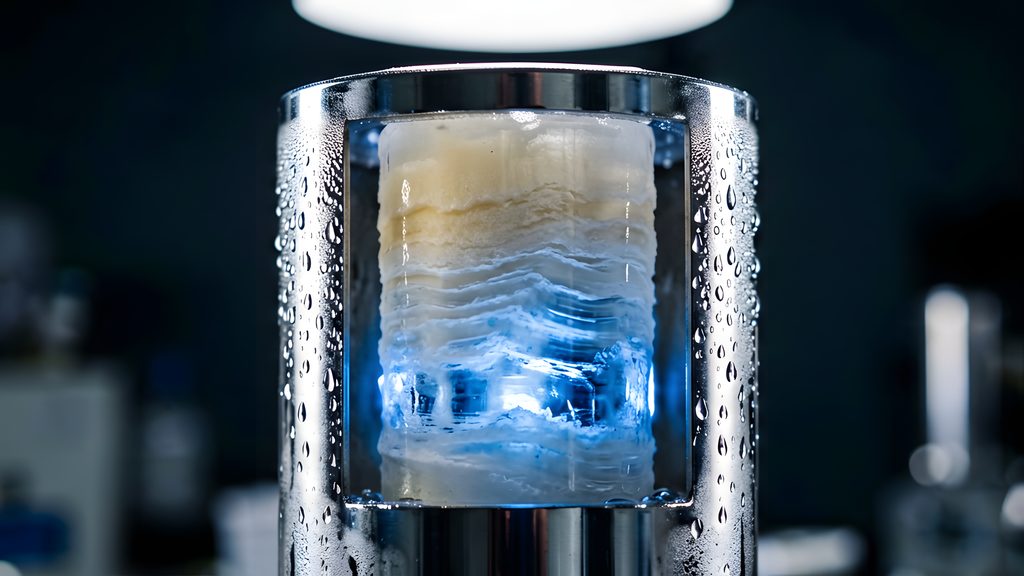
Not over a decade. Not over a century. Three years.
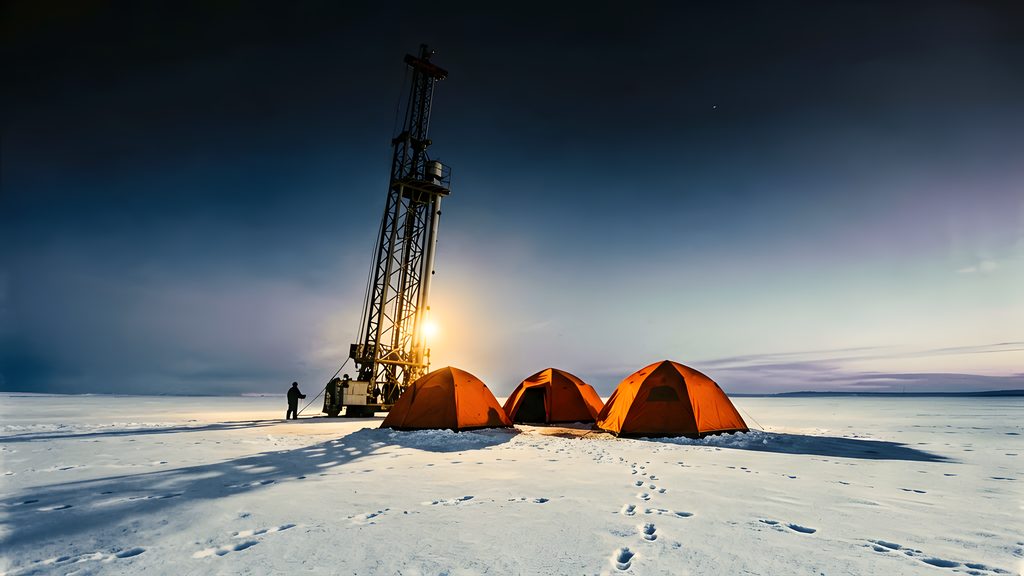
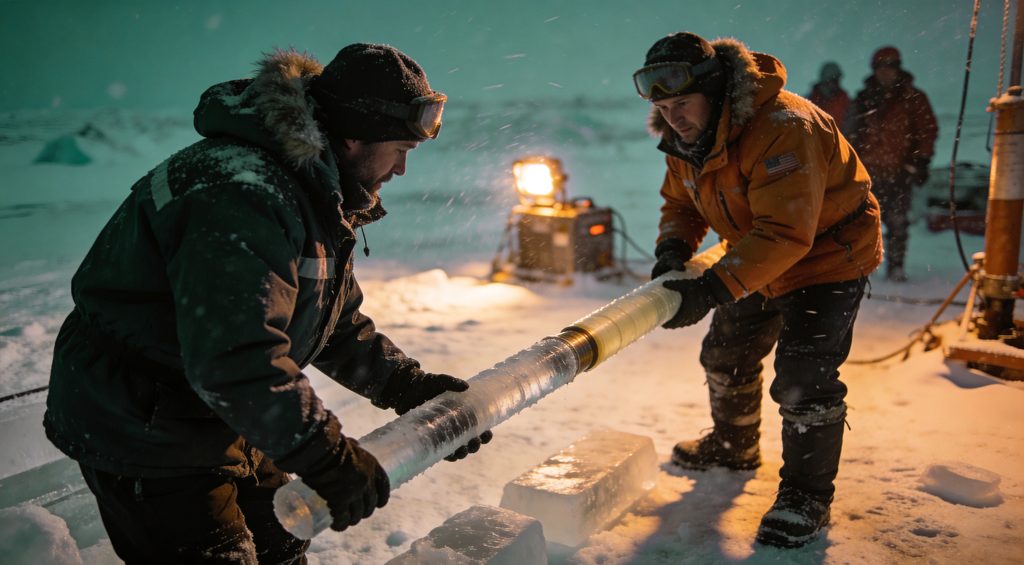
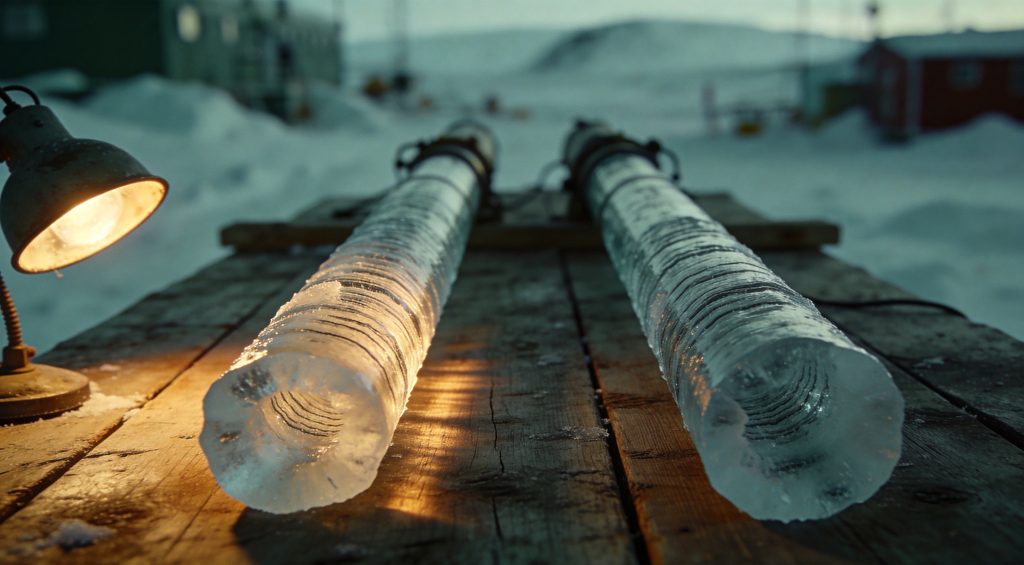
This happened approximately twelve thousand nine hundred years ago. The evidence is preserved in the layered ice of the Greenland ice sheet, in the GISP2 and GRIP cores extracted by international research teams in the nineteen nineties. The cooling was global. North America dropped three degrees. Europe dropped between two and six. The planet's climate did not slowly degrade. It collapsed.
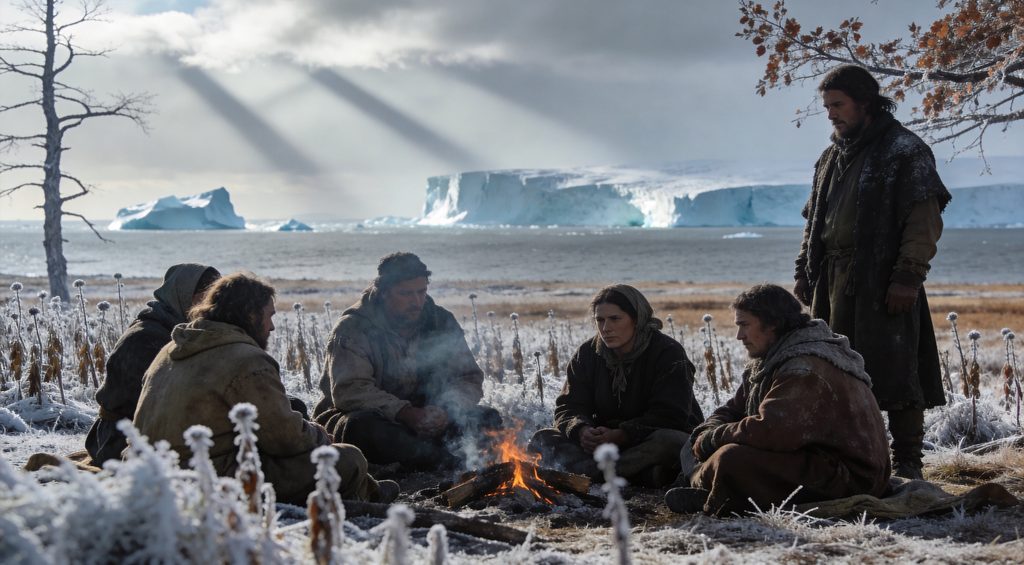
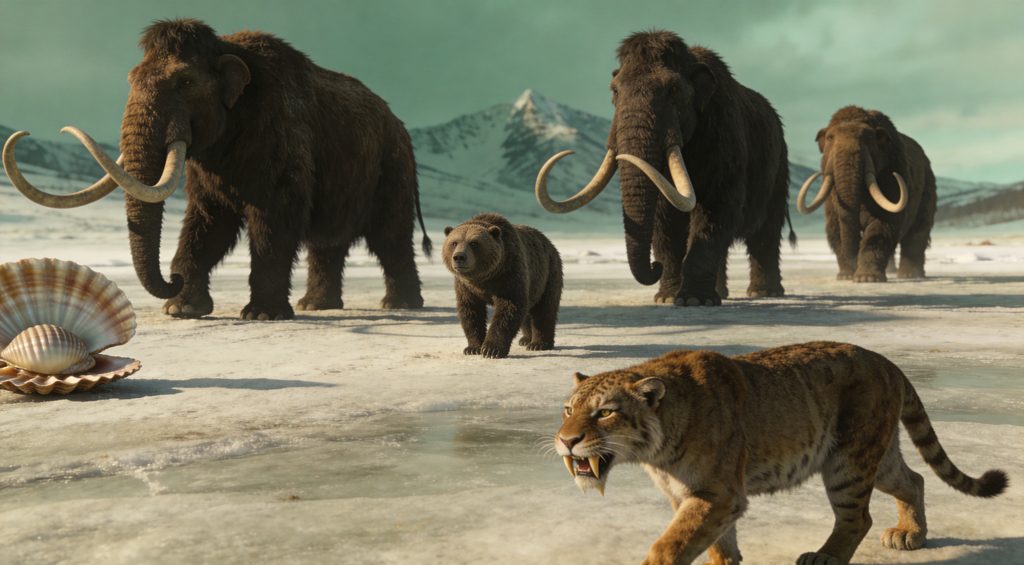
The event is called the Younger Dryas. It lasted approximately one thousand three hundred years. During that interval, the woolly mammoth, the American mastodon, the saber-toothed tiger, the giant ground sloth, and most of the rest of the Pleistocene megafauna of North America disappeared. The Clovis people, the dominant human culture of the continent, vanished from the archaeological record at the same boundary.
For over fifty years, geologists, paleoclimatologists, and archaeologists have tried to determine what caused it.
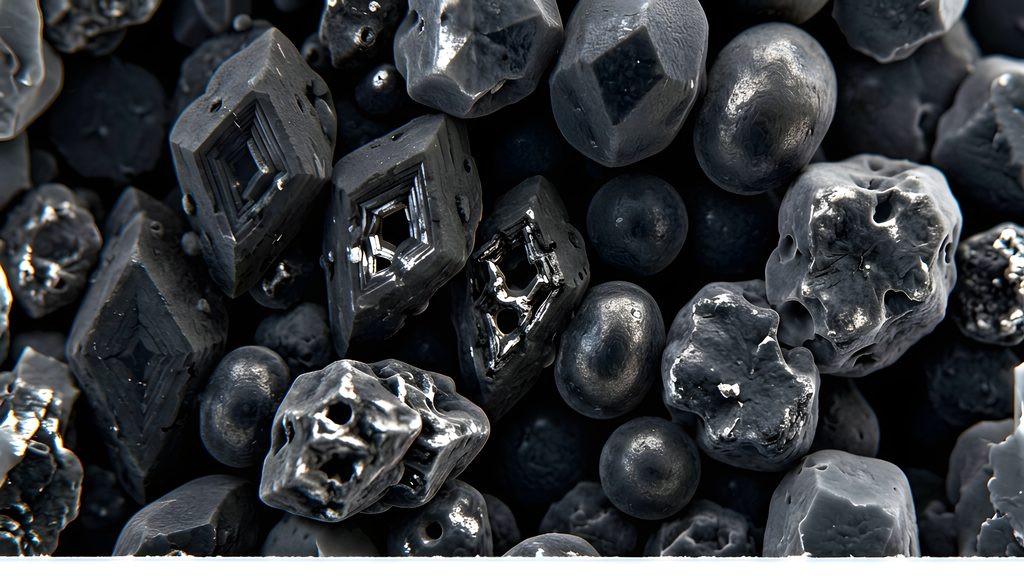
In two thousand seven, a research consortium proposed an answer that would, if true, change the entire chronology of the late Pleistocene.

The answer was: a cosmic impact.

What followed was eighteen years of evidence, counter-evidence, vindication, retraction, and a single Greenland crater that briefly looked like the smoking gun and then turned out to be fifty-eight million years old.

This is Fragment Zero, Case File forty-four. The planet's most consequential climate event in the last twenty thousand years, and the open question that geology has not been able to close.

To understand what was lost, you have to understand what an ice core is.

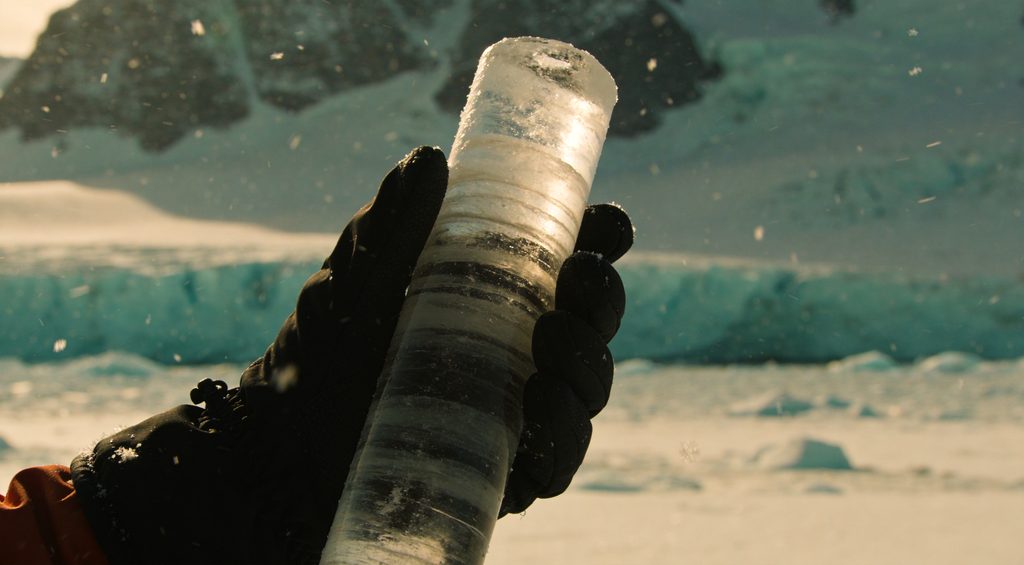
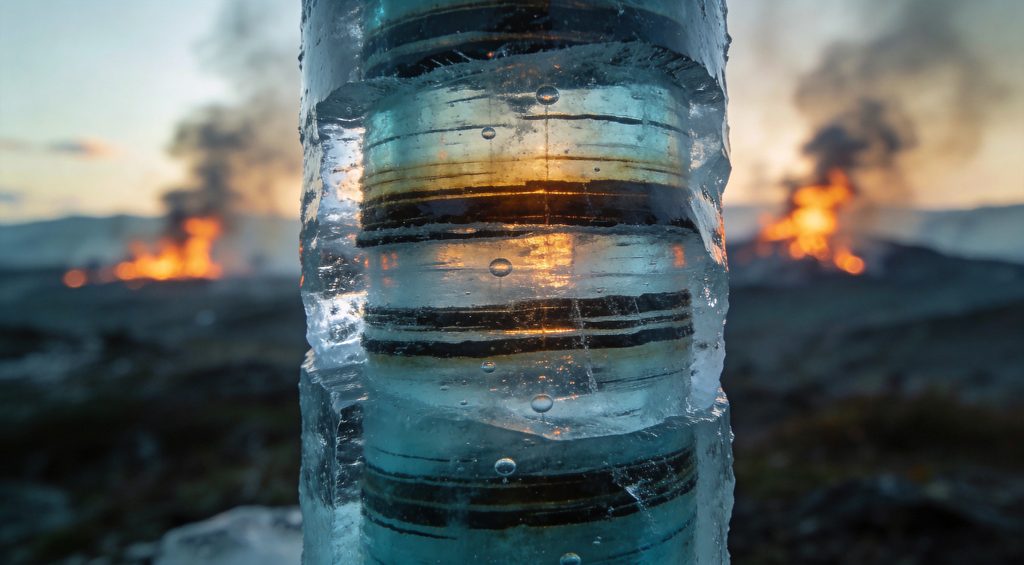
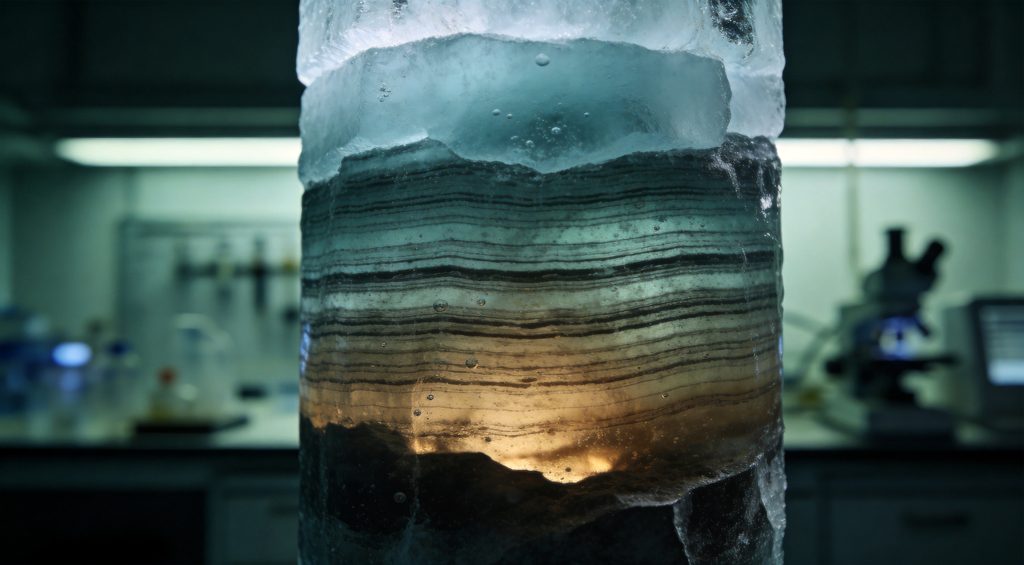
When snow falls on Greenland, it does not melt. It accumulates. Each year's snow is buried by the next year's snow, and over centuries the lower layers compress into ice. Air bubbles trapped between snowflakes preserve a sample of the atmosphere from the year the snow fell. Chemical impurities — dust, sulfate from distant volcanoes, sea salt from coastal storms, soot from continental fires, isotopes of oxygen that record temperature — are locked into the ice in chronological order, layer by layer, year by year.

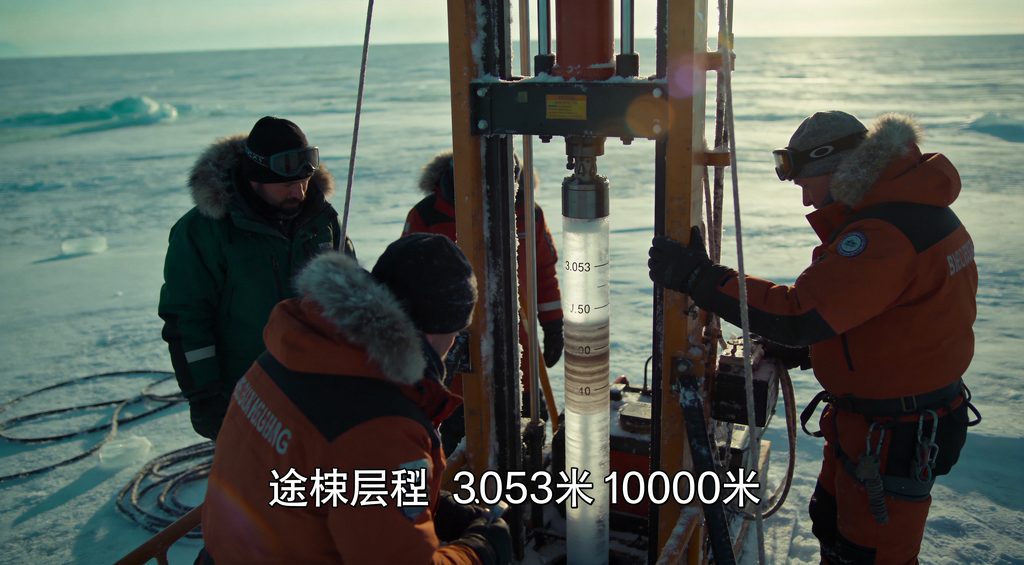
A Greenland ice core is a vertical timeline. The top is recent. The bottom is older than human civilization. The Greenland Ice Sheet Project Two core, drilled at a remote station called Summit between nineteen eighty-nine and nineteen ninety-three, extends three thousand fifty-three meters into the ice. The deepest layers it sampled formed over one hundred thousand years ago.

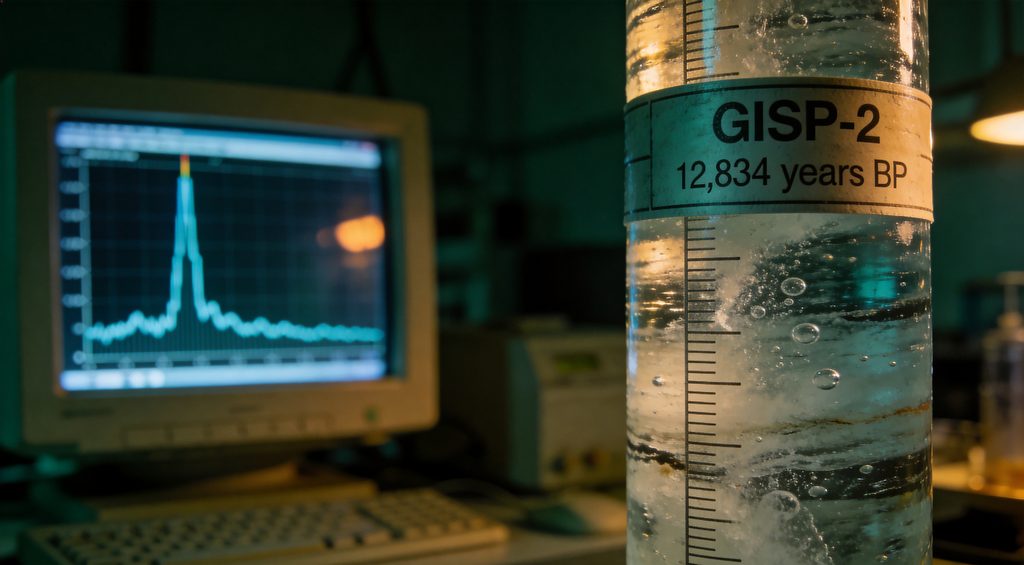
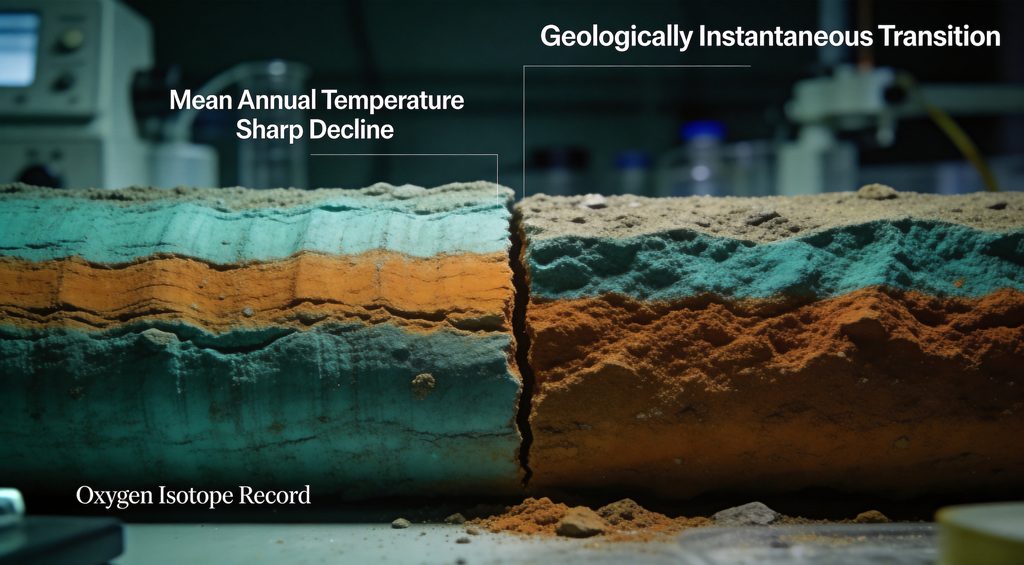
When researchers in Boulder, Copenhagen, and Bern read the GISP2 record, they found that at a depth corresponding to approximately twelve thousand eight hundred and thirty-four years before the present, something extraordinary happened. The oxygen isotope ratio that records mean annual temperature dropped sharply. The transition was not smooth. It happened, in geological terms, instantaneously.

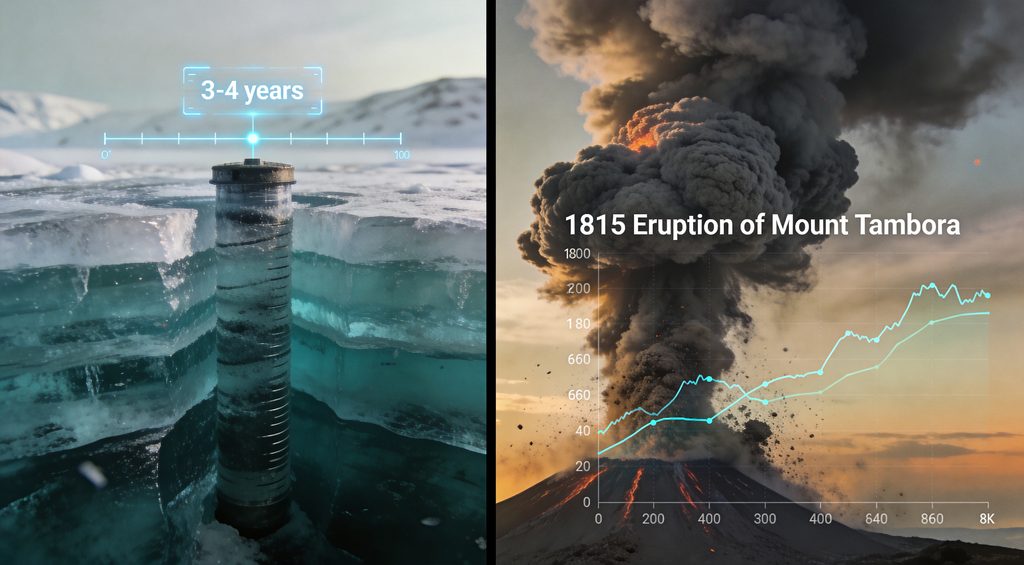
A subsequent re-analysis using high-resolution layer-counting determined that the cooling at Greenland was complete within three to four years.

For comparison: the climate change caused by the eighteen fifteen eruption of Mount Tambora — the largest volcanic event in recorded history, which produced the so-called Year Without a Summer of eighteen sixteen — cooled the global average temperature by about half a degree Celsius for one year.
The Younger Dryas onset cooled Greenland by ten degrees and held it there for over a millennium.
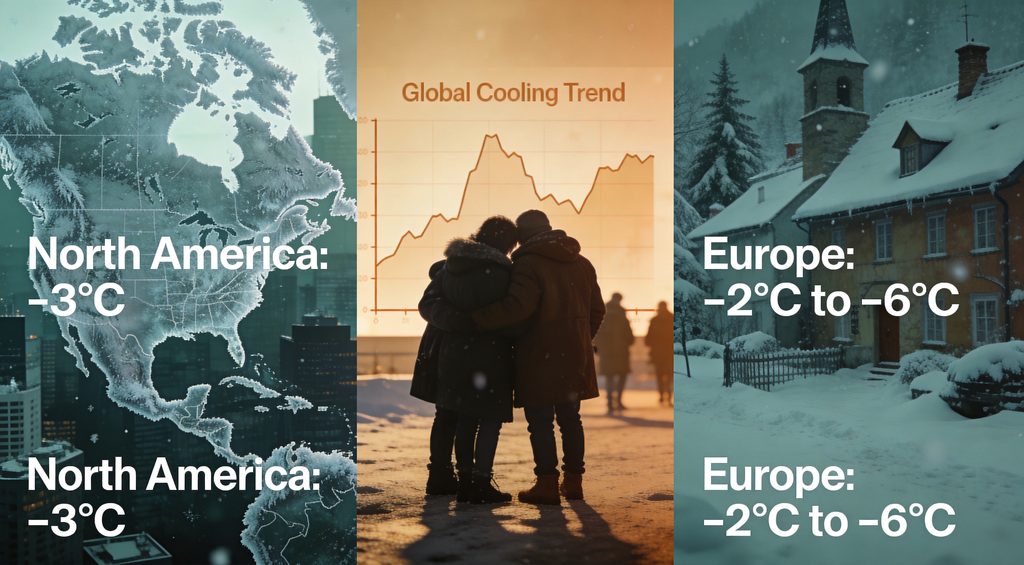
Whatever happened at twelve thousand nine hundred years before present was an order of magnitude larger than anything geology has documented within the human historical record.

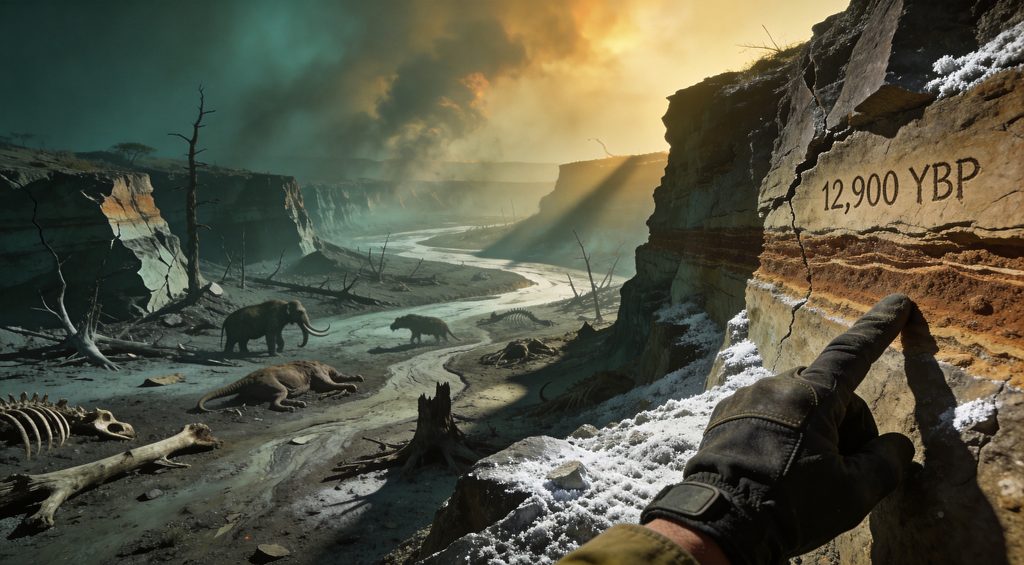
The ecological consequences are catalogued in the bone record.
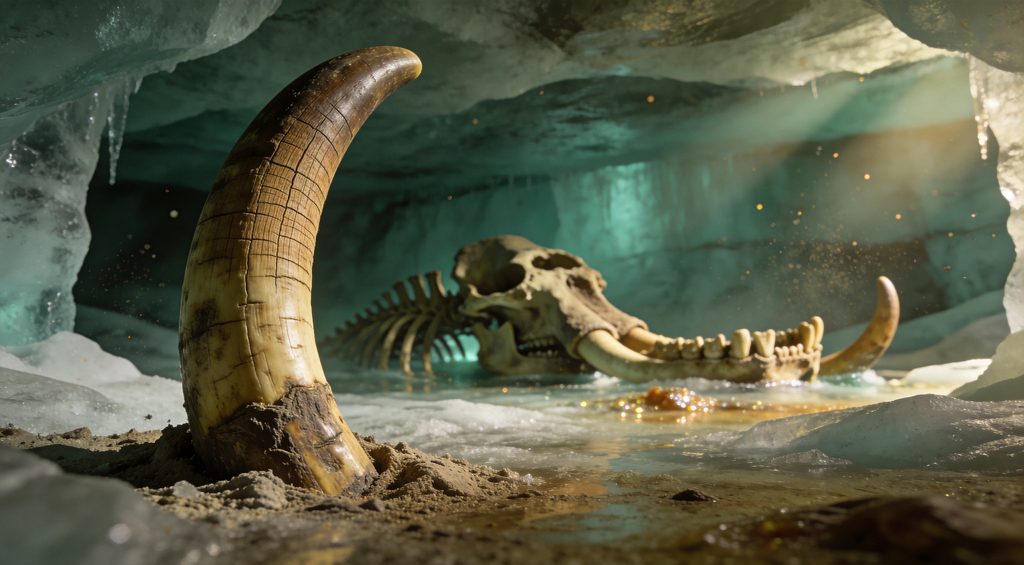
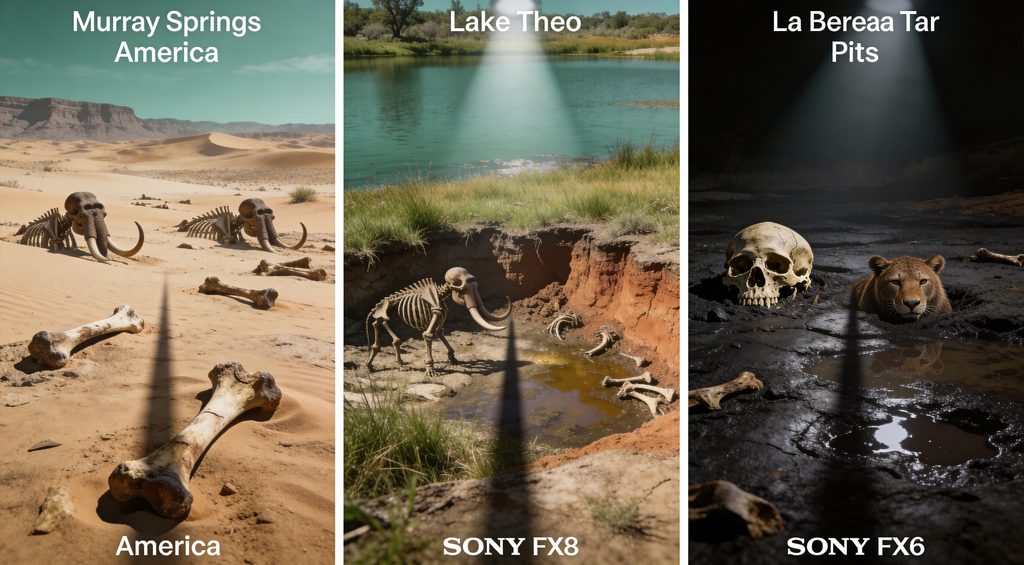
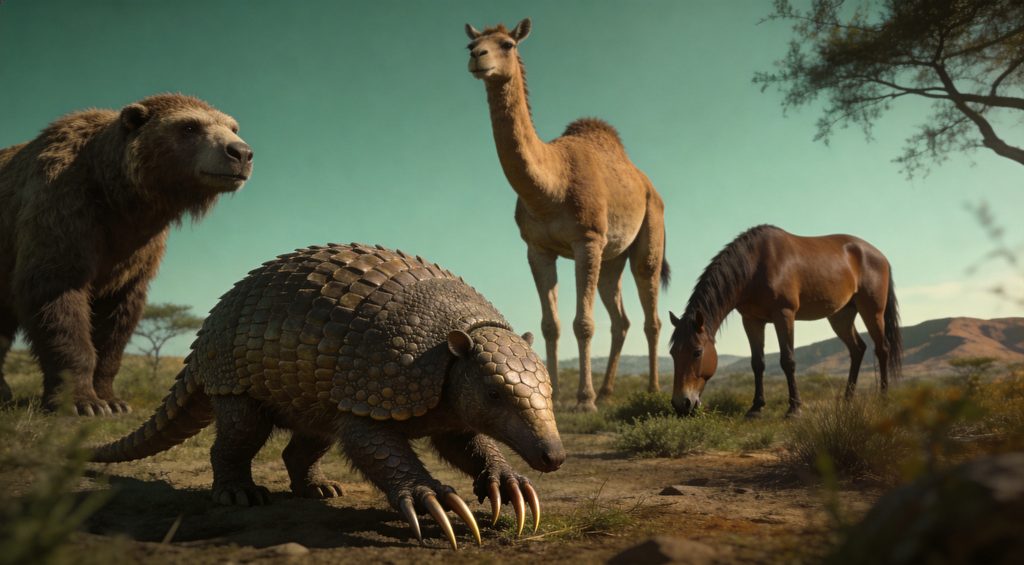
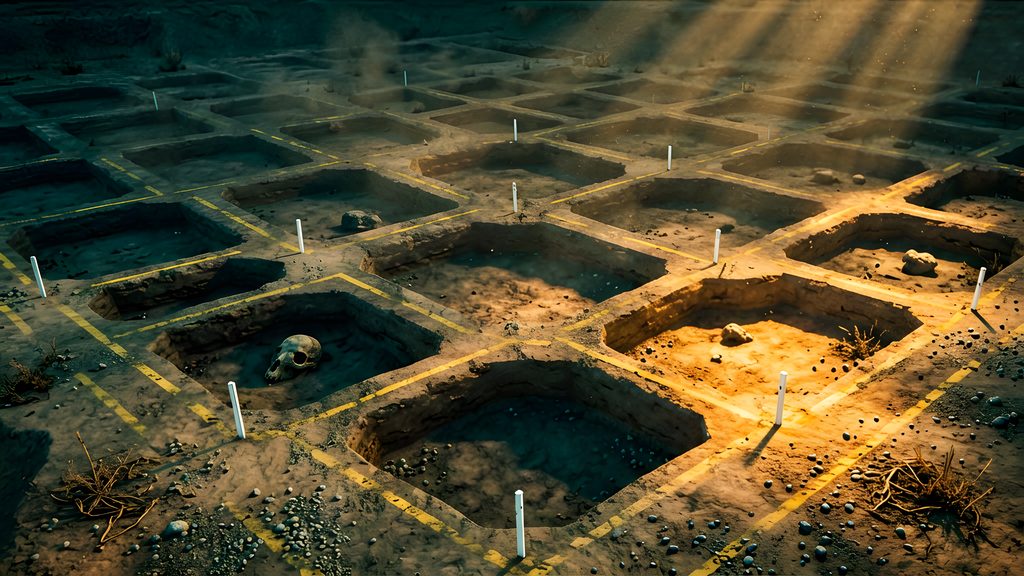
At sites across North America — Clovis kill sites in Arizona, Murray Springs, Lake Theo, the La Brea tar pits in California — the bones of the great Pleistocene fauna stop appearing in the sediment column at the Younger Dryas boundary. The species that vanished include Mammuthus columbi, the Columbian mammoth, ranging across the southern United States. Mammuthus primigenius, the woolly mammoth, across Alaska and the Yukon. Mammut americanum, the American mastodon. Smilodon fatalis, the saber-toothed cat. Megalonyx, the giant ground sloth. Camelops, the western camel. Equus, the New World horse. Glyptotherium, the armored armadillo-relative the size of a small car.
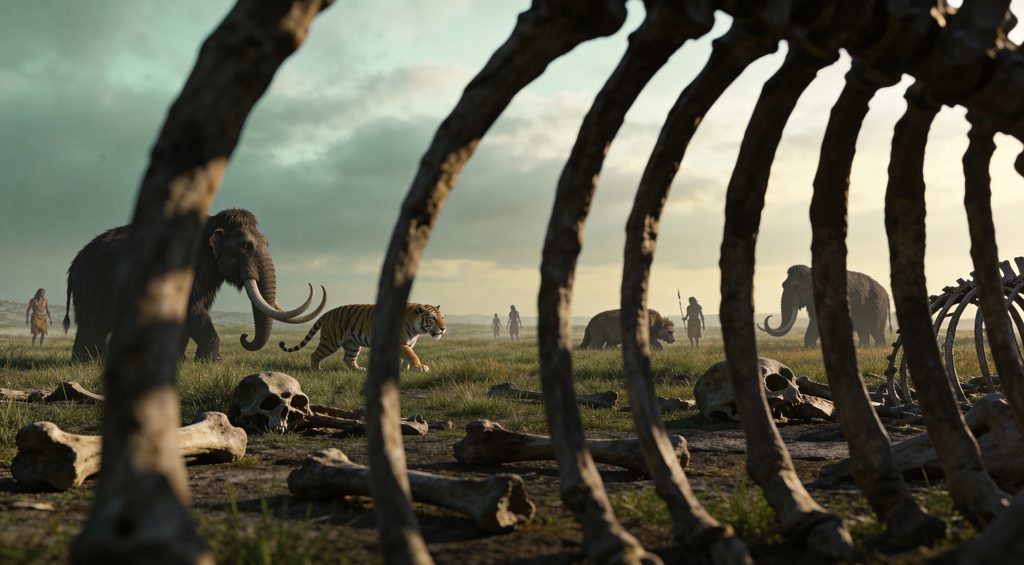
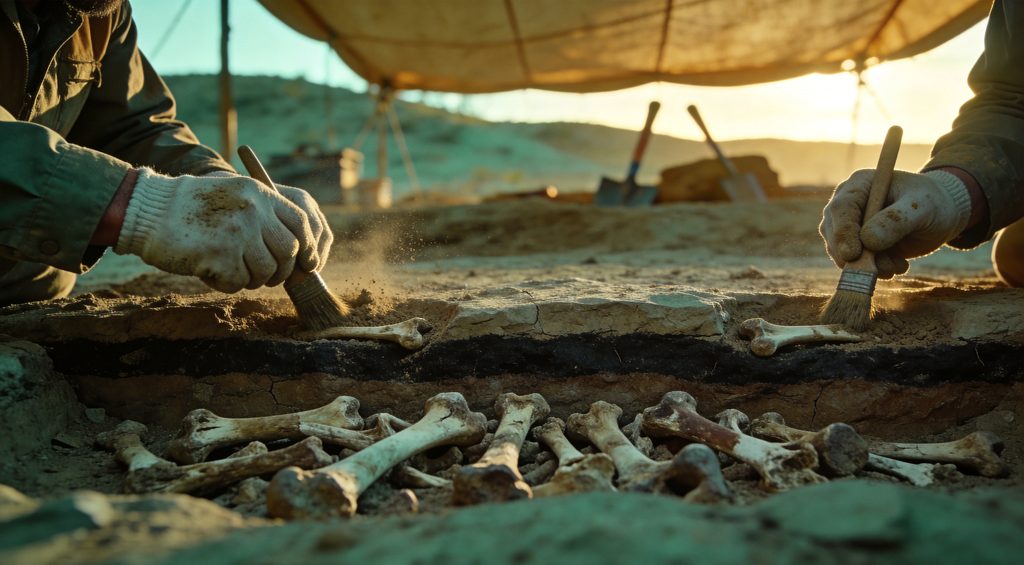
Thirty-five genera of large North American mammals went extinct in a window so narrow that paleontologists initially had difficulty resolving it at all. The bones are present in the layers below the Younger Dryas boundary and absent above it. The transition is, in many sections, less than ten centimeters of sediment.

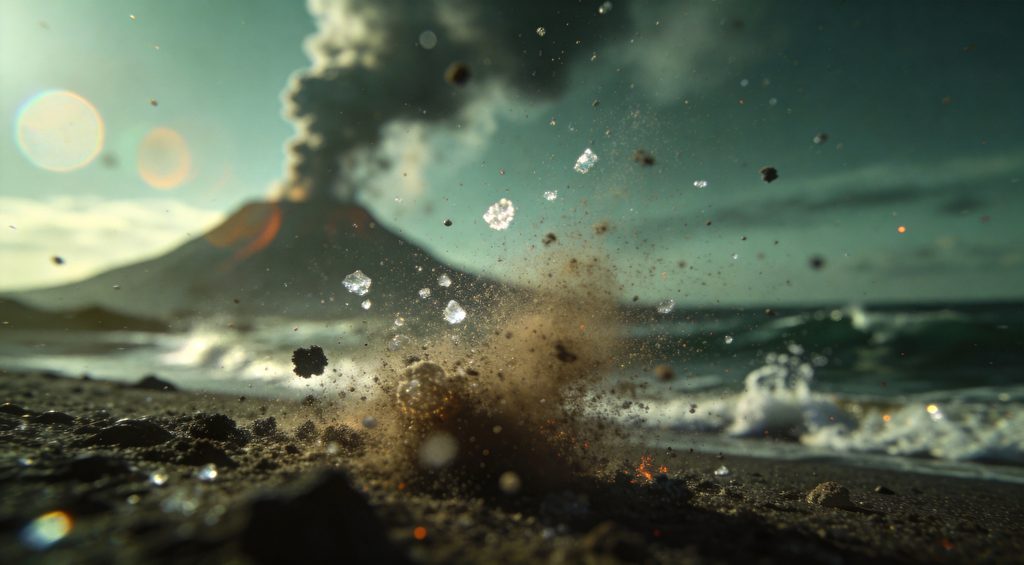
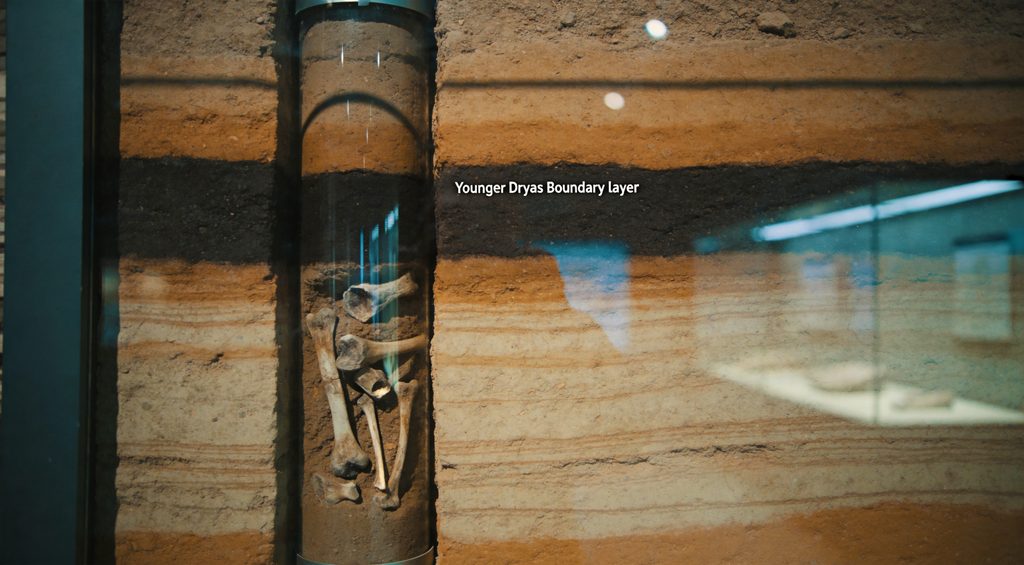
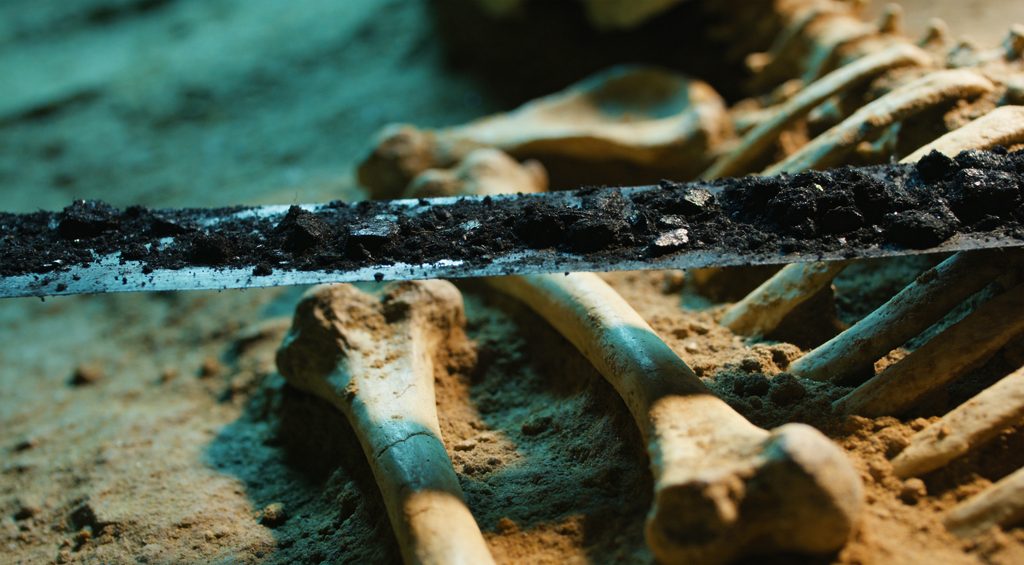
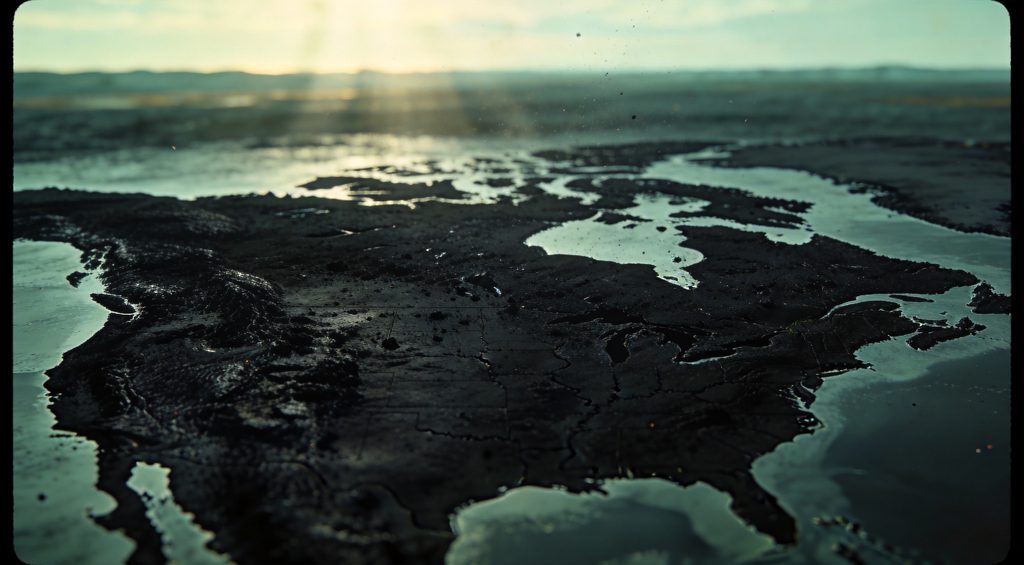
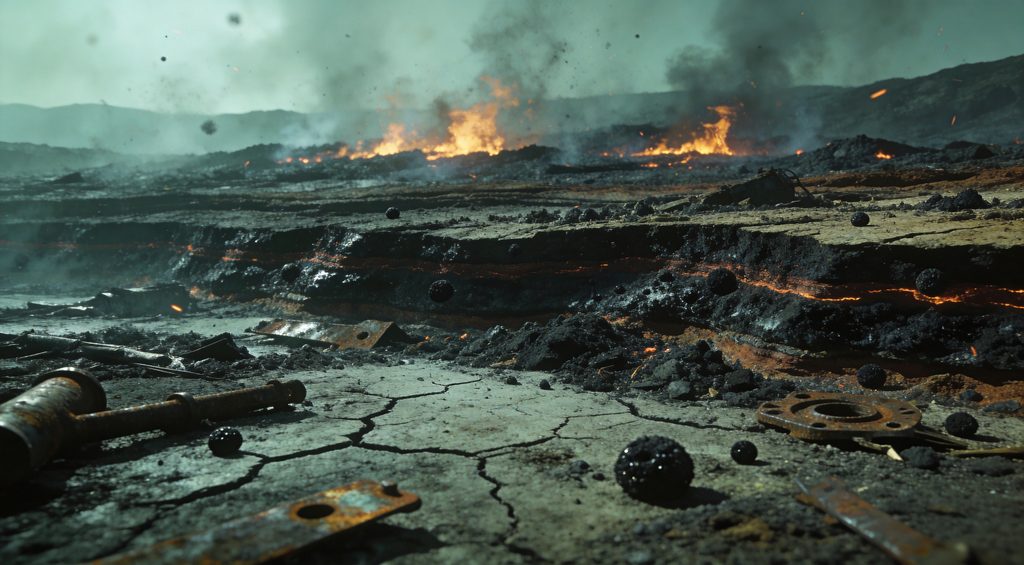
Above the bones, in many of these sites, geologists noted a thin dark layer of charcoal-rich sediment that they began calling the black mat. The black mat appears across roughly ten million square kilometers of the North American continent. Its composition includes high concentrations of carbon, soot, and ash. It is the signature of an enormous burning event — continent-scale wildfires, occurring at the precise stratigraphic moment that the megafauna disappeared and the climate collapsed.

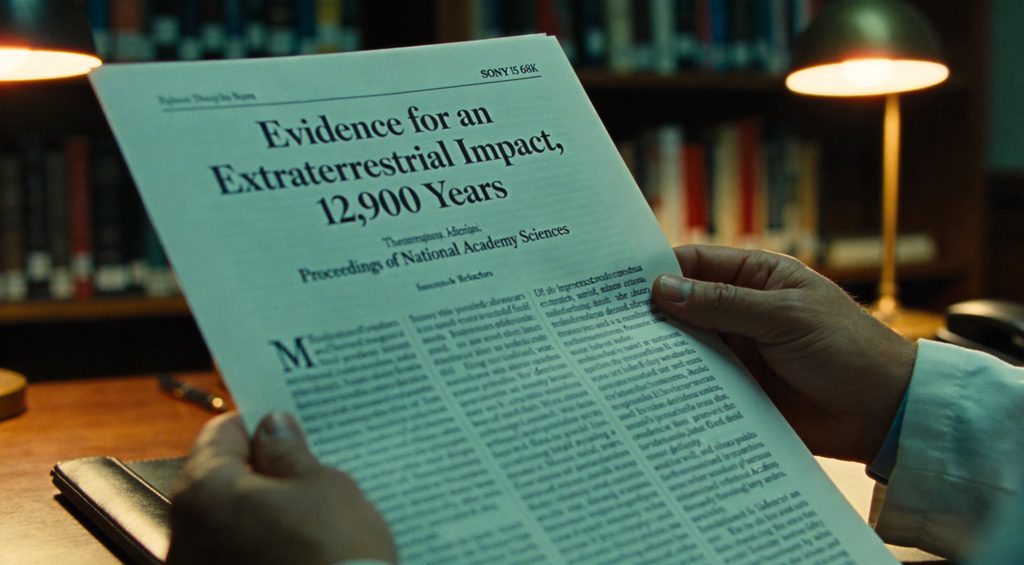
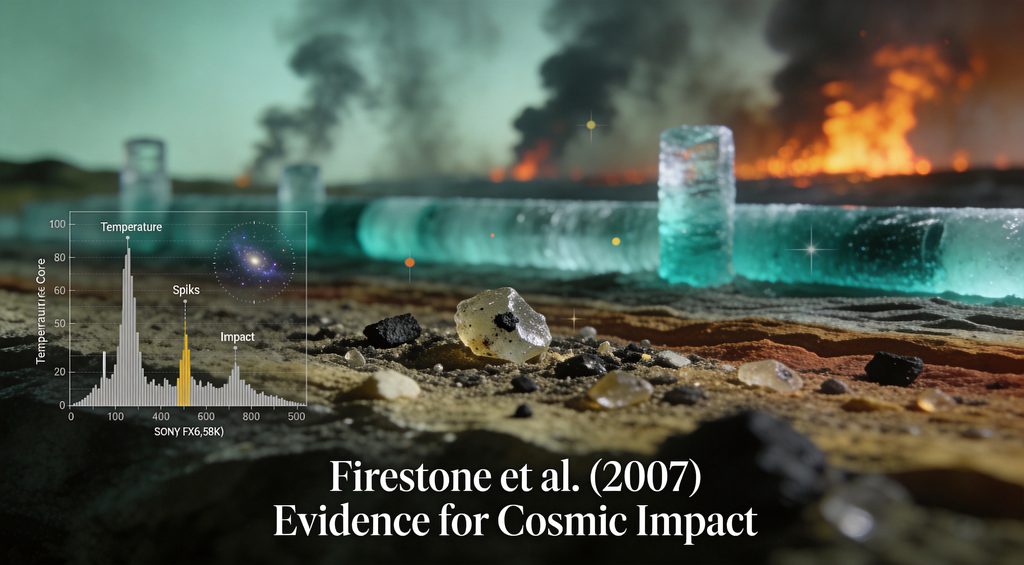
In two thousand seven, a group of researchers led by Richard Firestone, a nuclear chemist at Lawrence Berkeley National Laboratory, published a paper in the Proceedings of the National Academy of Sciences titled "Evidence for an extraterrestrial impact 12,900 years ago that contributed to the megafaunal extinctions and the Younger Dryas cooling."

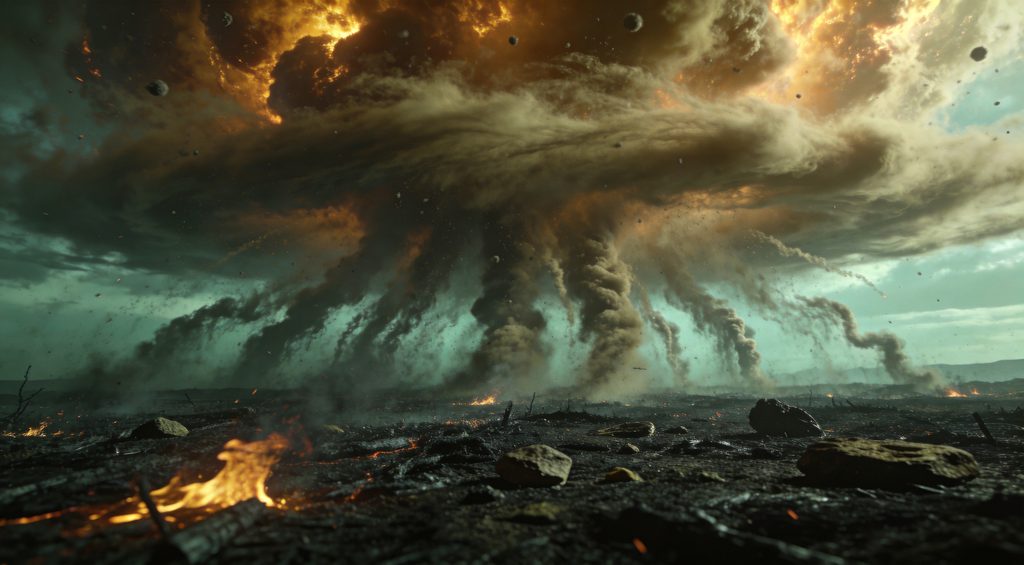
The paper proposed a specific mechanism. A comet or asteroid had broken apart in the atmosphere above the Laurentide Ice Sheet — the kilometers-thick ice covering most of Canada and the northern United States at the end of the Pleistocene. The impact had not produced a single large crater. It had produced a swarm of airbursts and surface fragments distributed across the continent. The resulting energy ignited continental-scale fires, producing the black mat. The heat and dust loaded into the upper atmosphere blocked solar radiation, triggering the rapid Younger Dryas cooling. The shockwaves and fires combined to extinguish the megafauna.
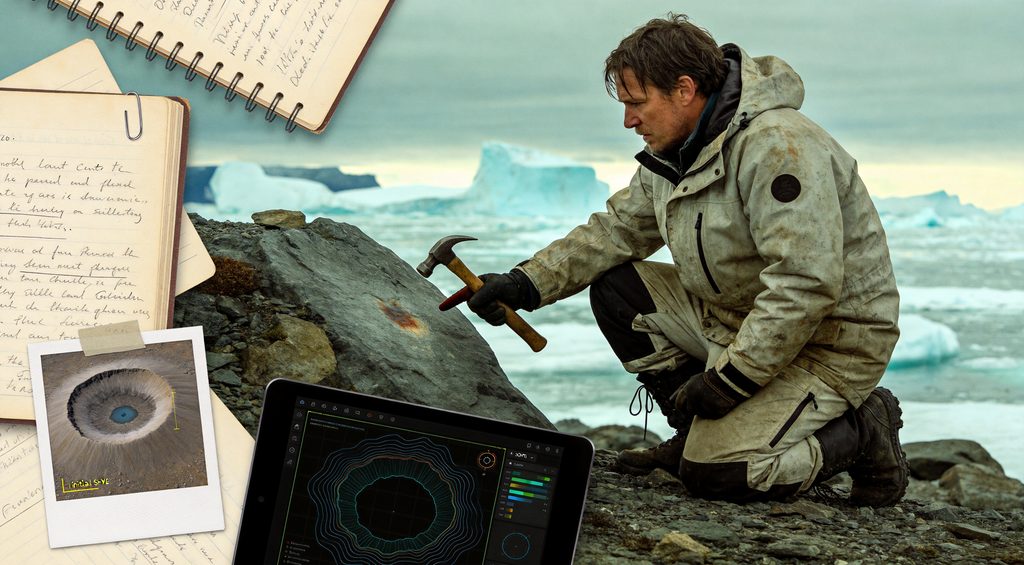
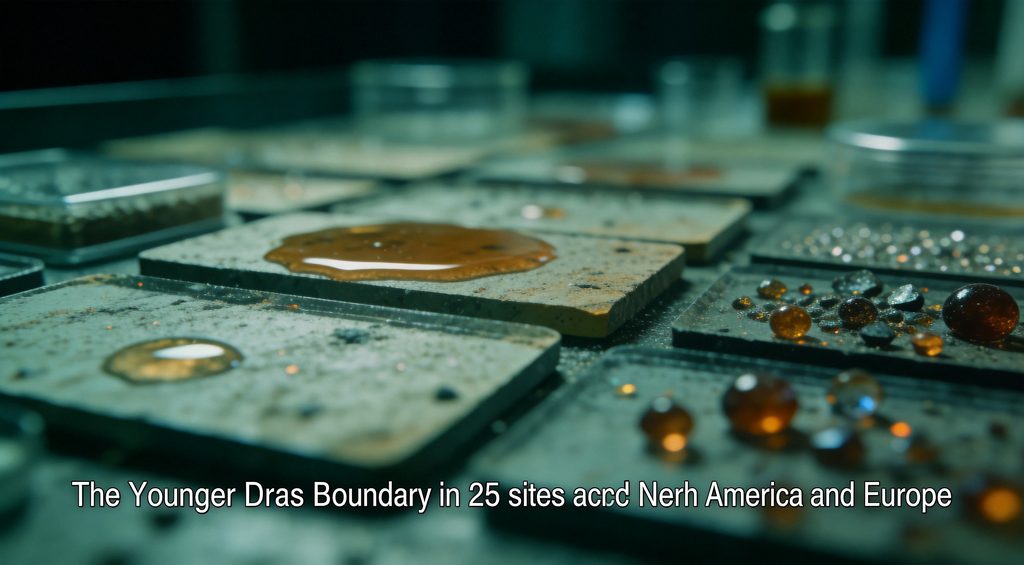
The evidence Firestone and his coauthors marshaled was substantial. At the precise Younger Dryas boundary layer in twenty-five sites across North America and Europe, they identified concentrations of materials associated with cosmic impacts: microscopic spherules of melted glass, formed when impact heat vaporizes silicate rock. Magnetic microspherules. Carbon spherules. Nanodiamonds — vanishingly small diamond crystals that form only under the extreme pressure and temperature conditions of an extraterrestrial impact. Iridium, the element that defines the Cretaceous-Paleogene boundary marking the dinosaur extinction.

The argument had a name: the Younger Dryas Impact Hypothesis. The research consortium that continued to publish in support of it called themselves the Comet Research Group. Over the next decade, they would publish dozens of papers documenting the boundary layer markers at sites in North America, Europe, the Middle East, South America, and Antarctica.

If the hypothesis was correct, it represented the most consequential cosmic event in the history of human civilization — coinciding with the disappearance of the dominant human culture of the Americas and the most rapid climate event in the geological record.
Then in two thousand eighteen, a separate research team discovered something that initially appeared to settle the question entirely.
A Danish-led consortium analyzing high-resolution radar data of the Greenland ice sheet identified a perfectly circular bedrock depression beneath the Hiawatha Glacier in northwestern Greenland. The depression was thirty-one kilometers across. It had the morphology — the central peak, the elevated rim, the disturbed bedrock — of an impact crater. The team flew aerial surveys. They drilled meltwater samples from rivers flowing out from under the ice. The meltwater contained shocked quartz grains, partially melted granite fragments, and elevated platinum concentrations. The crater was real.

The initial dating estimate, based on the youth of the overlying ice and the freshness of the bedrock deformation, suggested the impact had occurred within the past one hundred thousand years.
Twelve thousand nine hundred years before present is within one hundred thousand years.
The Hiawatha crater became, briefly, the most discussed feature in impact geology. If it had formed at the Younger Dryas boundary, it was the smoking gun the Comet Research Group had spent eleven years arguing for. A thirty-one kilometer crater is consistent with an impactor of approximately one kilometer in diameter — a body large enough to ignite continental fires, eject enough debris to perturb the atmosphere, and trigger climate collapse at exactly the magnitude observed.
For four years, scientists waited for a precise date on the Hiawatha impact.
In March of two thousand twenty-two, the Geological Survey of Denmark and Greenland, in collaboration with the Natural History Museum of Denmark and Sweden's Geological Survey, published the result of two independent dating analyses.
The first was argon-argon dating of sand grains from sediment downstream of the crater. The second was uranium-lead dating of zircon crystals from impact melt rock recovered from the meltwater. Both methods returned the same answer to within statistical uncertainty.

The Hiawatha crater formed fifty-seven point ninety-nine million years ago, plus or minus zero point five four million.
Late Paleocene. During an interval when Greenland was covered in temperate forest, when there was no ice sheet, when the early ancestors of modern primates were just beginning to diversify. Approximately fifty-seven million nine hundred and seventy-seven thousand years before any human being existed.
Brandon Johnson, an impact modeler at Purdue University and a coauthor of the dating paper, told the journal Science that the result, quote, probably means it is safe to put the Younger Dryas impact hypothesis back to rest for a while.

The crater is real. It is one of the twenty-five largest known impact structures on the planet. It is just sixty thousand times too old to be relevant to the question it had appeared to answer.
The Hiawatha date eliminated the most physically compelling piece of evidence for the impact hypothesis. The next three years would test whether the rest of the case could survive.
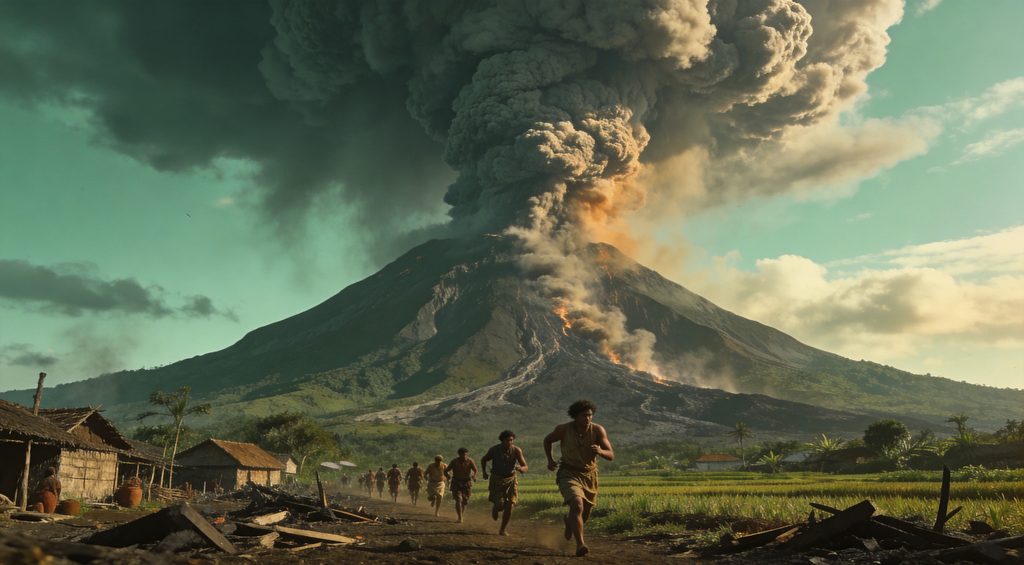
In twenty twenty-five, the journal Scientific Reports — a peer-reviewed open-access journal published by the Nature group — retracted a twenty twenty-one paper authored by members of the Comet Research Group. The paper had claimed that the Bronze Age city of Tell el-Hammam, located near the Dead Sea, had been destroyed by a cosmic airburst around three thousand six hundred years ago. The retraction notice cited concerns about manipulation of analytical data and irreproducible results.

It was the second retraction of a Comet Research Group paper from Scientific Reports in three years. The first, in twenty twenty-three, had concerned a separate set of putative impact markers from a different site. Independent statisticians who had requested the raw data for re-analysis reported that key figures in the retracted papers showed evidence of selective sample inclusion and post-hoc curve fitting — patterns inconsistent with the conclusions the authors had drawn from them.
The retractions did not, by themselves, falsify the Younger Dryas Impact Hypothesis. They concerned auxiliary applications of the hypothesis to other proposed impact events. But within the geological community, they had a chilling effect on the broader research program. Reviewers became more skeptical. Funding agencies became more cautious. Independent attempts to replicate the original Firestone findings became more critical.
By the middle of twenty twenty-five, the Comet Research Group's continued defenders included an active core of perhaps thirty researchers across multiple institutions, publishing primarily in lower-impact journals. The broader paleoclimate community had largely shifted to the alternative hypothesis: that the Younger Dryas was triggered by a freshwater pulse from the collapse of glacial Lake Agassiz into the North Atlantic, shutting down the thermohaline circulation that warms the Northern Hemisphere.
The freshwater-shutdown hypothesis explains the cooling. It does not, on its own, explain the megafaunal extinction, the continental burn layer, the platinum anomaly in the Greenland ice, or the carbon and nanodiamond spherules at twenty-five sites across the Northern Hemisphere.

The platinum spike is the part that has not gone away.

In twenty thirteen, a team led by Michail Petaev at Harvard published a paper in PNAS titled "Large Pt anomaly in the Greenland ice core points to a cataclysm at the onset of Younger Dryas." Their high-resolution analysis of the GISP2 ice core at the Younger Dryas boundary showed that the platinum concentration in the ice increased by a factor of approximately one hundred for a period spanning roughly twenty-one years. The platinum is real. The ice is undisturbed. The chronology is precise.
Platinum is not concentrated in continental crustal rocks. It is concentrated in iron meteorites and in the cores of differentiated bodies. A one-hundred-fold increase in atmospheric platinum deposition over approximately two decades is consistent with sustained input of extraterrestrial material — either from a single large impact distributing fragments across the Earth or from a sustained shower of smaller bodies. The duration is too long to be a single instantaneous event and too short to be a slow natural background variation.
No alternative geological mechanism for the platinum spike has been published.
The black mat is also real. Its distribution across ten million square kilometers of North American sediment, its timing precisely coincident with the Younger Dryas boundary, and its high concentrations of soot, charcoal, and high-temperature combustion products are accepted by both proponents and critics of the impact hypothesis. The disagreement is not about whether the black mat exists or what it indicates — massive continental burning — but about what caused the burning.
In twenty twenty-four, a team that included James Kennett, the original co-author on the two thousand seven Firestone paper, published a paper in PNAS reporting shock-fractured quartz grains at the Younger Dryas boundary at multiple sites. Shock-fractured quartz is one of the most diagnostic markers of cosmic impacts — the deformation patterns form only under pressures that can be produced by hypervelocity collision. The paper was peer-reviewed and accepted. The data are public. The interpretation is, as always, contested.
The state of the question, as of early twenty twenty-six, is this.
Something extreme happened twelve thousand nine hundred years ago. The data are unambiguous on this point. Greenland's annual temperature fell by ten degrees in less than a decade. North American megafauna underwent extinction at a rate not seen in any subsequent period of geological history. A continental burn layer was deposited from California to New York. The atmosphere over the Northern Hemisphere received approximately one hundred times its usual platinum loading, deposited over a period of roughly twenty Earth-years. A small but real population of impact-diagnostic markers — shocked quartz, microspherules, nanodiamonds, magnetic spherules — appear in the boundary sediment at multiple sites across multiple continents.
The hypothesis that this combination of evidence was caused by a cosmic impact has produced thirty-five published peer-reviewed papers in support, more in critique, two retractions, one apparently perfectly placed crater that turned out to be sixty thousand times too old, and an active scientific debate that has now spanned eighteen years without resolution.
The hypothesis that the event was caused entirely by the collapse of a glacial lake into the North Atlantic does not, by itself, account for the platinum, the burn layer, the impact markers, or the extinction pattern. It accounts for the cooling. It is the consensus answer for the cooling. It is an incomplete answer for everything else.
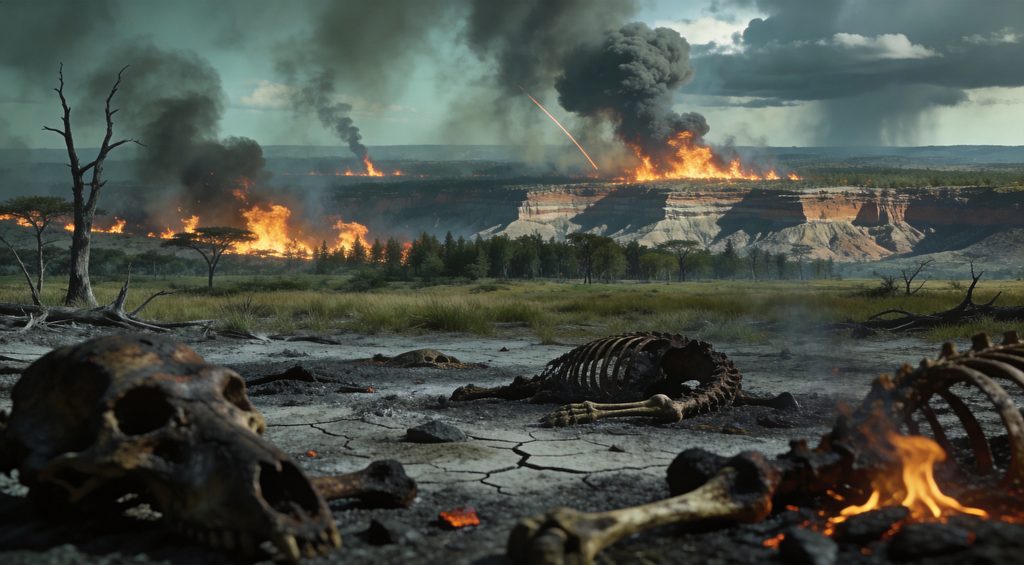
This is what the data permit us to say. A planetary-scale event occurred. Its mechanism remains formally undetermined. The evidence is preserved in ice cores that have been read, in sediment layers that have been mapped, and in the silence of the bone record across an entire continent. The interpretation has been disputed across multiple generations of researchers. The dispute has not been settled by the discovery of any one piece of evidence. It has been narrowed by the elimination of specific candidates — Hiawatha is too old, Tell el-Hammam was misinterpreted, certain markers have not survived independent replication.

What remains is the platinum, the burn layer, the extinctions, the climate collapse, and the absence of a single, agreed mechanism.
There is a reason this case continues to be worth tracking.

The Younger Dryas was not the most distant event in Earth's climate record. It is among the most recent. It happened during the lifetimes of the immediate ancestors of every living human being. It occurred at the start of the geological period — the Holocene — in which all of recorded human history takes place. The atmospheric and oceanic systems that produced the rapid cooling are the same atmospheric and oceanic systems that govern climate today. Whatever mechanism initiated a ten-degree temperature drop in three years has not been excluded from the present.
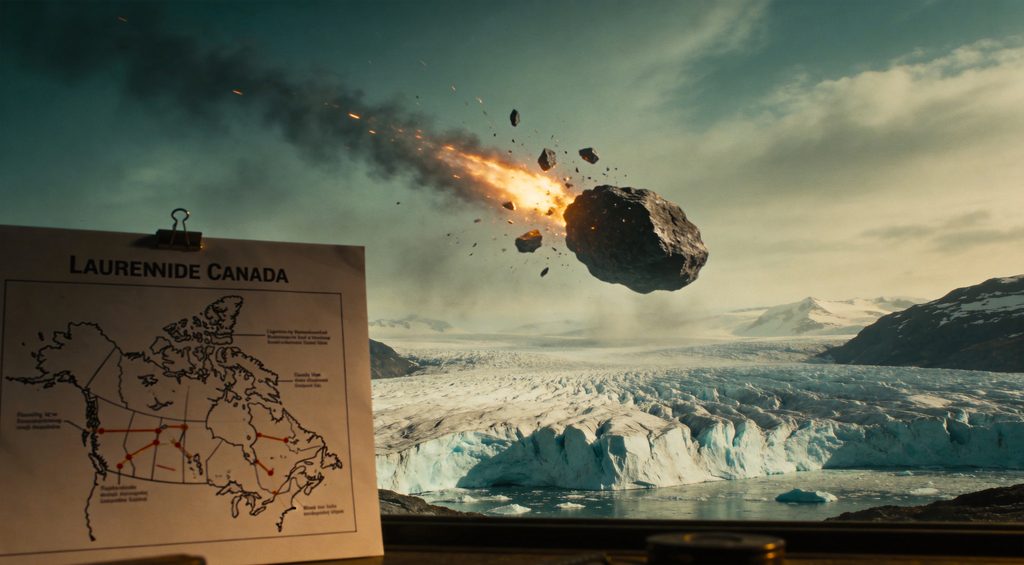
If the event was caused by an impact, then the relevant question is the frequency of such impacts. Modern surveys of near-Earth objects estimate that bodies capable of producing continent-scale damage strike the Earth on a timescale of approximately one hundred thousand years. Within that statistical window, twelve thousand nine hundred years is recent. Another such event is not predictable. It is not impossible.
If the event was caused entirely by a freshwater pulse from a collapsing glacial lake — the consensus mechanism — then the precondition was the existence of an unstable continental ice sheet that could release several hundred thousand cubic kilometers of fresh water into the North Atlantic in a short interval. The Laurentide Ice Sheet that collapsed at the end of the Pleistocene no longer exists. The Greenland Ice Sheet, which does exist, contains roughly twenty-four hundred thousand cubic kilometers of ice. It is currently losing mass at an accelerating rate.
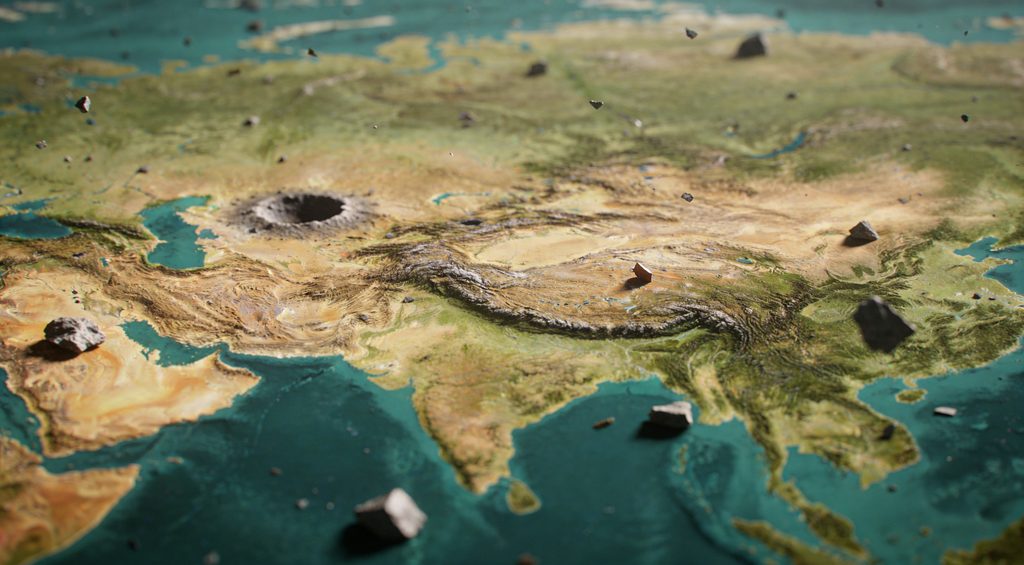
These are not equivalent risks. They are different categories of risk. They produce, however, similar outputs at sufficient magnitude: rapid disruption of the thermohaline circulation, regional cooling of multiple degrees within years to decades, extinction-grade ecological pressure on species that cannot adapt at that pace.
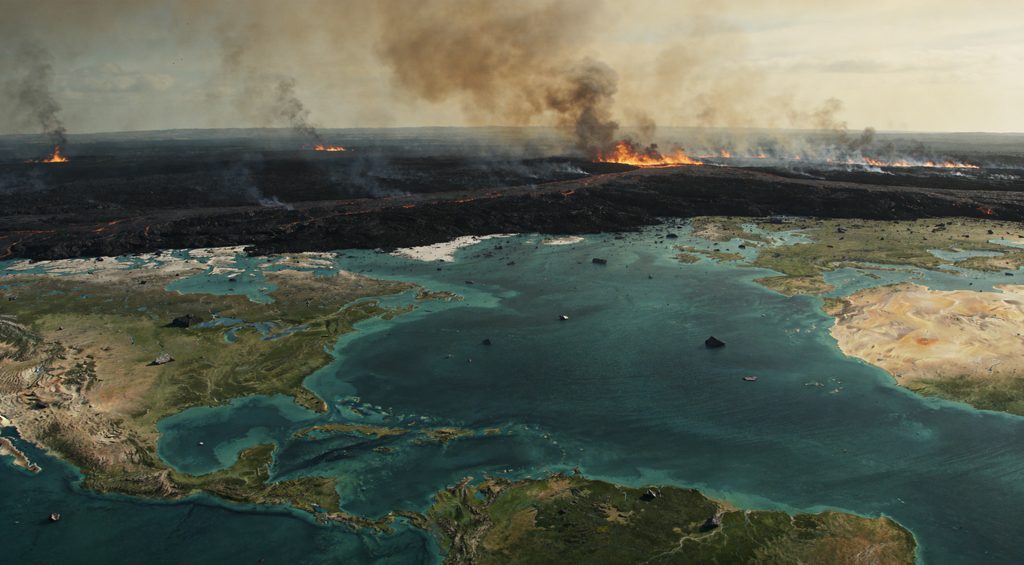
The black mat is preserved in the sediment. The platinum is preserved in the ice. The megafauna are gone.
The Comet Research Group continues to publish. The retractions did not silence them. The Hiawatha date did not falsify their hypothesis. They are arguing for the proposition that a specific kind of cosmic event happened during the time of human witnesses, that some component of human cultural memory may preserve fragmentary records of that event, and that the geological signature of such an event has been misclassified for over fifty years because the relevant markers were not recognized as impact-related.
The mainstream paleoclimate community has not accepted this argument. The mainstream paleoclimate community has also not, to date, produced a complete alternative explanation that accounts for every component of the boundary layer evidence.

What we know is this. There is a layer of sediment under our feet — in the southwestern United States, in the Carolinas, in Belgium, in Syria, in Patagonia, in South Africa — that is darker than the layers above and below. The layer is twelve thousand nine hundred years old. It contains the burn signature of forests that no longer exist, the bone fragments of animals whose lineages ended at that layer, traces of metals that do not concentrate in terrestrial rocks, and crystals deformed by pressures that do not naturally occur in surface geology.

A planet does not record this kind of layer often.
When it does, the explanation eventually comes. The Cretaceous-Paleogene boundary, which killed the non-avian dinosaurs sixty-six million years ago, was correctly attributed to an asteroid impact only in nineteen eighty, more than a hundred years after the boundary was first recognized. The Permian-Triassic extinction, the largest in Earth's history, was not satisfactorily attributed to volcanic activity until the late nineteen nineties, more than a century after the geological boundary was identified.
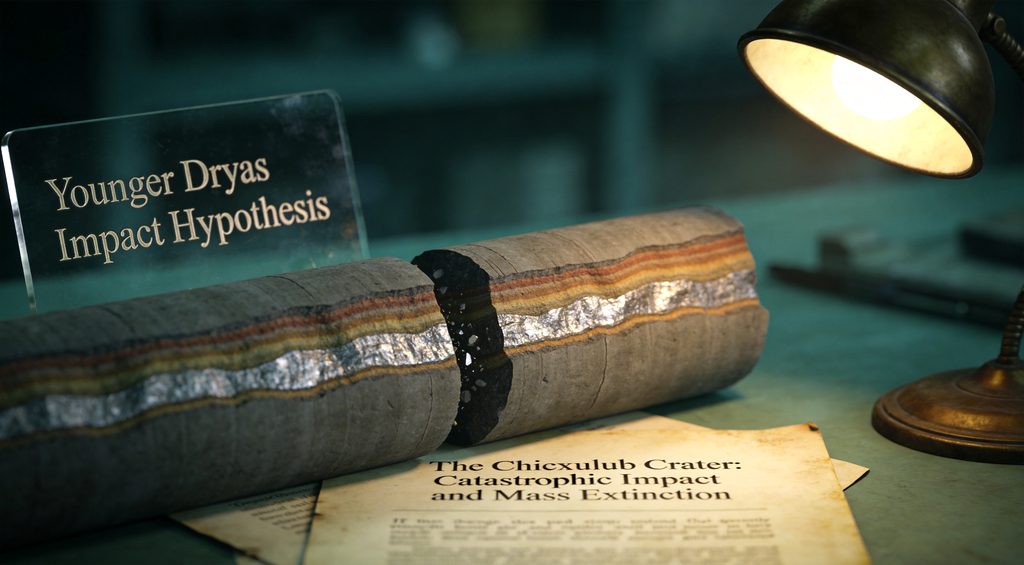
The Younger Dryas boundary was identified in nineteen thirty-five. The Firestone hypothesis is eighteen years old. The Hiawatha dating is four years old. The Tell el-Hammam retraction is one year old. The platinum spike has been measured but not explained.

These cases close on geological timescales, not human ones.
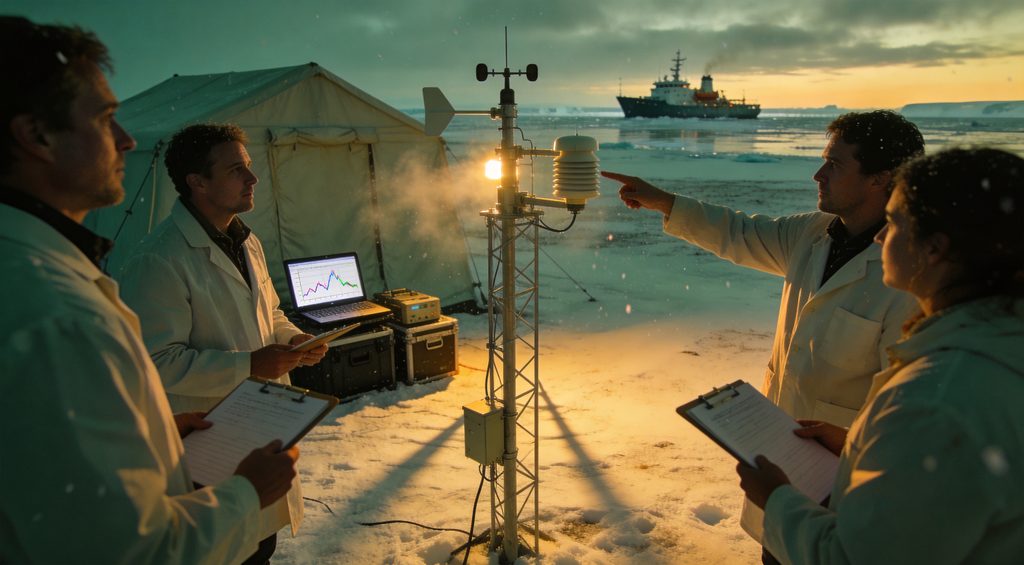
This is Fragment Zero, Case File forty-four. The Younger Dryas.
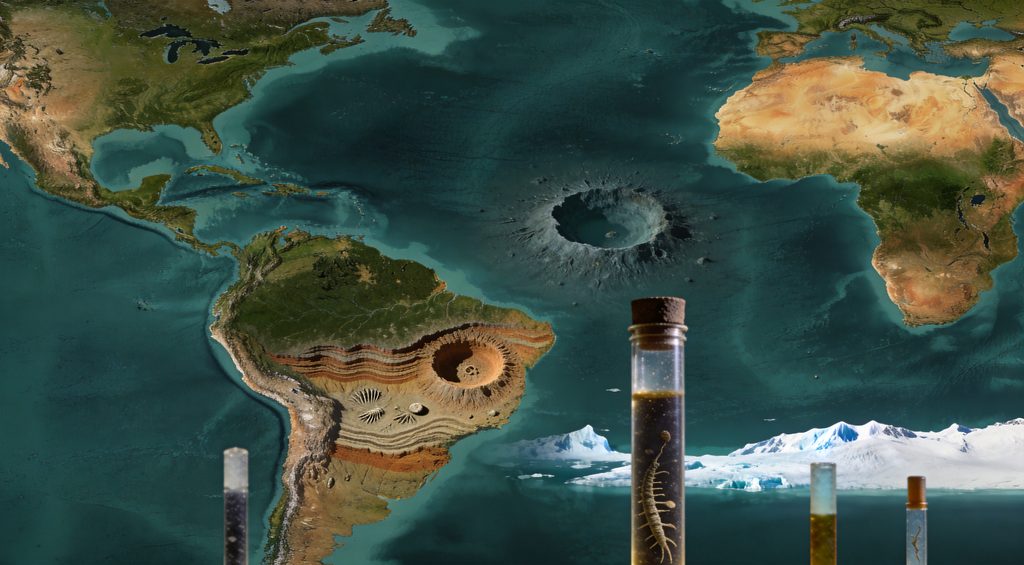
Subscribe. Turn on notifications. Because the layer is real. The mechanism is not yet known. And the next time someone tells you a planetary catastrophe must announce itself in advance, you will know how long it takes for the announcement to be understood.
We will be watching. We will be listening.
The ice has been waiting twelve thousand nine hundred years to be read.
Every factual claim in this case file is supported by one of the following public sources. Click each to verify against the primary record.
-
Younger Dryas impact hypothesis — Wikipedia
— Wikipedia
(2026-05)
Comprehensive overview of the hypothesis history, supporting evidence, criticisms, retractions, and current state of the debate.
-
Hiawatha impact structure — Wikipedia
— Wikipedia
(2026-05)
Background on the Greenland crater, its 2018 discovery, and the 2022 dating revision to 58 million years.
-
Younger Dryas — Wikipedia
— Wikipedia
(2026-05)
Stratigraphic, climatological, and ecological background on the Younger Dryas cooling event.
-
Firestone et al. — Evidence for an extraterrestrial impact 12,900 years ago that contributed to the megafaunal extinctions and the Younger Dryas cooling
— Proceedings of the National Academy of Sciences
(2007)
Original 2007 PNAS paper proposing the Younger Dryas Impact Hypothesis.
-
Petaev et al. — Large Pt anomaly in the Greenland ice core points to a cataclysm at the onset of Younger Dryas
— Proceedings of the National Academy of Sciences
(2013)
PNAS paper documenting the 100x platinum spike at the Younger Dryas boundary in the GISP2 Greenland ice core.
-
Kenny et al. — A Late Paleocene age for Greenland's Hiawatha impact structure
— Science Advances
(2022-03)
Argon-argon and uranium-lead dating analyses establishing the 57.99 ± 0.54 million year age of the Hiawatha crater.
-
Controversial impact crater under Greenland's ice is surprisingly ancient
— Science Magazine
(2022-03)
Reporting on the Hiawatha dating revision, including the quote from Brandon Johnson at Purdue.
-
Mysterious Hiawatha crater in Greenland is 58 million years old
— Science News
(2022-03)
Independent science journalism coverage of the dating revision and its implications for the YDIH.
-
Retraction of Bunch et al. — A Tunguska sized airburst destroyed Tall el-Hammam
— Scientific Reports / Nature Portfolio
(2024)
Retraction notice for the Comet Research Group's claim of a Bronze Age cosmic airburst at Tell el-Hammam.
-
Massive crater under Greenland's ice points to climate-altering impact in the time of humans (original 2018 announcement)
— Science Magazine
(2018-11)
Original announcement of the Hiawatha crater discovery, before the dating revision overturned the speculation of a recent impact.